
Endothenia hebesana
(Walker, 1863)
Verbena Bud Moth
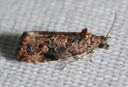
Endothenia hebesana is a small tortricid commonly known as the verbena bud moth. The has a broad North American distribution spanning from the Atlantic coast to the Pacific. Larvae develop inside the flower stalks and seed of numerous plant species, particularly in the Verbena and Penstemon. Fourth and fifth instars overwinter within plant stems, with occurring in late spring.
Pronunciation
How to pronounce Endothenia hebesana: //ˌɛn.doʊˈθiː.ni.ə ˌhɛ.bɪˈzæn.ə//
These audio files are automatically generated. While they are not always 100% accurate, they are a good starting point.
Identification
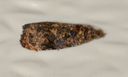
Forewing coloration is highly variable (dusky brown to clay), making visual identification challenging without examination of genitalia or molecular confirmation. Distinguished from similar Endothenia by association with specific larval plants and geographic range; precise identification typically requires dissection and comparison of genital structures.
Images
Appearance
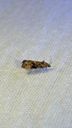
Small with forewing length of 5–8.2 mm in both sexes. Forewings variable in coloration, ranging from dusky brown to clay. No significant in size.
Habitat
Primarily associated with black spruce-sphagnum bogs, though the ' broad plant range suggests occupancy of diverse moist meadow and wetland edge where host plants occur.
Distribution
Widespread in North America. Recorded from Massachusetts, New York, New Jersey, Pennsylvania, Maryland, Virginia, North Carolina, Florida, Texas, Ohio, Indiana, Missouri, and California in the United States; British Columbia, Alberta, Manitoba, and Ontario in Canada. Additional GBIF records indicate presence in Saskatchewan, Norway, and Sweden.
Seasonality
active from late April to mid-June. One or multiple per year depending on latitude; northern likely , southern populations potentially multivoltine.
Diet
Larvae feed on seeds within flower stalks and seed of diverse plant : Antirrhinum, Gentiana, Gerardia, Iris, Orthocarpus, Penstemon, Physostegia, Solidago, Stachys, Teucrium, Tigridia, Verbascum, Verbena, Veronica, Sarracenia, Scrophularia, and Scutellaria. feeding habits unknown.
Host Associations
- Antirrhinum - larval seeds
- Gentiana - larval seeds
- Gerardia - larval seeds
- Iris - larval seeds
- Orthocarpus - larval seeds
- Penstemon - larval seeds
- Physostegia - larval seeds
- Solidago - larval seeds
- Stachys - larval seeds
- Teucrium - larval seeds
- Tigridia - larval seeds
- Verbascum - larval seeds
- Verbena - larval seeds; source of
- Veronica - larval seeds
- Sarracenia - larval seeds
- Scrophularia - larval seeds
- Scutellaria - larval seeds
Life Cycle
Five larval instars. Instars four and five overwinter in flower stalks of plant. occurs in late May. Voltinism varies geographically: one per year at northern latitudes, potentially multiple generations at southern latitudes.
Behavior
Larvae bore into flower stalks and developing seed , feeding internally on seeds. occurs within plant stems, providing protection from environmental extremes. takes place within the larval gallery or in adjacent plant material.
Ecological Role
Seed on diverse flowering plants; may influence plant reproductive success in localized . Provides food source for and predators, though specific natural enemies unrecorded.
Human Relevance
Minor potential as a garden pest on ornamental , particularly Verbena and Penstemon cultivars. Not considered economically significant. Scientific interest due to broad range and unusual distribution pattern including Palearctic records.
Similar Taxa
- Endothenia gentianaeanaSimilar size and coloration; distinguished by larval association with Gentiana and more restricted distribution
- Endothenia nigricostanaOverlapping range and variable forewing coloration; requires genital dissection for reliable separation
- Other OlethreutinaeNumerous small brown tortricids share general appearance; identification to / level typically requires examination of genital
More Details
Nomenclature
Originally described as Sciaphila hebesana by Walker in 1863; transferred to Endothenia by subsequent authors.
Biogeographic Note
GBIF records indicate presence in Norway and Sweden, suggesting either introduced in Europe or potential misidentifications requiring verification; native distribution otherwise strictly Nearctic.