
Glypta
Gravenhorst, 1829
Species Guides
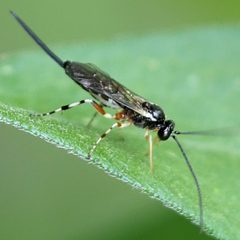
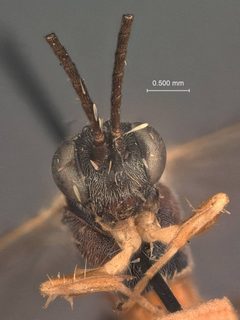
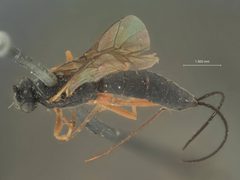
4Glypta is a of in the Ichneumonidae. are endoparasitoids of lepidopteran larvae, particularly tortricid moths including spruce budworm (Choristoneura fumiferana) and related forest pests. Several species have been studied for their role in of economically important forest insects. females locate larvae using chemical cues and oviposit internally; parasitoid larvae develop within the host and kill it upon .
Pronunciation
How to pronounce Glypta: //ˈɡlɪp.tə//
These audio files are automatically generated. While they are not always 100% accurate, they are a good starting point.
Images
Habitat
Coniferous and mixed forests; associated with trees of lepidopteran prey. Glypta fumiferanae cocoons have been observed on foliage of host trees during periods.
Distribution
Records from Denmark, Norway, Sweden, Vermont (USA), and broader North American distribution. Specific study documented in northern New Brunswick, Canada; Montana, USA; and British Columbia including Vancouver Island.
Seasonality
Glypta fumiferanae show peak activity between 11:00-15:00. Males emerge 2-3 days before females. Activity influenced by temperature and solar radiation.
Host Associations
- Choristoneura fumiferana - PARASITOID_OFPrimary ; spruce budworm
- Choristoneura occidentalis - PARASITOID_OFWestern spruce budworm
- Choristoneura rosaceana - PARASITOID_OFObliquebanded leafroller; of G. variegata
- Barbara colfaxiana - PARASITOID_OFDouglas-fir cone moth; of G. evetriae
- Cydia nigricana - PARASITOID_OFPea moth; of G. haesitator
- Grapholita molesta - PARASITOID_OFOriental fruit moth; of G. rufiscutellaris
- Epinotia sp. - PARASITOID_OFLeaf-tier on hawthorn; alternative of G. rufiscutellaris
Life Cycle
Endoparasitoid development within larvae. Glypta fumiferanae or larvae lie within hibernating host larvae, resuming development in spring when host breaks hibernation and begins feeding. Host typically killed when in sixth larval instar. longevity 8-28 days with honey feeding, 2-5 days unfed. 42-176 eggs with honey feeding, 4-89 eggs unfed.
Behavior
show greater activity in upper forest than lower crown regions. Females search for immediately after . Males patrol host seeking females. activity synchronized with host availability and influenced by environmental conditions. Host location mediated by volatile chemical cues from host plants and hosts.
Ecological Role
Primary of forest lepidopteran pests; contributes to of spruce budworm and other tortricid moths. Potential agent for of economically important forest insects.
Human Relevance
Studied for applications in forest pest management. Glypta fumiferanae and related investigated for their capacity to reduce spruce budworm during .
Similar Taxa
- Apanteles fumiferanaeAlso a primary of spruce budworm; distinguished by killing in fifth instar (versus sixth instar for Glypta) and different cocoon characteristics
- GlyptapanteleSimilar of ichneumonid with comparable relationships; distinguished by taxonomic characters and specific host associations
Sources and further reading
- BugGuide
- Wikipedia
- GBIF taxonomy match
- iNaturalist taxon
- NCBI Taxonomy
- Catalogue of Life
- What's It Like to Be Parasitized? | Bug Squad
- FURTHER NOTES ON SOME ALTERNATIVE HOSTS OF THE ORIENTAL FRUIT MOTH PARASITE, GLYPTA RUFISCUTELLARIS CRESS
- Temporal and Spatial Activity Patterns of an Adult Parasitoid, Glypta fumiferanae (Hymenoptera: Ichneumonidae), and their Influence on Parasitism
- The Interaction of the Spruce Budworm, Choristoneura fumiferana (Clem.), and the Parasite Glypta fumiferanae (Vier.)
- Parasitism of Spruce Budworm by Glypta and Apanteles at Different Crown Heights in Montana
- STUDIES ON PARASITES OF THE SPRUCE BUDWORM, ARCHIPS FUMIFERANA (Clem.): 2. Life History of Glypta fumiferanae (Viereck) (Hymenoptera, Ichneumonidae)
- Sources of volatiles mediating host location behaviour of Glypta haesitator, a larval parasitoid of Cydia nigricana
- Factors Affecting Assessment of Parasitization by Apanteles fumiferanae Vier. and Glypta fumiferanae (Vier.) on Spruce Budworm Larvae
- ELECTROPHORETIC TECHNIQUES FOR DETECTION OF GLYPTA FUMIFERANAE, AN ENDOPARASITOID OF WESTERN SPRUCE BUDWORM
- On the Life History of the Douglas-fir Cone Moth, Barbara colfaxiana (Kft.) (Lepidoptera: Olethreutidae), and one of its Parasites, Glypta evetriae Cush. (Hymenoptera: Ichneumonidae)
- OVIPOSITION BY GLYPTA FUMIFERANAE (HYMENOPTERA: ICHNEUMONIDAE) IN CHORISTONEURA FUMIFERANA (LEPIDOPTERA: TORTRICIDAE) LARVAE AND THE EFFECT OF HONEY ON THEIR FECUNDITY AND SURVIVAL
- A biological assessment ofGlypta variegata(Hymenoptera: Ichneumonidae) as a parasitoid ofChoristoneura rosaceana(Lepidoptera: Tortricidae)
- The genus Orientoglypta Kuslitzky, 1973 (Ichneumonidae, Banchinae) from China with descriptions of four new species.