
Sereda tautana
(Clemens, 1865)
Speckled Sereda Moth
Sereda tautana is a small tortricid in the Olethreutinae, known from the Canadian prairie provinces. It is one of few described in the Sereda, which belongs to the tribe Grapholitini. The species was first described by James Brackenridge Clemens in 1865. Despite having nearly 500 iNaturalist observations, detailed biological information remains limited in published literature.

Pronunciation
How to pronounce Sereda tautana: /sɛˈreː.da taʊˈtaː.na/
These audio files are automatically generated. While they are not always 100% accurate, they are a good starting point.
Identification
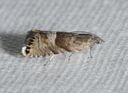
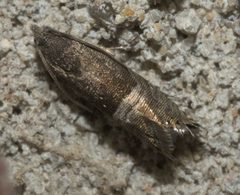
The speckled forewing pattern distinguishes it from many other small tortricids, though precise identification requires examination of genitalia or comparison with closely related Grapholitini. The combination of small size, mottled gray-brown forewings with irregular pale speckling, and prairie context aids field recognition. Similar in the Sereda and related grapholitine genera such as Grapholita and Cydia require dissection for definitive separation.
Images
Appearance
A small with forewings showing a speckled or mottled pattern of light and dark markings. Wing pattern includes variable pale and brownish speckling that provides camouflage against bark and lichen. Hindwings are generally paler and less patterned than forewings. Typical Tortricidae resting posture with wings held tent-like over the body.
Habitat
Associated with open prairie and parkland environments in the Canadian interior plains. Found in grassland, shrubland, and wooded edge where plants occur. Specific microhabitat preferences are poorly documented.
Distribution
Recorded from Manitoba and Saskatchewan, Canada. Distribution appears centered in the Prairie Provinces, with potential range extension into adjacent U.S. northern plains states though unconfirmed in available sources.
Seasonality
period spans late spring through summer based on iNaturalist observation dates; exact requires further study.
Ecological Role
Larval stage likely functions as a herbivore on specific plants; may contribute to pollination though this has not been documented.
Human Relevance
No documented economic or agricultural significance. Of interest to lepidopterists documenting prairie diversity.
Similar Taxa
- Other Sereda species contains few described with similar size and wing shape; require genitalia examination for separation
- Grapholita spp.Related grapholitine tortricids with similar small size and mottled patterns; distinguished by wing pattern details and genitalia
- Cydia spp.Small olethreutine tortricids with speckled wings; separation requires detailed pattern analysis and often dissection
More Details
Taxonomic history
First described by J.B. Clemens in 1865, placed in the Sereda which remains poorly studied. The genus is classified in tribe Grapholitini, a group of small tortricids many of which are associated with fruits or seeds of plants.
Data availability
High iNaturalist observation count (478 records) contrasts with limited published biological studies. Most observations are from Canada, with photographic records providing primary documentation of and distribution.