
Dichrorampha sedatana
(Busck, 1906)
Dingy Drill
Dichrorampha sedatana is a small tortricid with a wingspan of 12–16 mm. are active from April to June, with one per year. The larvae are root feeders, specializing on Asteraceae including Tanacetum vulgare and related . The species is widespread across Europe and occupies rough meadows and wayside .
Pronunciation
How to pronounce Dichrorampha sedatana: /ˈdɪkrɔˌræmfə ˌsɛdəˈteɪnə/
These audio files are automatically generated. While they are not always 100% accurate, they are a good starting point.
Identification
Distinguished from by genitalia and wing pattern details. Similar to Dichrorampha alpestrana and D. montanana, but separable by examination of genital structures and subtle wing pattern differences. Molecular identification through provides definitive separation from cryptic .
Images
Appearance
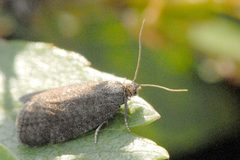
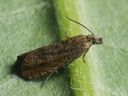
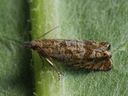
Small with wingspan of 12–16 mm. Forewings olive-brown with silvery lines. Overall coloration relatively inconspicuous, consistent with the 'Dingy Drill'.
Habitat
Rough meadows and waysides. Occupies open, disturbed with herbaceous vegetation.
Distribution
Widespread in Europe. Recorded from Belgium (Flemish and Walloon regions, including Antwerp province) and across the continent.
Seasonality
fly from April to June. Single per year ().
Diet
Larvae feed primarily on roots of Asteraceae, especially Tanacetum vulgare (tansy), other Tanacetum , and Leucanthemum. do not feed.
Host Associations
- Tanacetum vulgare - larval primary
- Tanacetum - larval other in
- Leucanthemum - larval secondary
Life Cycle
One per year. Larvae develop in roots of plants. occurs in soil or within root material. emerge in spring.
Behavior
are or . Larvae are root-borers, feeding internally on plant roots.
Ecological Role
Root herbivore on Asteraceae. Contributes to nutrient cycling in meadow through herbivory and soil interaction.
Human Relevance
Minor potential as pest of ornamental Asteraceae. No significant economic impact documented.
Similar Taxa
- Dichrorampha alpestranaSimilar wing pattern and size; historically confused but separable by genital and distribution (alpine vs. lowland meadows)
- Dichrorampha montananaFormerly considered with D. alpestrana; D. sedatana distinguished by association and subtle morphological differences
More Details
Taxonomic History
described by Busck in 1906. Part of a with complex species boundaries resolved through integrative combining and molecular data.
Research Significance
Exemplifies the hidden diversity within European tortricid moths, where cryptic have been revealed through detailed morphological and genetic study.