
Cydia gallaesaliciana
(Riley, 1881)
Willow Gall Moth
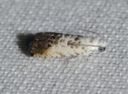
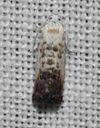
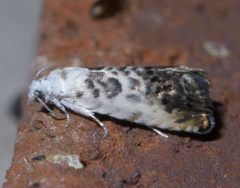
A small tortricid known for inducing galls on willow (Salix) . The was described by Riley in 1881 and has been recorded from the northeastern United States, particularly Vermont. Like other Cydia species, it develops through complete with larval stages associated with plant tissue modification.
Pronunciation
How to pronounce Cydia gallaesaliciana: /ˈsɪdiə ɡæliˌɛsælɪˈsiːænə/
These audio files are automatically generated. While they are not always 100% accurate, they are a good starting point.
Images
Habitat
Associated with willow (Salix) in temperate environments where gall formation occurs.
Distribution
Recorded from Vermont, United States. Distribution records are sparse, suggesting either restricted range or undercollection.
Host Associations
- Salix - gall inducerForms galls on willow; specific gall and location on plant not documented in available sources
Ecological Role
Induces galls on willow, potentially affecting plant growth and serving as a food source for or other natural enemies.
Similar Taxa
- Cydia latiferreanaBoth are Cydia in Tortricidae, but C. latiferreana is a filbertworm pest of pomegranate and other , not a gall inducer on willow
- Cydia pomonellaBoth share Cydia and tortricid , but codling moth is a global apple/pear pest with different and economic importance
Sources and further reading
- BugGuide
- GBIF taxonomy match
- iNaturalist taxon
- NCBI Taxonomy
- Catalogue of Life
- Blacklighting at the Bohart: They Saw the Light | Bug Squad
- What Will You See at Bohart Museum Open House | Bug Squad
- Like a Moth to a Flame: Moth Night at Bohart Museum of Entomology | Bug Squad
- Oh, What a (Moth) Night! | Bug Squad
- Line Trapping: A Promising Method for More Accurate Pest Monitoring
- Odorant Receptor Gene in Codling Moth Also Affects Egg Production