
Zeiraphera canadensis
Mutuura & Freeman, 1967
spruce bud moth
Zeiraphera canadensis, the spruce bud , is a small tortricid moth native to North America. The is , with laid on white spruce in July that overwinter and hatch the following May. Larvae feed within spruce buds and shoots, causing deformation and growth reduction in trees. The species is recognized as a significant pest of white spruce plantations, particularly in Canada and the northeastern United States.
Pronunciation
How to pronounce Zeiraphera canadensis: /ˌzaɪrəˈfɪərə ˌkænəˈdɛnsɪs/
These audio files are automatically generated. While they are not always 100% accurate, they are a good starting point.
Identification
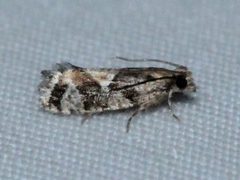
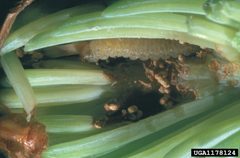
Distinguished from Zeiraphera ratzeburgiana by the presence of an anal comb in Z. canadensis (absent in Z. ratzeburgiana). are small, dark brown tortricid moths with rapid, fluttering . Larvae are found within white spruce buds and shoots.
Images
Appearance
are small brown with a wingspan of approximately 12–13 mm (about half an inch). Larvae are approximately 10 mm in length, brown in early instars and light yellow by the fourth instar.
Habitat
Associated almost exclusively with white spruce (Picea glauca) trees. Found in spruce-dominated forests and plantations, particularly in cooler northern temperate regions. Larvae develop within bursting spruce buds; remain in the tree .
Distribution
North America: Canada (New Brunswick, Quebec, Alberta, Manitoba, Saskatchewan) and northeastern United States (particularly Maine). Distribution is limited to regions with high densities of white spruce.
Seasonality
active from approximately June to July. laid in July, until May of the following year. Larvae present May–June. occurs late May. activity is temperature-dependent, with adults flying higher above after sunset and remaining lower in canopy during warmer daytime conditions.
Diet
Larvae feed on white spruce (Picea glauca). First and second instar larvae feed inside spruce needles; third and fourth instar larvae consume spruce shoots, destroying cortical tissue.
Host Associations
- Picea glauca - primary essential for oviposition, larval development, and mating
Life Cycle
(one per year). laid in July at base of spruce shoots in clusters of up to 7; overwinter until May. Four larval instars: first–second instars feed within needles, third–fourth instars feed on shoots for up to six weeks. drop to ground, spin silk cocoons using ground materials, and pupate on ground for approximately 10 days. emerge and mate within first night post-.
Behavior
exhibit rapid, fluttering . Mating occurs between 10 pm and 4 am. Males secrete accessory gland proteins that can inhibit female re-mating. Both sexes mate multiply (polygamous). Adults are sensitive to temperature: fly low in tree during warm daytime periods, higher above canopy after sunset when temperatures drop. Females use sensillae on ovipositor and receptors on feet to test oviposition sites.
Ecological Role
Herbivore of white spruce. Acts as prey for (unidentified) and including Trichogramma wasps. Defoliation and bud deformation alter tree growth form but do not typically cause tree mortality.
Human Relevance
Recognized as a pest of white spruce plantations since 1980. Larval feeding deforms buds, stunts growth, and reduces wood quality. Does not typically kill trees but causes multiple leaders and crown deformation. Control methods under investigation include traps (using E-9-tetradecenyl-acetate) and targeted applications in late July (oviposition) and early May ( hatch). Planting of white spruce is also being explored.
Similar Taxa
- Zeiraphera ratzeburgianaVery similar ; distinguished definitively by presence of anal comb in Z. canadensis (absent in Z. ratzeburgiana)
Sources and further reading
- BugGuide
- Wikipedia
- GBIF taxonomy match
- iNaturalist taxon
- NCBI Taxonomy
- Catalogue of Life
- Bug Eric: Spider Sunday: Red Velvet Jumper
- Bug Eric: True Bug Tuesday: Mirid plant bug
- Carried with the wind: mass migration of Larch Budmoth to the Russian High Arctic | Blog
- Snake Road | Beetles In The Bush
- Melanthiaceae | Beetles In The Bush