Rhyacionia adana
Heinrich, 1923
Adana tip moth
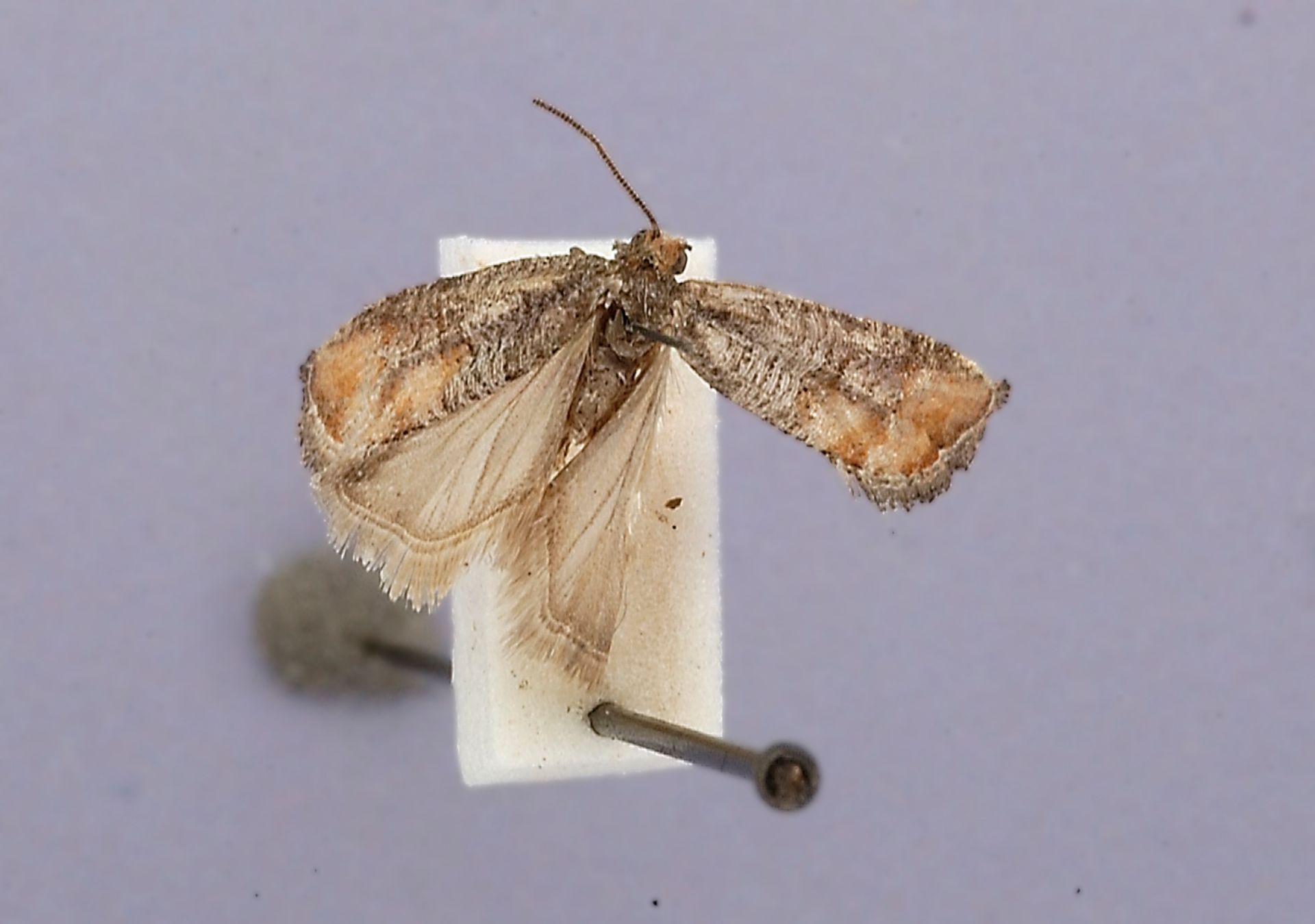
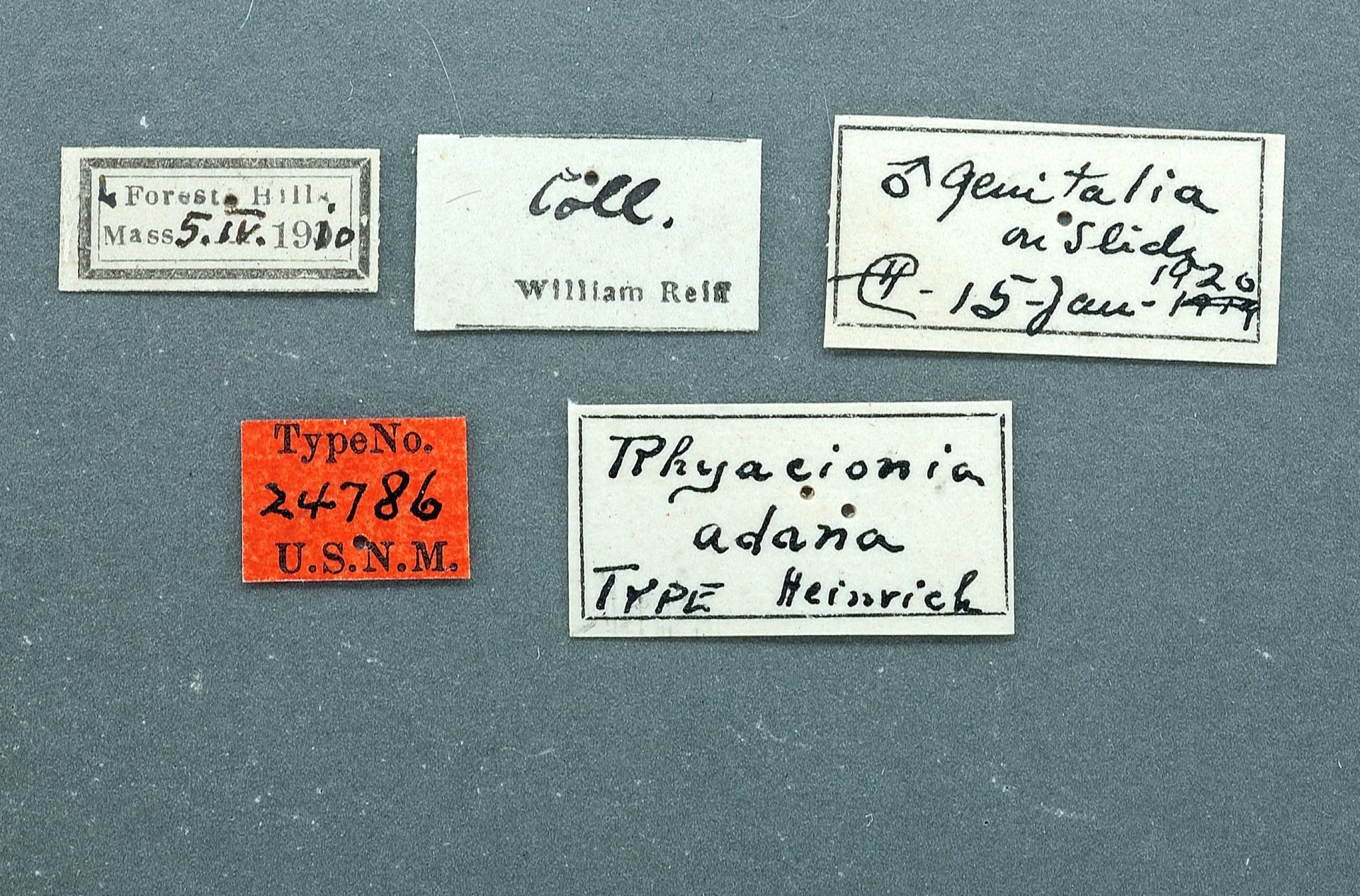
adana is a small tortricid known as the Adana tip moth. It was described in 1923 but remained overlooked for decades because its damage to pine trees was confused with that of the European pine shoot moth (R. buoliana). The is a documented pest of young pine plantations in northeastern North America.
Pronunciation
How to pronounce Rhyacionia adana: /ˌraɪəˈkoʊniə əˈdænə/
These audio files are automatically generated. While they are not always 100% accurate, they are a good starting point.
Identification
The was historically confused with buoliana (European pine shoot ) based on similar damage patterns to pine shoots. Accurate identification requires examination of or larval characteristics; the two species can be distinguished by careful taxonomic study, though specific distinguishing field marks are not detailed in available sources.
Images
Appearance
Small with a wingspan of approximately 17 mm. As a member of the Olethreutinae , it possesses the characteristic bell-shaped wing posture at rest typical of tortricid moths. Specific coloration and pattern details are not documented in available sources.
Habitat
Young pine plantations, particularly in southern Ontario and the northeastern United States.
Distribution
Northeastern North America: Massachusetts, Pennsylvania, Virginia, Michigan, Wisconsin (USA), and Ontario (Canada).
Seasonality
One per year. The seasonal history was first studied systematically beginning in 1957; specific timing of and larval activity periods are not detailed in available sources.
Diet
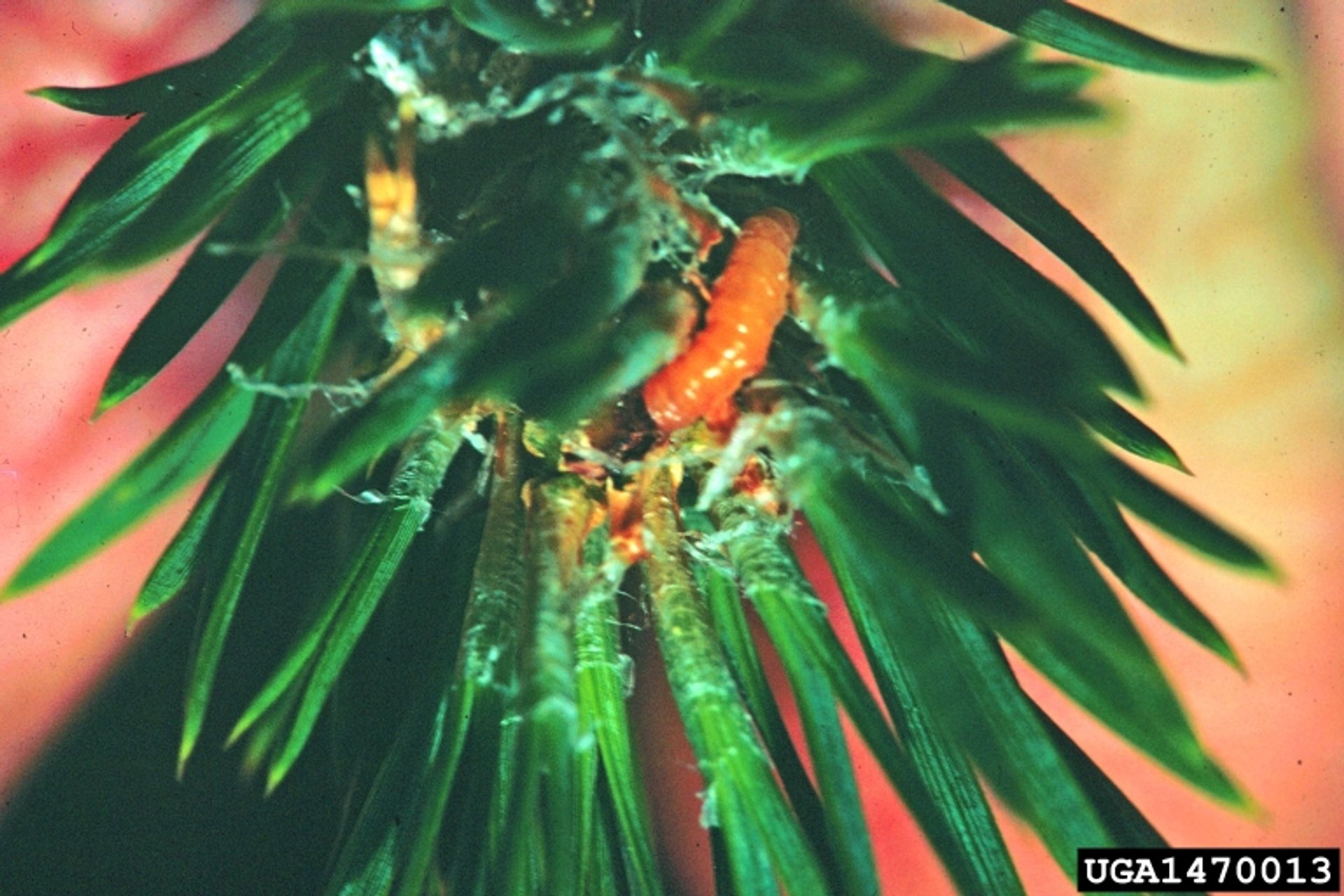
Larvae feed on various Pinus (pine) .
Host Associations
- Pinus - larval food plantVarious pine ; specific range not fully documented
Life Cycle
One per year (). , larval instars, details, and stage are not specified in available sources.
Behavior
Larvae feed within pine shoots, causing damage that was historically attributed to the European pine shoot . This confusion delayed recognition of the as a distinct pest.
Ecological Role
Pest causing damage to young pine plantations. The larval feeding damage to pine shoots can affect tree growth and form.
Human Relevance
Economic pest of pine plantations. have been documented as common in young pine plantations, though the was overlooked until 1959 when plants were first recorded.
Similar Taxa
- Rhyacionia buolianaSimilar damage to pine shoots caused historical confusion between the two ; R. adana damage was mistakenly attributed to R. buoliana (European pine shoot )
Misconceptions
Tree damage from R. adana was long misattributed to R. buoliana, leading to the being overlooked despite common in Ontario pine plantations.
More Details
Taxonomic history
Described by Heinrich in 1923, but plants were not recorded until 1959 (Martin, 1959). The first comprehensive study began in 1957 in Ontario.