
Pseudexentera
Heinrich, 1940
oak olethreutid leafroller, aspen leafroller, apple leafroller
Species Guides
18- Pseudexentera costomaculana
- Pseudexentera cressoniana(Shagbark Hickory Leafroller Moth)
- Pseudexentera faracana(American Chestnut Leafroller)
- Pseudexentera habrosana
- Pseudexentera haracana
- Pseudexentera hodsoni
- Pseudexentera kalmiana
- Pseudexentera knudsoni
- Pseudexentera mali(pale apple leafroller)
Pseudexentera is a of tortricid moths in the Olethreutinae. in this genus are early-season fliers whose larvae function as defoliators of economically important trees. Three species are of particular economic significance: P. spoliana (oak olethreutid leafroller) on oaks, P. oregonana (aspen leafroller) on aspens, and P. mali on apples. Female have been identified for these species and are species-specific, with no cross-attraction occurring between species.
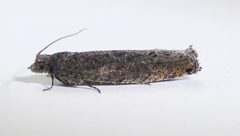
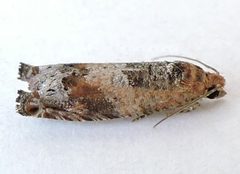
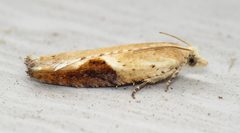
Pronunciation
How to pronounce Pseudexentera: //suːdˌɛk.sənˈtɛr.ə//
These audio files are automatically generated. While they are not always 100% accurate, they are a good starting point.
Identification
can be distinguished from similar tortricid by genital ; males of economically important are attracted to specific synthetic lures (Z10-16:Ac for P. spoliana, Z8-14:Ac for P. oregonana, Z,Z-8,10-16:Ac for P. mali) that do not cross-attract other Pseudexentera species.
Images
Habitat
Oak forests, aspen forests, and apple orchards, corresponding to associations of constituent .
Distribution
North America; recorded from Vermont and other United States localities.
Seasonality
Early-season period; active in spring.
Host Associations
- Quercus - larval P. spoliana
- Populus - larval P. oregonana
- Malus - larval P. mali
Behavior
Males are attracted to -specific female components; addition of secondary components to primary attractants does not enhance male attraction in P. spoliana or P. oregonana.
Ecological Role
Larval defoliators of deciduous trees; can cause economic damage to oak, aspen, and apple.
Human Relevance
Three are economically important forest and orchard pests; have been identified for monitoring and potentially managing .
Similar Taxa
- Other OlethreutinaeSimilar general ; distinguished by genitalia and -specific responses
More Details
Pheromone Chemistry
-specific components identified: P. spoliana females produce Z10-16:Ac as primary component with 16:Ac, Z10-16:OH, 16:OH, and possibly Z12-16:Ac as minor components; P. oregonana females produce Z8-14:Ac with Z8-14:OH and possibly 14:Ac; P. mali females produce Z,Z-8,10-16:Ac. lures are not cross-attractive between these species.