
Epinotia cinereana
(Haworth, 1811)
Grey Aspen Bell
Epinotia cinereana is a Holarctic tortricid in the tribe Eucosmini, resurrected from synonymy with E. nisella in 2012 based on , genital , and differences. It occurs across Europe and North America, with moderate intraspecific genetic variation between continents but no correlated morphological differences. The was previously hidden under the name E. nisella, a highly variable species with which it had been conflated for decades.
Pronunciation
How to pronounce Epinotia cinereana: /ɛ.pɪˈnoʊ.ti.ə ˌsɪ.nɪˈriː.ə.nə/
These audio files are automatically generated. While they are not always 100% accurate, they are a good starting point.
Identification
Distinguished from E. nisella by barcode sequences forming a distinct genetic cluster, and by differences in male and female genitalia structure. Forewing color pattern is not a reliable distinguishing character due to high variability in both . North American specimens previously identified as Proteopteryx criddleana represent this species.
Images
Appearance
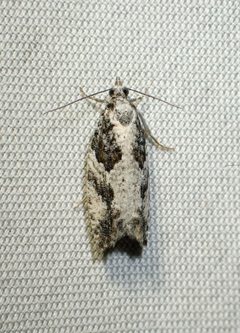
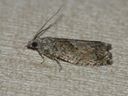
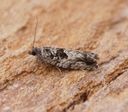
are small tortricid moths with forewings showing variable coloration. Male and female genitalia show distinct structural differences from the closely related E. nisella, which was the primary basis for their separation as distinct . The specific epithet 'cinereana' refers to ashen or grey coloration.
Distribution
Holarctic: Europe (including Belgium, with records from Liège and Luxembourg provinces) and North America (including Alberta, Canada). The has been documented on both continents with moderate genetic divergence between regional .
Similar Taxa
- Epinotia nisellaFormerly considered ; distinguished by barcodes, genital , and characteristics. Both are highly variable in forewing coloration, making external appearance unreliable for separation.
More Details
Taxonomic history
Epinotia cinereana was described by Haworth in 1811 as Tortrix cinereana, but was subsequently synonymized with E. nisella for several decades. A 2012 revision based on , genital , and data resurrected it as a valid , synonymizing North American Proteopteryx criddleana and European Tortrix petrana with it.
Sources and further reading
- BugGuide
- GBIF taxonomy match
- iNaturalist taxon
- NCBI Taxonomy
- Catalogue of Life
- My Publications | Beetles In The Bush
- Epinotia cinereana (Haworth, 1811) bona sp., a Holarctic tortricid distinct from E. nisella (Clerck, 1759) (Lepidoptera: Tortricidae: Eucosmini) as evidenced by DNA barcodes, morphology and life history