
Conchylodes ovulalis
Guenée, 1854
Zebra Conchylodes Moth
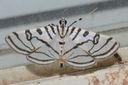
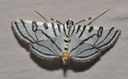
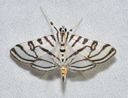
Conchylodes ovulalis, commonly known as the Zebra Conchylodes , is a small crambid moth notable for its striking black-and-white striped wing pattern. The was described by Guenée in 1854 and occurs across a broad range from the eastern United States through Mexico and Central America to northern South America. are frequently attracted to artificial light sources and are most commonly encountered during summer months. The distinctive zebra-striped coloration is presumed to function in camouflage, though experimental evidence for this is lacking.
Pronunciation
How to pronounce Conchylodes ovulalis: /kɒnˈkaɪloʊdiːz ˌoʊvjuˈleɪlɪs/
These audio files are automatically generated. While they are not always 100% accurate, they are a good starting point.
Identification
The Zebra Conchylodes is readily distinguished from most other North American crambid moths by its distinctive black-and-white zebra-striped wing pattern. The only other crambid with similar striping in its range is Conchylodes diphteralis, which has more irregular, less uniform banding and typically shows some brownish or ochreous tones rather than clean black-and-white. Other striped moths in different (such as the zebra swallowtail or zebra longwing) are much larger and belong to different orders. The moth's small size, crambid resting posture, and clean geometric striping separate it from superficially similar beetles like Typocerus zebra.
Images
Appearance
Small with wingspan approximately 15-20 mm. Forewings and hindwings display bold black-and-white longitudinal striping pattern, with alternating dark and light bands running from base to apex. Wing margins are relatively straight. Body is slender and similarly patterned with dark and pale banding. are and relatively long. At rest, wings are held tent-like over the body or slightly spread, displaying the characteristic striped pattern.
Habitat
Occurs in a variety of wooded and semi-open including mature deciduous forests, mixed woodlands, forest edges, and riparian corridors. are frequently found near buildings and artificial light sources in rural and suburban areas. Larval habitat requirements are poorly documented but likely involve herbaceous vegetation in moist woodland settings.
Distribution
Eastern and central United States from Pennsylvania south to Florida, west to Arizona; south through Mexico and Central America ( Rica) to Colombia in northern South America. The shows a broad latitudinal range across the Nearctic and northern Neotropical regions.
Seasonality
are active primarily during summer months, with peak activity from June through August in temperate regions. Multiple per year are likely in southern portions of the range. Adults are strongly attracted to ultraviolet and mercury vapor lights, making them frequent visitors to light stations during evening hours.
Behavior
are and strongly attracted to artificial light sources, frequently appearing at light stations in wooded areas. They are relatively sedentary when at rest during daylight hours, often found on vertical surfaces such as tree trunks, walls, or window screens. activity peaks during warm, humid evenings. The ' distinctive striped pattern is presumed to provide camouflage when resting on bark or among dappled light and shadow in forest environments, though this hypothesis lacks experimental validation.
Ecological Role
likely serve as prey for including bats, night-flying birds, and predatory insects. Their attraction to lights makes them vulnerable to by spiders and other that hunt around artificial light sources. Larval is poorly known; caterpillars presumably feed on herbaceous plants and serve as prey for and other natural enemies.
Human Relevance
Primarily of interest to lepidopterists and naturalists due to its distinctive appearance. Frequently photographed by enthusiasts at light stations. Not known to be of economic importance. The serves as an accessible example of convergent zebra-striped coloration for educational purposes in discussions of animal coloration and mimicry.
Similar Taxa
- Conchylodes diphteralisSimilar crambid with striped pattern, but shows more irregular, less geometric banding with brownish or ochreous tones rather than clean black-and-white; also occurs in overlapping range
- Typocerus zebraZebra longhorn beetle with similar black-and-white striping, but much larger (12-25 mm body length), has hardened rather than scaled wings, and belongs to a different order (Coleoptera)
- Protographium marcellusZebra swallowtail shares reference and striped pattern, but is much larger, has clubbed , and is rather than
- Heliconius charithoniaZebra longwing has similar striping but is larger, has different wing shape, and possesses chemical defenses advertised by its pattern (aposematism) rather than presumed camouflage
More Details
Taxonomic history
Originally described as Spilomela ovulalis by Guenée in 1854, later transferred to the Conchylodes. The has remained relatively stable in its taxonomic placement within the Spilomelinae of Crambidae.
Etymology
The specific epithet 'ovulalis' likely refers to the -shaped (oval) markings or the overall oval outline of the wings when at rest. The 'Zebra Conchylodes ' directly references the distinctive striped pattern.
Research needs
The larval , including plant associations and stages, remains undocumented. The functional significance of the zebra-striped pattern has not been experimentally tested in this .