
Duponchelia
Zeller, 1847
European pepper moth (D. fovealis)
Species Guides
1- Duponchelia fovealis(European Pepper Moth)
Duponchelia is a of snout moths ( Crambidae) established by Zeller in 1847. The genus contains at least five described , with Duponchelia fovealis being the most economically significant and widely studied. D. fovealis, commonly known as the European pepper , has become a major pest of protected crops, particularly strawberries, across multiple continents. The genus is characterized by its association with diverse plants and its importance in agricultural pest management research.
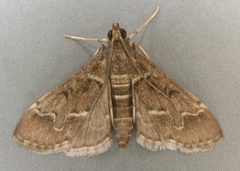
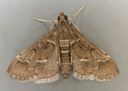
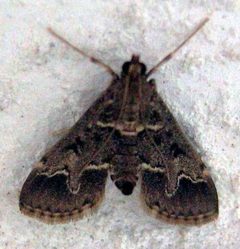
Pronunciation
How to pronounce Duponchelia: //djuːpɒnˈkeɪliə//
These audio files are automatically generated. While they are not always 100% accurate, they are a good starting point.
Images
Distribution
The Duponchelia has been recorded across multiple continents. D. fovealis specifically occurs in: Africa (Algeria, Botswana, Cameroon, Cabo Verde, Democratic Republic of the Congo, Egypt, Eswatini, Kenya, Liberia, Madagascar, Malawi, Mauritania, Morocco, Mozambique, Namibia, Nigeria, Reunion, Seychelles, South Africa, Tanzania, Western Sahara, Zimbabwe); Asia (Iraq, Israel, Oman, Pakistan, Saudi Arabia, South Korea, Syria, Turkey, United Arab Emirates, Yemen); Europe (widespread including Belgium, Bulgaria, Croatia, Cyprus, Czechia, Denmark, Finland, France, Germany, Greece, Hungary, Italy, Malta, Netherlands, North Macedonia, Norway, Poland, Portugal, Slovenia, Spain, Sweden, United Kingdom); North America (Canada, Mexico, USA); and South America (Brazil).
Human Relevance
in this , particularly D. fovealis, are significant agricultural pests. D. fovealis has become a key pest of strawberry production in Brazil and other regions, causing severe damage to leaves and fruits. The species is and has been documented feeding on plants from at least 47 . Management strategies include using Trichogramma , -based monitoring, and selective applications. Research has focused on compatibility between fungi and parasitoids for .
Sources and further reading
- BugGuide
- Wikipedia
- GBIF taxonomy match
- iNaturalist taxon
- NCBI Taxonomy
- Catalogue of Life
- Duponchelia fovealis . [Distribution map].
- Duponchelia fovealis Zeller. [Distribution map].
- Detección con feromonas de Duponchelia fovealis Zeller en fincas freseras de Costa Rica Detection of Duponchelia fovealis Zeller with pheromones in strawberry farms of Costa Rica
- Dispersal Capacity of Trichogramma for the Management of Duponchelia fovealis
- Differential feeding on ornamental plants by Duponchelia fovealis (Lepidoptera: Crambidae) larvae
- Seletividade de inseticidas reguladores de crescimento e botânico no parasitismo de três espécies de Trichogramma em ovos de Duponchelia fovealis Zeller (Lepidoptera: Crambidae)
- Functional Response of Two Egg Parasitoids of Trichogramma (Hymenoptera: Trichogrammatidae) Genre on Duponchelia fovealis Zeller (Lepidoptera: Crambidae) Eggs
- Duponchelia fovealis (Lepidoptera: Crambidae) and its Parasitoid in Cultivated Berries in Guanajuato, Mexico
- Trichogramma galloi and Trichogramma pretiosum for the management of Duponchelia fovealis (Lepidoptera: Crambidae) in strawberry plants
- Compatibility between Entomopathogenic Fungi and Egg Parasitoids (Trichogrammatidae): A Laboratory Study for Their Combined Use to Control Duponchelia fovealis
- The genome sequence of the European Pepper moth, Duponchelia fovealis (Zeller, 1847) (Lepidoptera: Crambidae).