
Hodebertia testalis
(Fabricius, 1794)
Incolorous Pearl
Hodebertia testalis, known as the Incolorous Pearl, is a small crambid found primarily in tropical regions with occasional vagrant records reaching parts of Europe. It is the sole in its , making Hodebertia . The species was first described by Fabricius in 1794 and has undergone taxonomic reclassification, with some sources placing it in the genus Pyrausta.
Pronunciation
How to pronounce Hodebertia testalis: /hoʊdəˈbɛrtiə tɛsˈtælɪs/
These audio files are automatically generated. While they are not always 100% accurate, they are a good starting point.
Identification
Distinguished from related crambid by its notably pale, 'incolorous' wing appearance with reduced patterning. The Hodebertia can be separated from the closely related Pyrausta (where this has sometimes been placed) by genitalic characters. Vagrant individuals in Europe may be confused with other small pale crambids, but the combination of extremely plain wings and tropical origin of the specimen should prompt further examination.
Images
Appearance
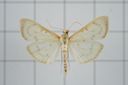
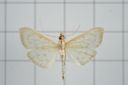
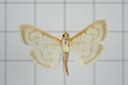
Small with pale, relatively unmarked wings that give rise to its 'Incolorous Pearl'. As a crambid moth, it possesses the characteristic slender body and relatively narrow wings typical of the . Specific wing pattern details are not well documented in available sources.
Habitat
Tropical ; specific microhabitat preferences are not well documented. Occasional records from Europe suggest ability to survive in temperate conditions when displaced, though breeding in these areas is not established.
Distribution
Primarily tropical distribution across multiple continents. Ranges north to parts of Europe as a vagrant or occasional transient, though not established as a breeding resident there. Specific native range boundaries within the tropics are not precisely defined in available literature.
Seasonality
Not documented in available sources; likely active year-round in tropical portions of its range.
Behavior
Not documented in available sources.
Ecological Role
Presumed to function as a herbivore in larval stages and as , consistent with other crambid , though specific ecological interactions are not documented.
Human Relevance
Minimal direct significance; occasional interest from European lepidopterists due to its status as a rare vagrant from tropical regions.
Similar Taxa
- Pyrausta speciesH. testalis has been classified in Pyrausta by some authorities (GBIF lists it as a synonym of Pyrausta testalis); separation requires examination of genitalic
- Other small pale CrambidaePlain wing coloration resembles various crambid ; dissection or molecular analysis may be required for definitive identification of vagrant specimens
More Details
Taxonomic uncertainty
The exhibits taxonomic instability, with GBIF recognizing it as a synonym of Pyrausta testalis while NCBI and other sources maintain it in the Hodebertia. This reflects ongoing debate about generic boundaries within the Crambidae.
Vagrant records
European records appear to represent long-distance events rather than established , given the ' primarily tropical distribution.