
Hodebertia
Leraut, 2003
Species Guides
1- Hodebertia testalis(Incolorous Pearl)
Hodebertia is a of crambid erected by Leraut in 2003. Its sole , Hodebertia testalis, is a tropical micro-moth with occasional vagrant records in Europe. The genus is notable for its distinctive wing pattern and larval association with milkweed relatives and hibiscus.
Pronunciation
How to pronounce Hodebertia: /hoʊdɪˈbɛrtiə/
These audio files are automatically generated. While they are not always 100% accurate, they are a good starting point.
Identification
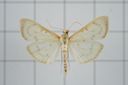
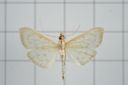
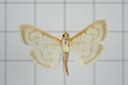
Distinguished from similar white crambid by the paired ragged brown arcs across wings—most and related lack this specific double-arc pattern. European records should be verified against other vagrant Crambidae such as Udea or Hellula , which differ in wing pattern and often show more uniform coloration or different marking arrangements.
Images
Habitat
Tropical and subtropical regions; larvae develop on plants in disturbed and natural . European records represent transient vagrants rather than established .
Distribution
Native range: Democratic Republic of Congo, Kenya, Madagascar, Mozambique, Réunion, Saint Helena, Somalia, South Africa, Zambia, Australia (Queensland), India, Indonesia, Japan, Saudi Arabia, Sri Lanka, Syria, Taiwan, Yemen. Vagrant records: Croatia, England (Isles of Scilly), France, Greece, Italy, Portugal, Spain, Switzerland.
Diet
Larvae feed on Hibiscus, Gomphocarpus, and Asclepias , including Asclepias curassavica. feeding habits not documented.
Host Associations
- Hibiscus - larval food plant-level association
- Gomphocarpus - larval food plant-level association
- Asclepias - larval food plant-level association; includes Asclepias curassavica
Life Cycle
Complete with documented larval and stages. details and number of per year not recorded.
Behavior
are . Long-distance capability evidenced by vagrant records across multiple continents including trans-oceanic of Saint Helena and occasional European appearances.
Ecological Role
Larval herbivore on plants in Apocynaceae Asclepiadoideae (milkweeds) and Malvaceae (hibiscus). Potential role in plant-insect interactions within tropical .
Human Relevance
Occasional minor pest potential on ornamental Asclepias and Hibiscus in . Scientific interest due to biogeographic pattern combining widespread tropical distribution with rare northward vagrancy.
Similar Taxa
More Details
Taxonomic history
erected by Leraut in 2003, making it a relatively recent taxonomic recognition within Crambidae.
Biogeographic significance
The combination of widespread Afro-tropical distribution, Indian Ocean island records (Réunion, Saint Helena), and sporadic Palearctic vagrancy suggests substantial capability for a small .