
Hellula
Guenée, 1854
cabbage webworm, cabbage centre grub, cabbage budworm moth
Species Guides
4- Hellula aqualis(Brassica Webworm)
- Hellula kempae(Kemp's hellula moth)
- Hellula phidilealis(Cabbage Budworm Moth)
- Hellula rogatalis(Cabbage Webworm)
Hellula is a of in the Crambidae, established by Achille Guenée in 1854. The genus includes approximately ten described distributed worldwide in warm regions. Several species are significant agricultural pests, particularly of brassica crops. The most economically important species, Hellula undalis () and H. hydralis (cabbage centre ), cause substantial damage to cabbage and related crops through larval feeding on stems and leaves.
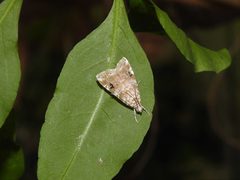
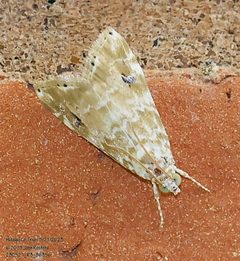
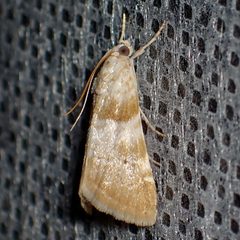
Pronunciation
How to pronounce Hellula: /hɛˈluːla/
These audio files are automatically generated. While they are not always 100% accurate, they are a good starting point.
Identification
Identification to level requires examination of genitalia and wing pattern details. are small to medium-sized crambid with relatively narrow wings. Larvae can be distinguished from other crambid pests by their habit of boring into cabbage stems and creating silk webbing around feeding sites.
Images
Habitat
Agricultural and cultivated areas associated with brassica crops; also present in natural supporting wild cruciferous plants. occur in warm temperate to tropical regions.
Distribution
Worldwide in warm regions; originated in Europe; established in Asia (India, Malaysia, Vietnam), Africa, Australia, and the Americas. Distribution records from GBIF include Denmark and Sweden.
Diet
Larvae feed on brassicas and other cruciferous plants ( Brassicaceae). Specific feeding include boring into stems of growing shoots and mining leaves and leaf stems.
Host Associations
- brassicas - larval food plantprimary
- cruciferous plants - larval food plant Brassicaceae
- cabbage - larval food plantmajor agricultural
Life Cycle
Larvae progress through multiple instars. Early instars bore into stems of growing shoots. Mature larvae mine leaves and leaf stems, creating silk webbing around the feeding area that becomes filled with . occurs within the webbed shelter or in soil.
Behavior
Larvae construct silk webs around feeding areas, which accumulate waste material. Feeding damage during the pre-heading stage of cabbage development can cause plant death or render unmarketable.
Ecological Role
Significant agricultural pest causing severe crop damage in brassica . have been documented in multiple countries.
Human Relevance
Major pest of cabbage and related brassica crops worldwide. Economic impact includes direct yield loss and reduced marketability of produce. Subject of genomic research for pest management applications.
Similar Taxa
- OebiaHistorically related ; one extinct formerly placed in Oebia now recognized as part of Hellula lineage
- other Crambidae stem borersSimilar larval feeding habits on crop plants; distinguished by specific association with brassicas and characteristic web-building
More Details
Genomic Resources
De novo transcriptome assembly for H. undalis has been generated using Illumina NovaSeq6000 technology, producing 30,451 contigs. The assembly includes 1,913 potential SSR markers for genetic studies and identified 391 unique orthologous gene compared to Spodoptera .