Chrysoteuchia topiarius
Zeller, 1866
Topiary Grass-veneer, Subterranean Sod Webworm, Cranberry Girdler
Chrysoteuchia topiarius is a small crambid with a wingspan of 17–20 mm, distributed across most of North America. are active from late June to early August in a single . The is known by multiple reflecting its larval habits: subterranean refers to its grass-feeding larvae that live in silk-lined tunnels, while cranberry girdler indicates damage to cranberry plants. The species was first described by Philipp Christoph Zeller in 1866.
Pronunciation
How to pronounce Chrysoteuchia topiarius: //ˌkrɪsoʊˈteʊkiə ˌtoʊpiˈɛəriəs//
These audio files are automatically generated. While they are not always 100% accurate, they are a good starting point.
Identification
Distinguished from other Chrysoteuchia by the specific pattern of forewing streaking and geographic range; C. culmella is restricted to the Palearctic. Within North American Crambinae, the combination of small size (17–20 mm), pale brown streaked forewings, and late June–early August period helps separate it from similar grass-veneer moths. Genitalia examination may be required for definitive identification from .
Images
Appearance
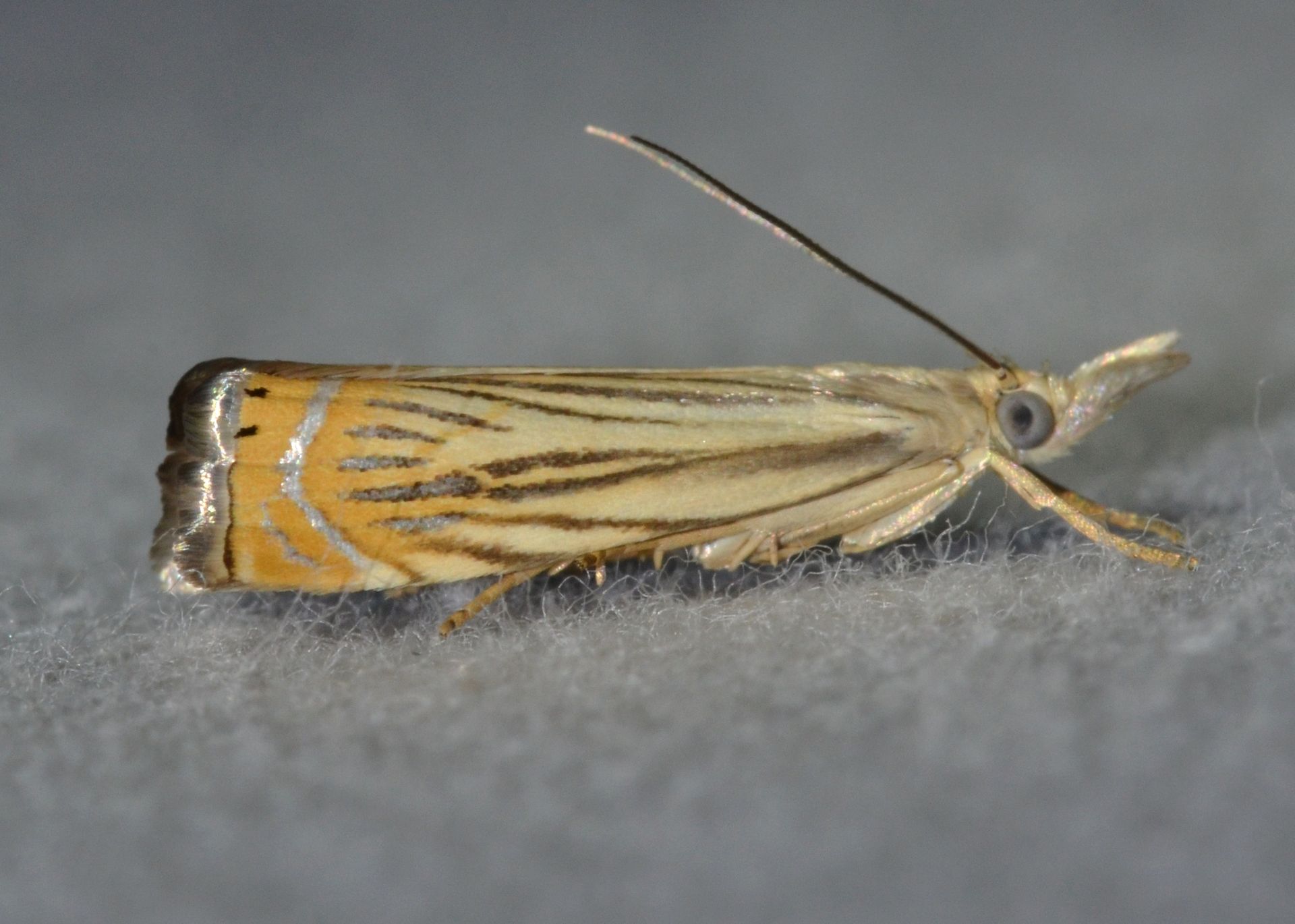
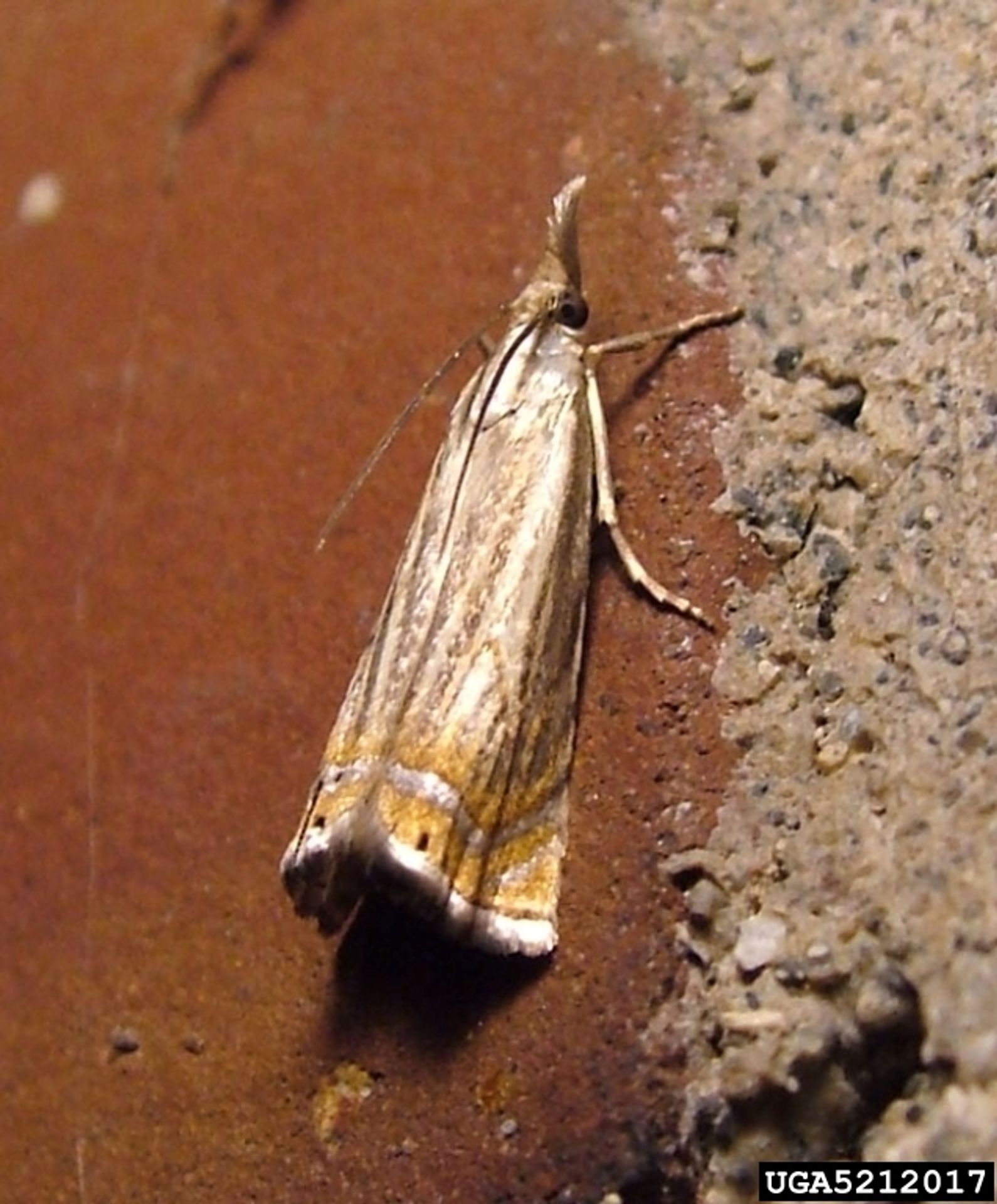
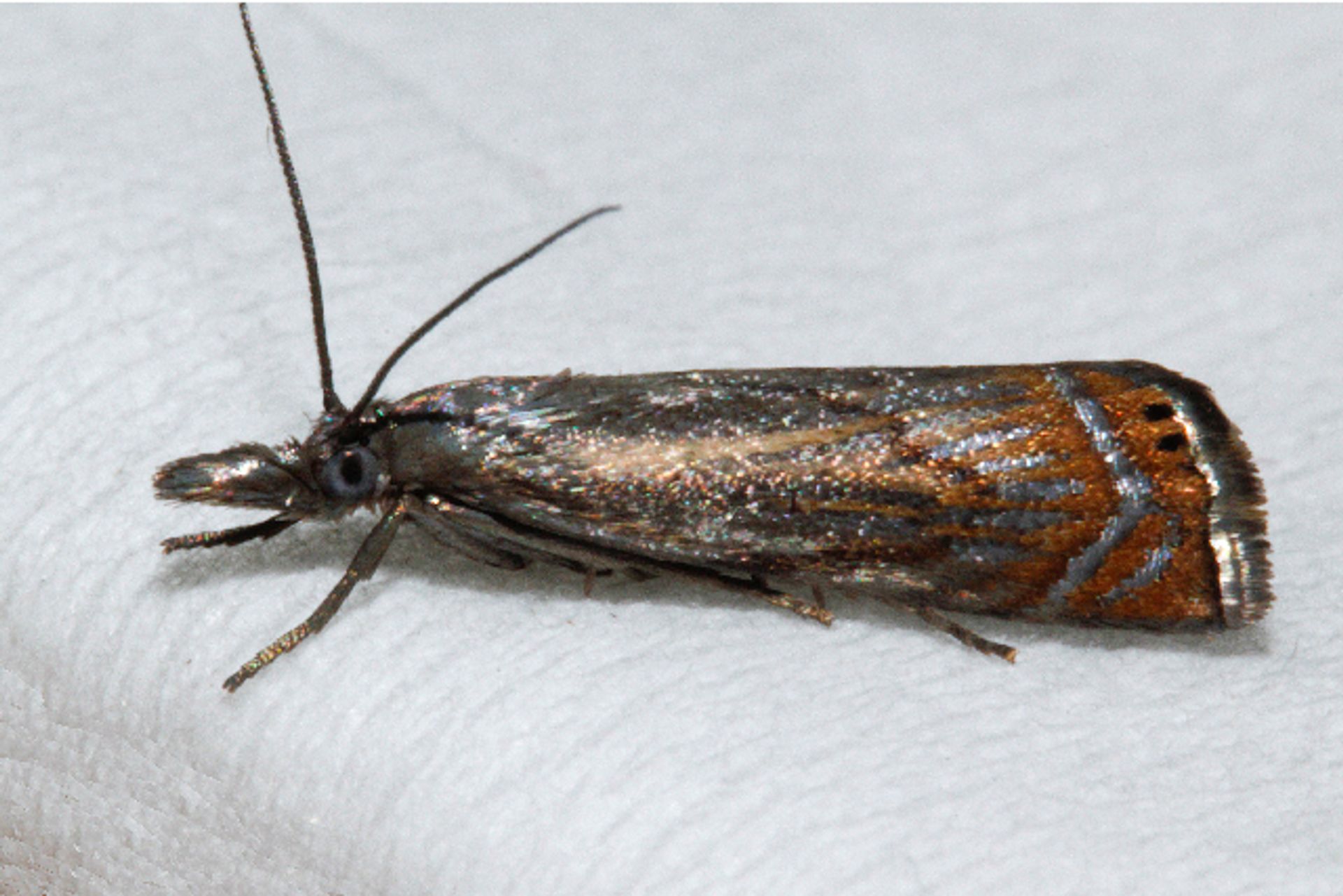
Small with wingspan of 17–20 mm. Forewings are narrow and elongated, typically pale brown to straw-colored with darker longitudinal streaking. Hindwings are lighter, often whitish or pale gray. Body is slender with long, thread-like . Labial palps project forward, giving a pointed facial appearance typical of grass-veneer moths.
Habitat
Grass-dominated including lawns, meadows, pastures, cranberry bogs, and agricultural fields. Larval habitat is subterranean or within thatch layer, in silk-lined tunnels at or below soil surface.
Distribution
Most of North America. Documented from Canada (Alberta, Manitoba, Saskatchewan) and the United States (including Vermont).
Seasonality
active late June to early August. One per year ().
Diet
Larvae feed on a wide range of plants, primarily grasses (Poaceae).
Host Associations
- Poaceae - larval food plantprimary
Life Cycle
with one per year. Larval stage occurs in subterranean silk-lined tunnels or within grass thatch. presumably occurs in soil or within larval tunnel, though details are not well documented.
Behavior
Larvae construct silk-lined tunnels in soil or thatch and feed from within these shelters. are and attracted to light.
Ecological Role
Larval herbivore in grassland . Can reach pest status in managed turf and cranberry .
Human Relevance
Economic pest of lawns, golf courses, and cranberry production. Larval feeding damages roots and crowns of grasses, causing brown patches in turf. The "cranberry girdler" refers to damage in cranberry bogs. Control measures may be required in managed landscapes.
Similar Taxa
- Chrysoteuchia culmellaSimilar appearance but Palearctic distribution only; does not overlap with C. topiarius in North America
- Other Crambinae grass-veneer mothsSimilar size and use; distinguished by period, wing pattern details, and genitalia
More Details
Etymology
The specific epithet "topiarius" refers to topiary, the art of clipping shrubs into ornamental shapes, alluding to the 's association with managed ornamental grass and turf .