
Diatraea lisetta
Dyar, 1909
Dotted Diatraea
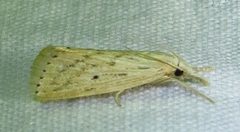
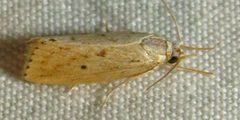
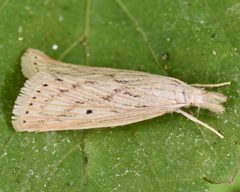
Diatraea lisetta is a in the Crambidae, described by Harrison Gray Dyar Jr. in 1909. It belongs to the Diatraea, which includes several stalk-boring pest of grasses. The species has been recorded from Panama, Mexico, and multiple southeastern and mid-Atlantic states in the United States. As a member of the Diatraea genus, it likely shares the general of related stalk borers, though specific ecological details for this species are poorly documented.
Pronunciation
How to pronounce Diatraea lisetta: /di.əˈtriːə laɪˈzɛtə/
These audio files are automatically generated. While they are not always 100% accurate, they are a good starting point.
Identification
Diatraea lisetta can be distinguished from other Diatraea by genitalia examination and subtle morphological features. are typically small, white to buff-colored . Larvae, when described, would be expected to resemble other Diatraea species: creamy white with conspicuous round brown or black spots on most body segments. Accurate identification to species level requires examination and is not reliably accomplished by external appearance alone.
Images
Distribution
Panama; Mexico; United States (Alabama, Florida, Georgia, Louisiana, Maryland, Mississippi, South Carolina, Tennessee, Virginia).
Similar Taxa
- Diatraea saccharalisSugarcane borer; widely distributed and economically important stalk borer with similar coloration and larval . Distinguished by geographic distribution, preferences, and genitalia.
- Diatraea grandiosellaSouthwestern corn borer; closely related with overlapping range in the southern United States. Separated by larval spot patterns, size, and genitalia characteristics.
- Diatraea lineolataNeotropical borer; similar stalk-boring and appearance. Distinguished by distribution and subtle morphological differences.
Sources and further reading
- BugGuide
- Wikipedia
- GBIF taxonomy match
- iNaturalist taxon
- NCBI Taxonomy
- Catalogue of Life
- Stalk-boring insect pests - AgriLife Extension Entomology
- Insects that feed on developing grain in the head - AgriLife Extension Entomology
- “Picudo negro” (black weevil) on soybean in Argentina | Beetles In The Bush
- Biological Control in Brazil is Used on an Area that is Larger than Belgium
- A New Resource for Fighting the Mexican Rice Borer
- Argentina | Beetles In The Bush | Page 7