
Siproeta epaphus
(Latreille, 1813)
Rusty-tipped Page, Brown Siproeta
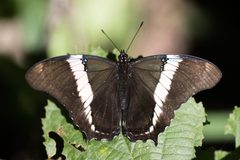
Siproeta epaphus, commonly known as the rusty-tipped page or brown siproeta, is a New World in the Nymphalidae. It is a tropical butterfly with large wings averaging 7.0–7.5 cm in wingspan, characterized by striking black, brown, white, and rusty orange coloration. The species is resident year-round in tropical and ranges from southern North America through Central America to central South America. Three are recognized, with the nominate subspecies S. epaphus epaphus being the most widespread and displaying the characteristic rusty orange wing tips.


Pronunciation
How to pronounce Siproeta epaphus: /sɪˈpɹoʊɛtə ˈɛpəfəs/
These audio files are automatically generated. While they are not always 100% accurate, they are a good starting point.
Identification
Distinguished from similar by the combination of large size, bold white transverse stripe continuous across both wings, and rusty orange coloration on the outer forewing portion (in the widespread ). The similar Malachite (Siproeta stelenes) is bright green rather than brown and rusty orange. Other Siproeta species and related nymphalines lack the distinctive white stripe pattern and rusty orange wing tips.
Images
Appearance
Large with wingspan of 7.0–7.5 cm (2.8–3.0 in). Upper wing surface black on inner portion, with outer forewing portion rusty orange in the widespread S. epaphus epaphus (mostly or entirely black in other two subspecies). Underside brown throughout. Bold white transverse stripe continuous across both wings on both surfaces.
Habitat
Tropical year-round. Specific microhabitat preferences are not well documented in available sources.
Distribution
Ranges from southern North America (south Texas, rarely southern New Mexico) through eastern and western Mexico, Central America, and South America to the Guyanas, Brazil, Bolivia, and Peru. Present throughout Central America where it is one of the most common butterflies.
Seasonality
Active year-round in tropical ; no seasonal dormancy reported.
Similar Taxa
- Siproeta stelenes (Malachite)Similar and wing pattern with white stripe, but bright green instead of brown and rusty orange; occurs in similar geographic range including southern Florida and Texas
More Details
Subspecies
Three recognized : S. epaphus epaphus (widespread, with rusty orange forewing tips), S. epaphus gadoui (described from Venezuela, mostly or entirely black outer forewings), and S. epaphus trayja (described from Brazil and Paraguay, mostly or entirely black outer forewings)