
Siproeta stelenes
Linnaeus, 1758
Malachite
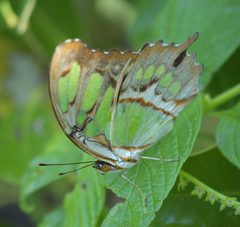
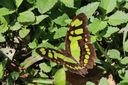
Siproeta stelenes, commonly known as the malachite, is a neotropical in the Nymphalidae. It is named for the mineral malachite due to the brilliant green or yellow-green coloration on the upperside of its wings. The ranges from Brazil through Central America to Mexico, with also established in southern Florida, southern Texas, and several Caribbean islands. are long-lived and feed on diverse sources including flower nectar, rotting fruit, and even carrion. Larvae feed on plants in the family Acanthaceae.
Pronunciation
How to pronounce Siproeta stelenes: /sɪˈprəʊ.ɪtə ˈstɛlɪniːz/
These audio files are automatically generated. While they are not always 100% accurate, they are a good starting point.
Identification
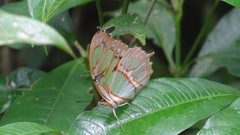
Distinguished from similar-looking heliconiine butterflies, particularly Philaethria dido, by wing shape—the malachite has broader, more rounded wings compared to the more elongated wings of P. dido. The green coloration is also more extensive and metallic in S. stelenes. At rest, the cryptic brown underside with olive green markings helps distinguish it from other green butterflies. The large size and distinctive color pattern make readily identifiable within their range.
Images
Habitat
Lowland tropical and subtropical forests, forest edges, and disturbed areas with flowering vegetation. Often found along river corridors and limestone outcroppings. In Florida and Texas, occupies subtropical hardwood hammocks and riparian zones. Hilltop have been observed in Rica, where butterflies concentrate on elevated ridges.
Distribution
Native range extends from Brazil through Central America to Mexico. Established in southern Florida (introduced 1960s), southern Texas, and the Caribbean including Cuba ( S. s. insularis) and other West Indian islands. Occurs in suitable throughout Central America and northern South America.
Seasonality
are active year-round in tropical portions of the range. In subtropical areas like southern Florida, activity peaks during warmer months. in Rica have been observed during the dry season. No specific activity pattern restrictions noted; adults are active during daylight hours.
Diet
feed on flower nectar, rotting fruit, dead animals, and bat . Larvae feed on leaves of plants in the Acanthaceae, particularly Ruellia and green shrimp plant (Justicia brandegeeana).
Host Associations
- Ruellia - larval Primary ; females lay on new leaves
- Justicia brandegeeana - larval Green shrimp plant; also called Yerba Maravilla in some sources
- Acanthaceae - larval General -level association
Life Cycle
Females lay on new leaves of plants. Larvae are horned, spiny, black caterpillars with red markings. The pupal stage is green with sharp, gold spines that can puncture . are long-lived compared to many butterflies, with extended periods enabled by diverse adult food sources.
Behavior
engage in , aggregating on elevated ridges likely to increase mate-finding probability. When at rest, individuals often perch on the undersides of leaves, using cryptic coloration to avoid detection. Adults are known to feed on fermenting fruit and other non-floral sources. Males may dominate hilltop .
Ecological Role
serve as when feeding at flowers. Larvae are herbivores that consume Acanthaceae foliage. The participates in nutrient cycling through consumption of rotting fruit and carrion. Pupae possess defensive spines that may deter . Adults are prey for various including birds and spiders.
Human Relevance
Popular attraction in conservatories and gardens due to striking appearance. Established in southern Florida through intentional or accidental introduction, where it has become a resident . Sometimes confused with the similar-looking Philaethria dido by observers. Not considered an agricultural pest; larvae feed on non-cultivated native plants.
Similar Taxa
- Philaethria didoSimilar green and black coloration, but with more elongated, narrower wings and different wing shape overall; belongs to Heliconiinae rather than Nymphalinae
- Siproeta epaphusCongeneric with similar size and wing shape, but with rusty orange-brown markings rather than green
More Details
Hilltopping behavior
Large on elevated terrain, observed in Rica at Palo Verde, represent a mate-locating strategy common in butterflies. Males often dominate these aggregations.
Introduction history
Established in southern Florida sometime in the 1960s, where have persisted and expanded. Also occurs as S. s. insularis in Cuba and S. s. biplagiata in other Caribbean islands.
Conservatory specimens
Frequently displayed in tropical houses including Magic Wings Butterfly Conservatory in Massachusetts, where their cryptic underside coloration makes them challenging for visitors to locate when at rest.