
Siproeta
Hübner, 1823
Malachite and Pages, Malachite
Species Guides
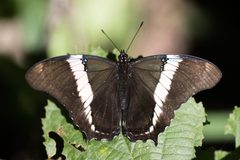
2- Siproeta epaphus(Rusty-tipped Page)
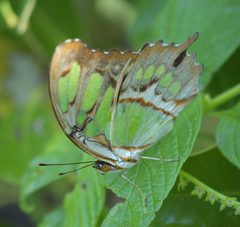
- Siproeta stelenes(Malachite)
Siproeta is a of brush-footed butterflies ( Nymphalidae) comprising three recognized found in the Neotropical region. The genus includes the well-known Malachite (Siproeta stelenes), named for its striking green coloration resembling the mineral malachite. These butterflies occur from Central America through South America, with some species extending into the Caribbean and occasionally reaching extreme southern Florida and Texas. are long-lived and exhibit distinctive including for mating.

Pronunciation
How to pronounce Siproeta: //sɪˈproʊ.ɪ.tə//
These audio files are automatically generated. While they are not always 100% accurate, they are a good starting point.
Identification
Siproeta are distinguished by their medium to large size, rounded wing shape, and distinctive color patterns. The Malachite (S. stelenes) displays bright green patches on a dark brown to black background on the upper wing surface, with complex brown, orange, and black patterns on the underside. When at rest with wings closed, the earth-toned undersides provide effective camouflage against vegetation. The can be distinguished from similar green-colored butterflies by the specific arrangement of green patches and the absence of tails on the hindwings. Siproeta species lack the elongated forewings of daggerwings (Marpesia) and the metallic blue sheen of Morpho butterflies.
Images
Habitat
Siproeta butterflies inhabit tropical and subtropical environments including lowland forests, forest edges, and disturbed areas with abundant vegetation. The Malachite has been observed in limestone outcroppings and ridge-top vegetation in Rica, where occur. Larval plants include leaves of the green shrimp plant (Justicia brandegeana) and Yerba Maravilla (Alternanthera spp.). frequent areas with fermenting fruit and nectar-producing flowers.
Distribution
The occurs throughout Central America, South America, and the Caribbean. Siproeta stelenes ranges from Brazil through Central America to Mexico, with on several West Indian islands. Introduced populations established in southern Florida in the 1960s and persist there. The genus has also been recorded in extreme southern Texas. Other in the genus have more restricted distributions within the Neotropical region.
Seasonality
are active year-round in tropical . In subtropical areas such as southern Florida, activity likely peaks during warmer months. The long-lived adults may persist for several months, with continuous breeding in suitable climates.
Diet
Siproeta butterflies feed on fermenting fruit and nectar from various flowers. Larvae consume leaves of plants in the Acanthaceae, specifically Justicia brandegeana (green shrimp plant) and Alternanthera (Yerba Maravilla).
Host Associations
- Justicia brandegeana - LARVAL_HOSTGreen shrimp plant, food for spiny black and orange caterpillars
- Alternanthera spp. - LARVAL_HOSTYerba Maravilla, larval food plant
Life Cycle
Siproeta undergoes complete with four stages: , larva, pupa, and . Larvae are described as spiny, black and orange caterpillars that feed on plant leaves. Adults are notably long-lived compared to many , allowing extended reproductive periods and opportunistic feeding .
Behavior
Siproeta stelenes exhibits , where aggregate on elevated terrain such as ridge-tops and limestone outcroppings. This behavior is believed to concentrate individuals in small areas to increase mating encounters, with males often dominating these . Adults are also known to rest on the undersides of leaves, a behavior that provides shelter from rain and enhances . When disturbed, individuals may fly rapidly but often resettle quickly on vegetation.
Ecological Role
As , Siproeta butterflies serve as when visiting flowers for nectar. Their fruit-feeding contributes to nutrient cycling in forest . Larvae function as herbivores, consuming plant and serving as prey for various . The spiny, aposematically colored caterpillars likely deter some predators, contributing to defensive mimicry complexes in tropical .
Human Relevance
Siproeta butterflies are popular attractions in conservatories and gardens due to their striking appearance and manageable size. The Malachite butterfly has been introduced to southern Florida, where it has established a breeding . The is featured in ecotourism activities in Central and South America, where can be spectacular natural displays. No significant agricultural or economic impacts have been documented.
Similar Taxa
- MarpesiaDaggerwings share similar wing shape and some color patterns, but have more elongated forewings and lack the distinctive green patches of Siproeta stelenes
- MorphoBoth contain large, showy butterflies with iridescent colors, but Morpho display metallic blue upper wings rather than green, and have different wing venation
- KallimaDead leaf butterflies share the tribe Kallimini and similar cryptic underside patterns, but Kallima have more pronounced leaf-mimicry with midrib markings and are not primarily green on the upper surface
More Details
Etymology
The 'Malachite' derives from the mineral malachite, a carbonate compound prized for its rich green color, which matches the distinctive green patches on the wings of Siproeta stelenes.
Conservation Status
No in the are currently considered threatened. The introduced Florida of S. stelenes appears stable and self-sustaining.