
Systasea
Edwards, 1877
Powdered-Skippers
Species Guides
2- Systasea pulverulenta(Texas Powdered Skipper)
- Systasea zampa(Arizona Powdered-Skipper)
Systasea is a of in the Hesperiidae, established by Edwards in 1877 as a replacement for the preoccupied name Lintneria. The genus comprises three recognized distributed in the southwestern United States and Mexico. Members are commonly known as Powdered-Skippers and are characterized by distinctive wing including transparent spots on the forewing and deeply notched hindwing margins.

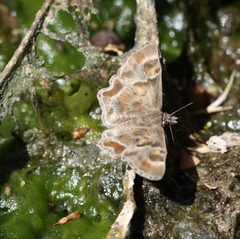
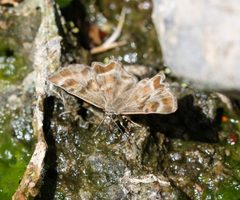
Pronunciation
How to pronounce Systasea: //sɪˈstæsiə//
These audio files are automatically generated. While they are not always 100% accurate, they are a good starting point.
Identification
Distinguished from other hesperiid by the combination of: (1) two deep indentations on the outer margin of the hindwing, (2) forewing with a complete band of transparent spots in a straight row, and (3) orange-brown upperside with olive-brown shading. Systasea zampa specifically may be confused with Fatal Metalmark (Calephelis nemesis) or Golden-headed Scallopwing (Staphylus ceos) due to similar size and coloration, but differs in wing venation and the transparent forewing spots. The Funereal Duskywing (Erynnis funeralis) has a white hindwing border rather than transparent forewing spots.
Images
Appearance
Small to medium-sized skippers with wingspan 2.4–3.5 cm. Upperside orange-brown with darker olive-brown areas. Forewing with band of transparent spots arranged in a single row. Hindwing outer margin with two deep indentations creating a scalloped or notched appearance. Underside patterning varies by ; S. zampa has been noted to resemble metalmark butterflies superficially.
Habitat
Arid and semi-arid regions including desert scrub, thorn scrub, and riparian edges. Observed in urban gardens with diverse flowering plants. In Arizona, has been recorded at elevations lower than expected for related skipper , suggesting adaptability to varied conditions when nectar sources are available.
Distribution
Southwestern United States (Arizona, New Mexico, Texas) and Mexico. Records from southern Arizona (Tucson area) indicate presence in the Sonoran Desert region. The ' range extends southward into Mexico, though precise southern limits require verification.
Seasonality
active in spring (March documented in Arizona). Specific periods vary by and locality; S. zampa observed in early March in Tucson.
Behavior
visit flowers for nectar. Perching observed on warm surfaces including bricks and rocks in late afternoon. Rapid, darting typical of skippers. Territorial behavior not documented for this specifically.
Ecological Role
function as when visiting flowers. Larval plants unknown for the ; ecological role of stages cannot be specified.
Human Relevance
Of interest to watchers and photographers; considered a notable find in Arizona due to perceived rarity. S. zampa specifically has been described as a 'supposedly rare ' in popular accounts, though this characterization may reflect observer effort rather than true scarcity.
Similar Taxa
- Staphylus ceos (Golden-headed Scallopwing)Similar size and superficial metalmark-like appearance; distinguished by different wing pattern and coloration
- Calephelis nemesis (Fatal Metalmark)Similar orange-brown coloration and small size; lacks transparent forewing spots and has rounded hindwing margin
- Erynnis funeralis (Funereal Duskywing)Similar and period; distinguished by white hindwing border and lack of transparent spots
More Details
Nomenclatural history
The name Systasea was introduced by Edwards in 1877 to replace Lintneria, which is invalid under the Principle of Homonymy (preoccupied by Lintneria in another taxonomic group). This replacement name has been stable in usage since establishment.
Species composition
Three currently recognized: S. microsticta Dyar, 1923; S. pulverulenta (R. Felder, 1869); and S. zampa (Edwards, 1876). S. zampa is the most frequently encountered in United States records.
Conservation status
No formal conservation assessments identified. Perceived rarity in some accounts (e.g., S. zampa in Arizona) may reflect limited survey effort in appropriate rather than genuine scarcity.