
Thymelicini
Genus Guides
5- Adopaeoides(sunrise skipper)
- Ancyloxypha(least skippers)
- Copaeodes
- Oarisma(skipperling)
- Thymelicus(skippers)
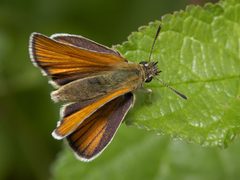
Thymelicini is a tribe of within the Hesperiinae. The tribe includes small to medium-sized with relatively plain wing patterns compared to other skippers. Members are primarily distributed across the Holarctic region, with notable including Thymelicus and Ochlodes. The group is characterized by specific genitalic and wing venation features that distinguish it from related tribes.
Pronunciation
How to pronounce Thymelicini: /θaɪˌmɛlɪˈsaɪni/
These audio files are automatically generated. While they are not always 100% accurate, they are a good starting point.
Identification
Thymelicini skippers can be distinguished from related Hesperiinae tribes by a combination of genitalic characters, particularly in the male valvae structure, and specific wing venation patterns. The forewing typically lacks the pronounced hook or costal fold found in some other skipper tribes. Antennal clubs are relatively slender with hooked tips, as is common in Hesperiidae, but the overall body proportions tend to be more gracile than in the related Taractrocerini.
Images
Distribution
Primarily Holarctic in distribution, with occurring across Europe, Asia, and North America. The tribe reaches its greatest diversity in the Palearctic region, particularly in temperate grassland and steppe .
Similar Taxa
- TaractroceriniAlso a tribe of Hesperiinae with similar overall skipper ; distinguished by different male genitalia structure and usually more robust body proportions
- HesperiiniLarger tribe of Hesperiinae with overlapping geographic range; Thymelicini tend to be smaller with more uniform wing coloration and different genitalic features
More Details
Systematic Position
Thymelicini has been subject to taxonomic revision, with some authors previously treating constituent as part of a broader concept of Hesperiini. Current molecular and morphological evidence supports its recognition as a distinct tribe.