
Amblyscirtes
Scudder, 1872
Roadside-Skippers
Species Guides
21- Amblyscirtes aenus(bronze roadside skipper)
- Amblyscirtes aesculapius(Lace-winged Roadside-Skipper)
- Amblyscirtes alternata(Dusky Roadside-Skipper)
- Amblyscirtes belli(Bell's Roadside-Skipper)
- Amblyscirtes carolina(Carolina Roadside-Skipper)
- Amblyscirtes cassus(Cassus Roadside-Skipper)
- Amblyscirtes celia(Celia's Roadside-Skipper)
- Amblyscirtes elissa(Elissa Roadside-Skipper)
- Amblyscirtes eos(Dotted Roadside-Skipper)
Amblyscirtes is a of in the Hesperiidae, commonly known as Roadside-Skippers. The genus was established by Samuel Hubbard Scudder in 1872. in this genus are small, relatively inconspicuous skippers found primarily in North America. The caterpillars feed on grasses, and are typically associated with open, disturbed including roadsides and trails.
Pronunciation
How to pronounce Amblyscirtes: /ˌæm.blɪˈskɜːrtiz/
These audio files are automatically generated. While they are not always 100% accurate, they are a good starting point.
Identification
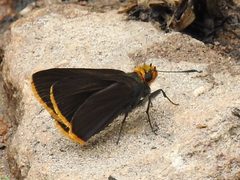
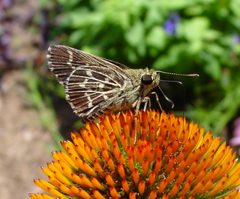
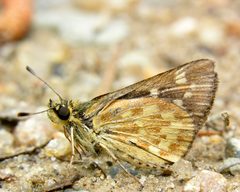
Members of Amblyscirtes are small skippers with relatively plain, brownish or grayish coloration. They lack the bold patterns seen in many other skipper . Specific identification to level often requires close examination of wing markings, particularly the presence or absence of pale spots on the forewings and hindwings, and in some cases dissection or genitalia examination. They may be confused with other grass-feeding skippers such as those in the genus Atrytonopsis or Thorybes, but Amblyscirtes species tend to be smaller and more drably colored.
Images
Habitat
in this occupy open, often disturbed including roadsides, trails, washes, grasslands, and riparian corridors. Some species show preference for sandy or gravelly substrates. The Nysa Roadside-Skipper (A. nysa) has been observed in abandoned unpaved roads becoming part of sandhill formations adjacent to riparian areas.
Distribution
The is distributed across North America, with ranges extending from Mexico through the southwestern United States (Arizona, New Mexico, Texas) northward through the Great Plains and into the eastern United States. Individual species have more restricted ranges; for example, A. nysa is known from Mexico, southeast Arizona, southern New Mexico, western and central Texas, Oklahoma, eastern Kansas, and barely into Missouri, with rare records in Colorado.
Seasonality
are active primarily in spring and summer. may have between one and three per year depending on geographic location and climate. Males of at least some species are active very early in the morning, perching in low areas before retiring to shade during hotter afternoon hours.
Diet
Caterpillars feed on grasses (Poaceae). food sources have not been explicitly documented in the provided sources.
Host Associations
- Poaceae - larval foodplantgrasses
Life Cycle
Has been observed to have between one and three ("") per year depending on geographic location of the . Complete with , larval, pupal, and stages; specific details of development and stage not documented in provided sources.
Behavior
Males of at least some perch in wash bottoms, road depressions, or along trails very early in the morning, then retire to shade during the afternoon. This has been specifically documented for A. nysa.
Human Relevance
in this are of interest to lepidopterists and naturalists. Rare or peripheral records, such as the Colorado observation of A. nysa, contribute to understanding of range expansions and distributional limits. The "Roadside-Skipper" reflects their frequent occurrence in human-disturbed .
Similar Taxa
- AtrytonopsisSimilar grass-feeding skippers with brownish coloration; Amblyscirtes tend to be smaller and more drably colored
- ThorybesOther grass-associated skippers; distinguished by size and wing pattern details
More Details
Taxonomic history
The was erected by Samuel Hubbard Scudder in 1872. It is classified in the Hesperiinae within Hesperiidae.
Notable records
A 2017 observation of A. nysa in Lamar, Colorado represented a significant range extension, as this was not previously documented in that state in standard references. This highlights the importance of field observation and documentation even for well-studied groups.