
Amblyscirtes alternata
(Grote & Robinson, 1867)
Dusky Roadside-Skipper, Blue-dusted Roadside Skipper
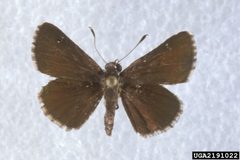
Amblyscirtes alternata, commonly known as the Dusky Roadside-Skipper or Blue-dusted Roadside Skipper, is a small in the Hesperiidae. It occurs in the southeastern and south-central United States, from Virginia to Florida and west to Texas. are active from spring through late summer, with multiple per year in warmer regions.
Pronunciation
How to pronounce Amblyscirtes alternata: /ˌæmbliˈskɜːrtiːz ˌɔːltərˈneɪtə/
These audio files are automatically generated. While they are not always 100% accurate, they are a good starting point.
Identification
The small size (22–25 mm wingspan) and dusky or blue-dusted wing appearance distinguish this from other roadside skippers. The 'Blue-dusted Roadside Skipper' refers to a diagnostic coloration trait. Accurate identification may require examination of wing patterns and comparison with such as other Amblyscirtes species.
Images
Habitat
Open, disturbed including roadsides, trails, and similar edge environments. Associated with grassy areas where larval plants occur.
Distribution
Southeastern and south-central United States: from southeastern Virginia south to Florida, west to east Texas.
Seasonality
are on wing from March to August in most of the range, with two per year. In Florida, the Gulf states, and Texas, there may be three generations with adults flying as late as November.
Diet
feed on flower nectar. Larvae feed on grasses ( Poaceae), though specific grass are not documented in the provided sources.
Life Cycle
Between one and three per year depending on geographic location. In most of the range, two generations occur with active March through August. In warmer southern regions (Florida, Gulf states, Texas), three generations may occur with extending into November.
Behavior
Males have been observed perching in wash bottoms, road depressions, or along trails very early in the morning before retiring to shade for the afternoon.
Similar Taxa
- Amblyscirtes nysaBoth are small roadside skippers in the same with overlapping ranges in the southern United States; A. nysa occurs further west and has different wing pattern details.
- Other Amblyscirtes species share similar preferences (roadsides, trails) and small size; identification requires careful examination of wing patterns and coloration.
More Details
Taxonomic Note
The was originally described as Hesperia alternata by Grote & Robinson in 1867, and later transferred to the Amblyscirtes.