Amblyscirtes belli
Freeman, 1941
Bell's Roadside-Skipper, Bell's roadside skipper
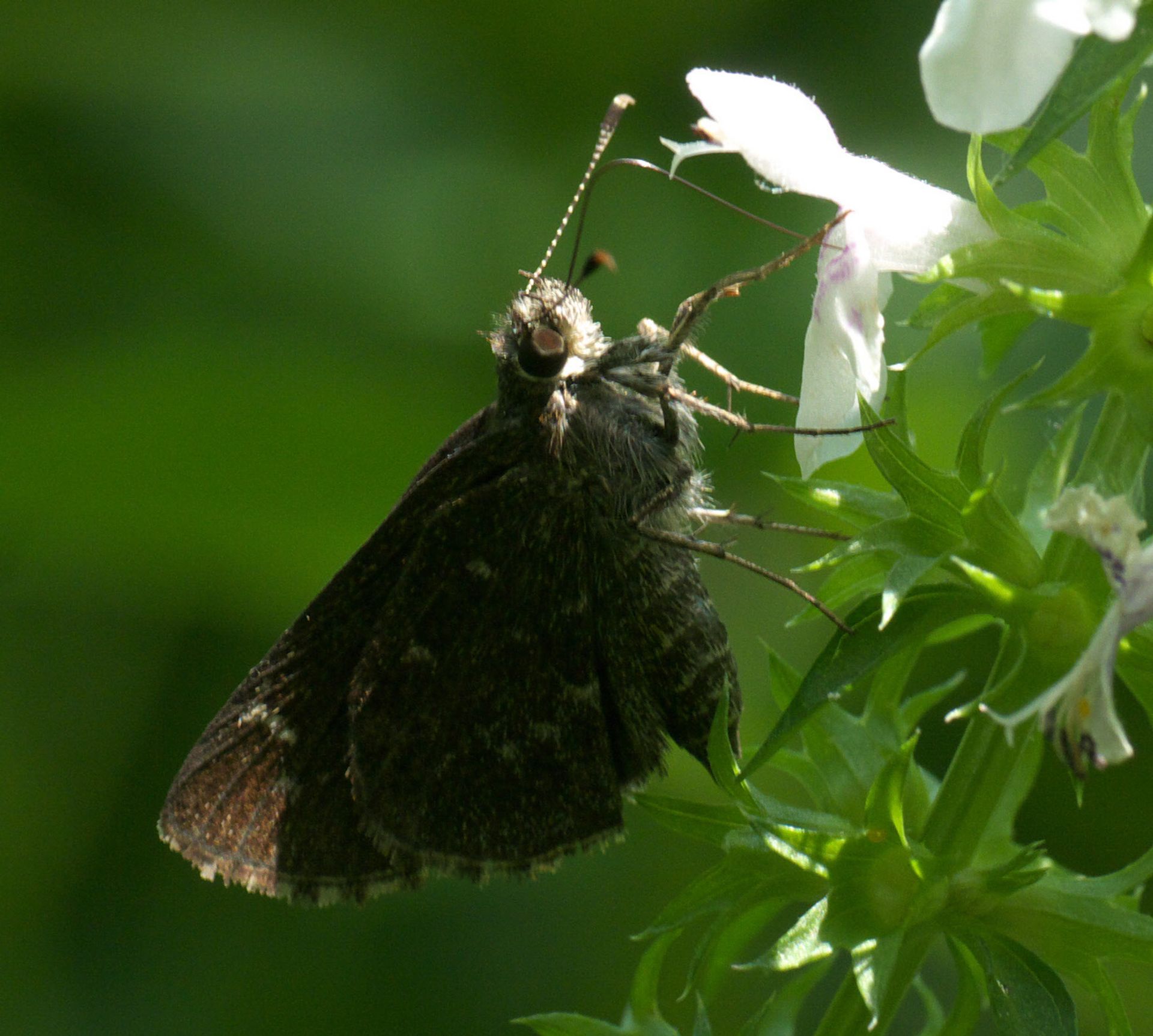
Amblyscirtes belli is a small grassland in the Hesperiidae, found in the central and eastern United States. have a wingspan of 30–32 mm and are active from April through September, with three per year. The is named for its discoverer and is closely associated with woodland edges and grassy where its larval plant grows.
Pronunciation
How to pronounce Amblyscirtes belli: /ˌæmbliˈskɜːrtiːz ˈbɛlaɪ/
These audio files are automatically generated. While they are not always 100% accurate, they are a good starting point.
Identification
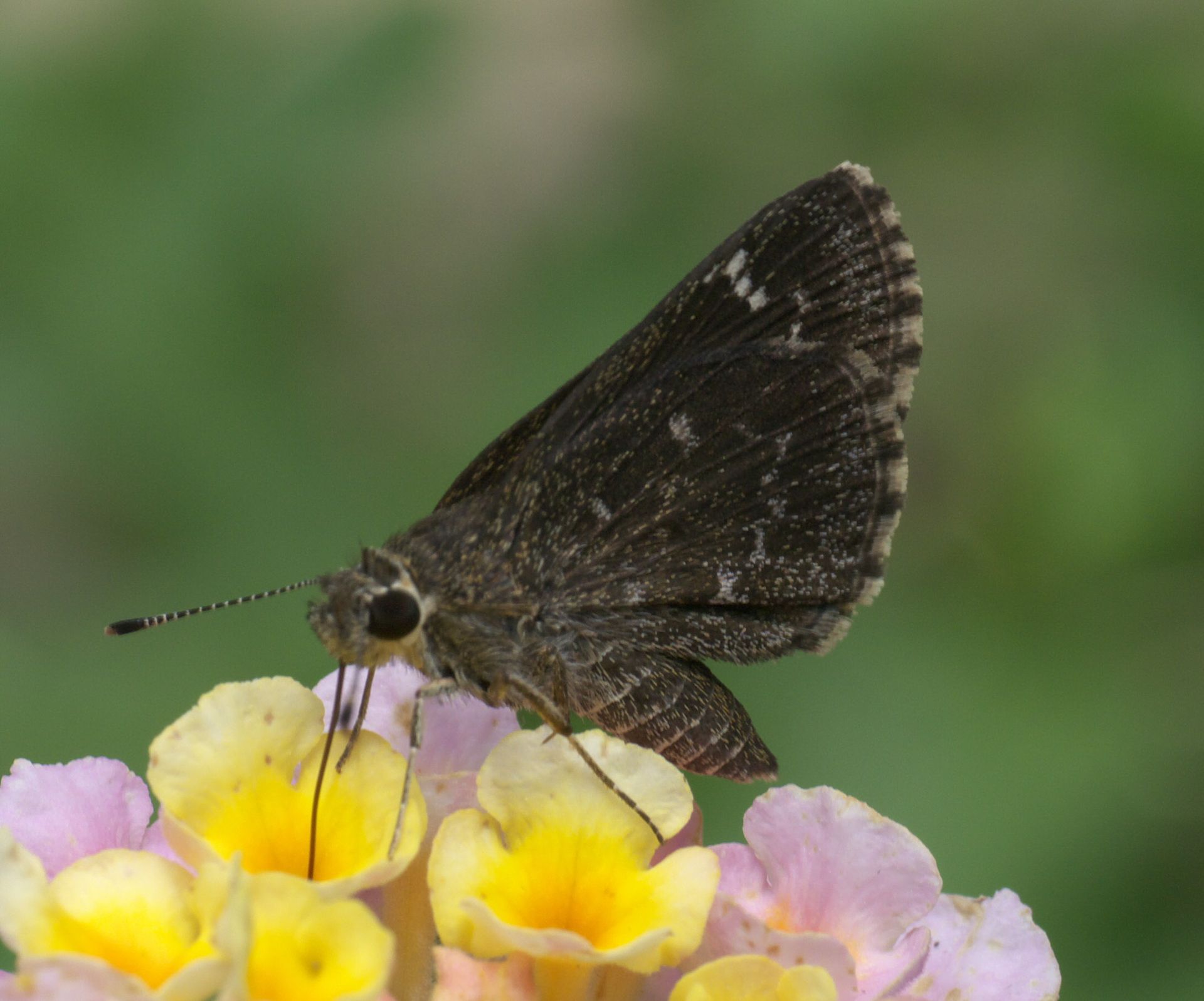
Distinguished from other Amblyscirtes by the combination of dark brown upper wings with small pale spots and the grayish hindwing underside with a pale band. Similar to A. nysa (Nysa Roadside-Skipper) but occurs in different geographic range and ; A. nysa is found further west in drier grasslands. Separated from A. vialis (Common Roadside-Skipper) by wing pattern details and habitat preference. A. belli prefers more wooded edge habitats compared to the open grassland preference of A. vialis. Genitalia examination may be required for definitive identification of worn specimens.
Images
Appearance
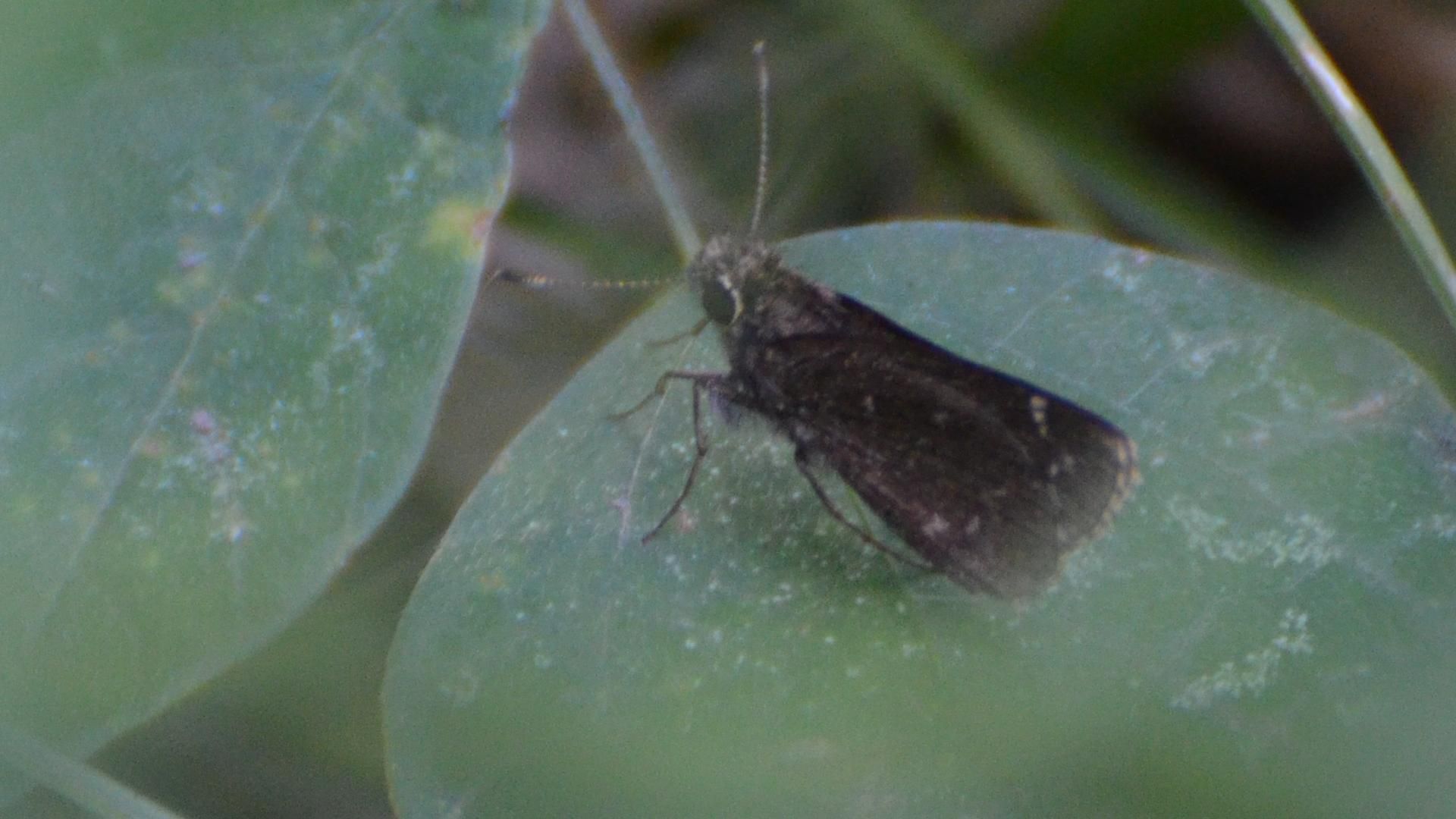
Wingspan 30–32 mm. Upper wing surfaces dark brown with small pale spots. Hindwing underside grayish with a distinctive pale band. relatively short with hooked tips, typical of skippers. Body compact and hairy, with a robust . Wing margins slightly scalloped. Sexes similar in appearance, with males possessing slightly more pointed forewings.
Habitat
Grassy woodland edges, open pine forests, roadside clearings, and grassy areas near deciduous woodlands. Associated with moist to mesic conditions where the larval plant Chasmanthium latifolia (river oats) grows. Found on rocky clay exposures and trails through open forests, particularly in areas with partial shade and abundant ground vegetation.
Distribution
Central and eastern United States: from eastern Kansas, central Oklahoma, and central Texas eastward to southwest Ohio, central Kentucky, eastern Tennessee, and western South Carolina. Core range includes the Ozark Highlands, Cumberland Plateau, and adjacent regions. Northern in Missouri and Ohio represent range limits.
Seasonality
active April through September. Three per year: first in April–May, second in June–July, third in August–September. Peak activity varies by latitude, with southern beginning earlier and extending later into fall. Overwinters as pupa or partially grown larva.
Diet
Larvae feed exclusively on Chasmanthium latifolia (river oats), a grass common in woodland edges and moist forests. feed on flower nectar from various herbaceous plants, though specific nectar sources are not well documented.
Host Associations
- Chasmanthium latifolia - larval River oats; sole documented larval food plant
Life Cycle
Complete with three annually. laid on or near plant. Larvae feed on leaves of Chasmanthium latifolia, developing through several instars. occurs in silken shelters on or near host plant. stage is pupa or partially grown larva, with exact overwintering stage not definitively documented. emerge in spring to initiate first generation.
Behavior
Males perch on low vegetation in open areas to await females, particularly in morning hours. Both sexes visit flowers for nectar. is rapid and low to the ground, typical of grass skippers, with quick darting movements interspersed with short periods of rest. often remain near larval plant stands. When disturbed, individuals fly short distances to settle in vegetation.
Ecological Role
Larval herbivore specializing on a native grass ; contributes to nutrient cycling in woodland edge . , though specific pollination services not quantified. Serves as prey for various including birds, spiders, and predatory insects. Specialized association with Chasmanthium latifolia makes it a potential indicator of intact woodland edge .
Human Relevance
Subject of citizen science observation and monitoring programs. Occasionally encountered by hikers and naturalists in appropriate . No economic importance; neither pest nor commercially significant. Range and records contribute to understanding climate change effects on temperate butterflies.
Similar Taxa
- Amblyscirtes nysaSimilar size and wing pattern, but occurs in drier western grasslands (Kansas, Oklahoma, Texas, New Mexico, Arizona) rather than eastern woodland edges; hindwing underside pattern differs
- Amblyscirtes vialisCommon Roadside-Skipper overlaps in range but prefers more open ; upper wing spots typically larger and more distinct
- Amblyscirtes hegonPepper and Salt Skipper has more contrasting light and dark wing patterning, with more extensive pale areas
More Details
Taxonomic History
Originally described by Freeman in 1941. Has been treated as a synonym of Mastor celia in some classifications, but currently recognized as valid in Amblyscirtes based on morphological and molecular evidence.
Conservation Status
Not formally assessed by IUCN. Appears secure within core range but may be vulnerable to loss from woodland fragmentation and conversion of grassy edges to developed or agricultural land. Missouri have been subject of study.
Sources and further reading
- BugGuide
- Wikipedia
- GBIF taxonomy match
- iNaturalist taxon
- NCBI Taxonomy
- Catalogue of Life
- Bohart Museum Spotlight on Yellow-Bellied Burying Beetles | Bug Squad
- Bug Eric: Spider Sunday: Star-bellied Orbweaver, Acanthepeira stellata
- A Citizen Scientist's Adventures with Western Red-bellied Tiger Beetles
- The “silky-bellied humpbacked” ant | Beetles In The Bush
- Eastern Red-Bellied Tiger Beetle | Beetles In The Bush
- Bug Eric: Another Rarity: Nysa Roadside-Skipper in Colorado
- The life history of Amblyscirtes belli in Missouri