
Amblyscirtes vialis
(Edwards, 1862)
Common Roadside-Skipper, Common Roadside Skipper
Amblyscirtes vialis, the Common Roadside-Skipper, is a small grass skipper (Hesperiidae) distributed across much of North America. fly from March through July, with a partial second in southern extending into September. The is listed as endangered in Connecticut.
Pronunciation
How to pronounce Amblyscirtes vialis: /ˌæmblɪˈskɜːrtiːz ˈvaɪəlɪs/
These audio files are automatically generated. While they are not always 100% accurate, they are a good starting point.
Identification
Distinguished from similar roadside skippers by its widespread distribution and early season. May be separated from Amblyscirtes nysa (Nysa Roadside-Skipper) by range—A. nysa is restricted to the southwestern United States and adjacent Mexico. A. vialis is the most broadly distributed member of the in North America.
Images
Appearance
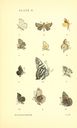
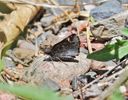
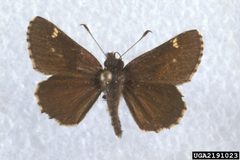
Small skipper with wingspan 22–32 mm. Dull brownish-gray coloration typical of the . Wings relatively short and broad, with hooked tips characteristic of Hesperiidae. Patterning is subdued, lacking bold markings.
Habitat
Open, disturbed including roadsides, fields, and grassy clearings. Often found in dry, sunny areas with short grass cover.
Distribution
British Columbia east across southern Canada to Maine and Nova Scotia; south to central California, northern New Mexico, Texas, the Gulf states, and northern Florida.
Seasonality
active March to July. One per year throughout most of range; partial second generation occurs in southern , with extending to September.
Diet
Larvae feed on various grasses: wild oats (Avena), bent grass (Agrostis), bluegrass (Poa), Bermuda grass (Cynodon dactylon), and Indian woodoats grass (Chasmanthium latifolia). feed on flower nectar, with preference for low-growing blue flowers including verbena and selfheal.
Host Associations
- Avena - larval food plantwild oats
- Agrostis - larval food plantbent grass
- Poa - larval food plantbluegrass
- Cynodon dactylon - larval food plantBermuda grass
- Chasmanthium latifolium - larval food plantIndian woodoats grass
Life Cycle
One per year () across most of range; with partial second generation in southern areas. stage not specified in sources.
Ecological Role
as ; larval herbivore on grasses.
Human Relevance
Listed as endangered in Connecticut by state authorities. Otherwise not of significant economic importance.
Similar Taxa
- Amblyscirtes nysaSimilar appearance and preference, but restricted to southwestern US and Mexico; distinguished by geographic range
More Details
Conservation Status
State-listed as endangered in Connecticut; not federally listed.