
Amblyscirtes aesculapius
(Fabricius, 1793)
Lace-winged Roadside-Skipper
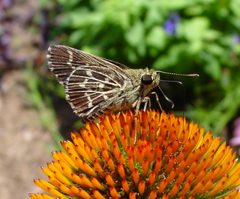
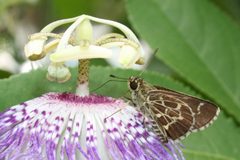
A small in the Hesperiidae, found in the southeastern and south-central United States. have a wingspan of 30–38 mm and are active from March through September, with two per year. The refers to the lacy pattern on the wings.

Pronunciation
How to pronounce Amblyscirtes aesculapius: //ˌæm.blɪˈsɜːr.tiːz iːˌskjuːˈleɪ.pi.əs//
These audio files are automatically generated. While they are not always 100% accurate, they are a good starting point.
Identification
The lacy or checkered wing pattern distinguishes this from other roadside-skippers in the Amblyscirtes. The specific epithet and both reference this distinctive wing appearance. It may be confused with other Amblyscirtes species, but the documented range and wing pattern help separate it from similar .
Images
Appearance
Wingspan 30–38 mm. Wings display a lacy or checkered pattern that gives the its . As a member of Hesperiidae, it has the characteristic stocky body and hooked clubs typical of skippers. Specific coloration details beyond the lacy wing pattern are not well documented in available sources.
Habitat
Roadsides and open areas with plants; associated with where Arundinaria (cane) occur. Specific microhabitat preferences are not well documented beyond general association with open, disturbed areas.
Distribution
Eastern Oklahoma and eastern Texas east to southeastern Virginia, south along the Atlantic Coast to northern Florida. Not documented from Colorado or western states.
Seasonality
active March through September. Two per year throughout its range.
Diet
Larvae probably feed on Arundinaria (cane). feed on nectar from various flowers including elephant's-foot (Elephantopus), sweet pepperbush (Clethra), blackberry (Rubus), white clover (Trifolium), selfheal (Prunella), and dogbane (Apocynum).
Host Associations
- Arundinaria - probable larval specific not confirmed; described as 'probably' in source
Life Cycle
Two per year. Complete with , larva, pupa, and stages. Detailed information is limited.
Ecological Role
function as when feeding on nectar. Larvae serve as herbivores on their plants. Specific ecological impacts are not documented.
Human Relevance
Subject of interest to lepidopterists and watchers. No documented economic or agricultural significance.
Similar Taxa
- Amblyscirtes nysaSimilar size and preference, but A. nysa occurs in the southwestern United States (Arizona, New Mexico, western Texas, Oklahoma, Kansas) and is not known from the Atlantic coastal plain where A. aesculapius occurs.
- Other Amblyscirtes species contains multiple roadside-skipper ; wing pattern and geographic range are primary distinguishing features.
More Details
Taxonomic history
Originally described as Hesperia aesculapius by Fabricius in 1793. Has been placed in the Mastor in some classifications, but currently accepted as Amblyscirtes aesculapius.