
Panoquina
Hemming, 1934
Species Guides
7- Panoquina errans(Wandering Skipper)
- Panoquina evansi(Evans's skipper)
- Panoquina hecebolus(Hecebolus Skipper)
- Panoquina lucas(purple-washed skipper)
- Panoquina ocola(Ocola Skipper)
- Panoquina panoquin(Salt Marsh Skipper)
- Panoquina panoquinoides(obscure skipper)
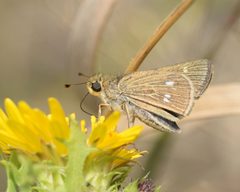
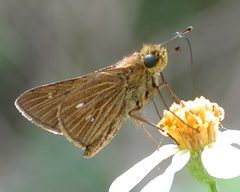
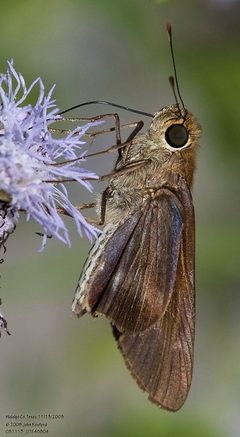
Panoquina is a of skippers in the Hesperiidae, established by Hemming in 1934. The genus comprises approximately 17 recognized distributed across the Americas. Several species, such as Panoquina lucas (purple-washed skipper) and Panoquina ocola (ocola skipper), are relatively well-known and frequently observed. Members of this genus are characterized by their rapid, darting patterns typical of skippers. The genus has accumulated substantial observational records, with over 21,000 observations documented on iNaturalist.
Pronunciation
How to pronounce Panoquina: /ˌpænəˈkwɪnə/
These audio files are automatically generated. While they are not always 100% accurate, they are a good starting point.
Identification
within Panoquina can be challenging to distinguish from other grass-skipper . The genus lacks the distinctive hindwing tail found in some related skipper genera. Panoquina ocola is recognizable by its long, narrow forewings and orange-brown coloration with small pale spots. Panoquina lucas shows purple-gray iridescence on the wing surface. Accurate identification to species level often requires examination of wing pattern details, genitalia, or geographic context.
Images
Habitat
in this occupy open, grassy including prairies, meadows, marshes, and agricultural fields. Many species are associated with wetland edges and coastal grasslands. Some, such as Panoquina ocola, are known to utilize disturbed habitats and can be found in urban and suburban settings with suitable plants.
Distribution
The is distributed throughout the Americas, with ranges extending from the southern United States through Central America and into South America. Individual species show varying distributions: Panoquina ocola occurs from New Jersey south to Florida and west to Texas, with strays further north; Panoquina lucas ranges from southern Texas through Mexico to Argentina; Panoquina panoquin is found along the Atlantic and Gulf coasts of the United States.
Seasonality
periods vary by and latitude. In temperate regions, most species fly from late spring through fall, with peak activity in summer months. Southern may have extended or year-round flight periods. Panoquina ocola adults have been recorded from March to November in the southern United States, with multiple produced annually.
Behavior
exhibit the rapid, erratic characteristic of skippers, often staying close to the ground in grassy vegetation. They frequently perch with hindwings held flat and forewings partially open. Males of some establish territories and engage in . Adults visit flowers for nectar, with some species showing preference for small flowers in the Asteraceae and other .
Human Relevance
Several serve as subjects for citizen science and monitoring programs due to their relative abundance and accessibility. Panoquina ocola is sometimes considered a pest in rice-growing regions, as larvae feed on rice and related grasses. The provides opportunities for studying skipper and in the Americas.
Similar Taxa
- HylephilaSimilar grass-skipper and preference; Hylephila often show more extensive pale markings on wings and may have different antennal club proportions
- WallengreniaOverlaps in distribution and ; Wallengrenia typically have more rounded forewings and different spot patterns on the hindwing
- LeremaFormerly included within Panoquina or closely related; Lerema accius (clouded skipper) is distinguished by more extensive dark scaling and reduced pale markings compared to most Panoquina
More Details
Taxonomic History
The was established by Francis Hemming in 1934 to accommodate previously placed in other genera. The boundaries of Panoquina have been revised multiple times, with some species transferred to or from related genera such as Lerema based on morphological and molecular studies.
Etymology
The name Panoquina is derived from the type Panoquina panoquin, which itself appears to be a diminutive or variant formation without clear etymological roots in classical languages.