
Panoquina panoquin
(Scudder, 1863)
Salt Marsh Skipper
Panoquina panoquin, commonly known as the salt marsh skipper, is a hesperiid restricted to coastal salt marsh in eastern and Gulf Coast North America. The is tightly associated with its larval plant, saltgrass (Distichlis spicata), and exhibits pronounced geographic variation in voltinism, with multiple in southern and fewer generations in northern populations.
Pronunciation
How to pronounce Panoquina panoquin: //ˌpænəˈkwɪnə ˌpænəˈkwɪn//
These audio files are automatically generated. While they are not always 100% accurate, they are a good starting point.
Identification
Distinguished from other Panoquina by its strict association with salt marsh and coastal distribution. Most similar to Panoquina ocola (Ocola skipper), which occurs in broader habitats including freshwater wetlands and has more extensive pale markings on the underwing. P. panoquin shows reduced underwing patterning and is rarely found away from saltgrass-dominated marshes. The curved forewing spot arrangement differs from the more angular pattern in some .
Images
Appearance
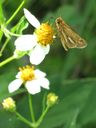
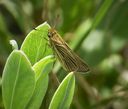
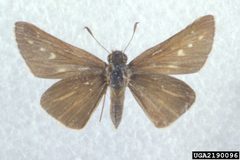
Small to medium-sized skipper with wingspan of 35–39 mm. Upperwing surface is dark brown with a variable pattern of pale spots; forewing typically shows a curved row of small pale spots. Underwings are lighter, often with a grayish or buff tone and reduced spotting. Body is relatively stout with large , typical of hesperiid . have hooked clubs.
Habitat
Coastal salt marshes dominated by saltgrass (Distichlis spicata). Occupits the intertidal zone and adjacent marsh platforms where plant grows. Tightly restricted to saline or brackish marsh environments; not found in freshwater wetlands or upland areas.
Distribution
Atlantic and Gulf coastal plain of the United States. Range extends from New York south through New Jersey, Delaware, Maryland, Virginia, North Carolina, South Carolina, Georgia, Florida (including Florida Keys), and west along the Gulf Coast to southern Texas.
Seasonality
activity varies latitudinally. Northern : May to August, two . Southern Gulf Coast: April to October, three generations. Florida: year-round activity with multiple overlapping generations, adults present February to December. Peak abundance generally coincides with warm months.
Diet
feed on flower nectar from a wide range of available plants in salt marsh and adjacent . Larvae are obligate feeders on Distichlis spicata (saltgrass).
Host Associations
- Distichlis spicata - larval plantobligate; larvae feed on leaves
Life Cycle
Complete with , larva, pupa, and stages. Larvae feed on saltgrass leaves. Voltinism varies geographically: two in the north, three in the southern Gulf region, and continuous breeding with multiple generations in Florida. stage not explicitly documented in sources.
Behavior
are rapid, darting fliers typical of skippers, often remaining low in vegetation. Males perch on plants or nearby vegetation to await females. Adults visit flowers for nectar throughout the day. Larval feeding occurs within saltgrass clumps.
Ecological Role
function as of marsh and coastal flowers. Larvae serve as herbivores on saltgrass, though densities appear insufficient to significantly impact plant . Provides food source for including birds and predatory arthropods.
Human Relevance
No direct economic importance. Occasionally encountered by naturalists and watchers in coastal marsh . Serves as an for intact salt marsh due to its strict habitat specificity.
Similar Taxa
- Panoquina ocolaSimilar size and general appearance, but occupies broader range including freshwater wetlands; has more extensive pale underwing markings and is not restricted to salt marshes
- Panoquina erransOverlapping range in parts of Texas; distinguished by more extensive pale spotting on upperwings and different preferences
More Details
Conservation Status
Not formally assessed by major conservation bodies, but vulnerable to salt marsh loss and degradation from coastal development, sea level rise, and salt marsh dieback events. trends likely correlate with saltgrass marsh extent.