
Elasmia mandela
(Druce, 1887)
Species Guides
1Elasmia mandela is a in the Notodontidae, first described by Herbert Druce in 1887. The occurs in Mexico, Rica, Texas, and Oklahoma. are active from April to early October. Two are recognized: the nominate form in Mexico and Costa Rica, and E. m. santaana in Texas, Oklahoma, and probably Mexico.
Pronunciation
How to pronounce Elasmia mandela: /ɛˈlæzmɪə mænˈdɛlə/
These audio files are automatically generated. While they are not always 100% accurate, they are a good starting point.
Identification
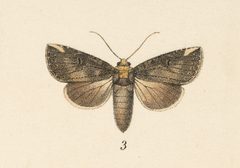
Distinguished from similar Notodontidae by the combination of dark grey-brown ground color and obscure transverse forewing markings. The santaana can be recognized by its greyer overall coloration and the distinctive dark patch in the /subreniform area. Males and females cannot be separated by external appearance.
Images
Appearance
Overall coloration is dark grey-brown with obscure transverse forewing markings. Males and females are similar in appearance. The E. m. santaana is grey overall with a contrasting dark patch in the /subreniform area of the forewing.
Distribution
Mexico, Rica, Texas (USA), and Oklahoma (USA). The nominate occurs in Mexico and Costa Rica; subspecies santaana occurs in Texas, Oklahoma, and probably Mexico.
Seasonality
are on wing from April to early October.
Diet
Larvae feed on Rhamnaceae and Sapindaceae , including Unganadia speciosa for santaana.
Host Associations
- Unganadia speciosa - larval plantrecorded for santaana
Similar Taxa
- Elasmia mandela santaana distinguished by greyer coloration and dark patch in /subreniform area
More Details
Subspecies
Two are recognized: Elasmia mandela mandela (Mexico and Rica) and Elasmia mandela santaana Metzler & Knudson, 2011 (Texas, Oklahoma, and probably Mexico). The subspecies name santaana refers to the type locality, the Santa Ana National Wildlife in Texas.
Etymology
The name santaana refers to its type locality, the Santa Ana National Wildlife in Texas.