
Nystaleinae
Forbes, 1948
Genus Guides
7Nystaleinae is a of prominent moths in the Notodontidae, established by Forbes in 1948. The subfamily comprises approximately 44 and 377 , with recent taxonomic revisions recognizing greater diversity than previously documented. Nystaleinae is distributed exclusively in the Americas, primarily in the Neotropics. Recent phylogenomic studies have revealed that the subfamily Dioptinae is nested within Nystaleinae, challenging traditional morphological classifications.
Pronunciation
How to pronounce Nystaleinae: //nɪˈstæliˌniː//
These audio files are automatically generated. While they are not always 100% accurate, they are a good starting point.
Identification
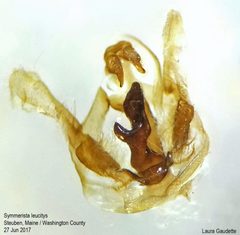
Identification relies heavily on male genitalia ; the can be distinguished from other Notodontidae by characters of the male terminalia, including structure of the valvae, phallus, and associated . A pictorial key to based on male terminalia has been developed. External morphology is highly variable across the diverse genera, and reliable identification to genus or often requires dissection and examination of genitalic structures.
Images
Distribution
Distributed exclusively in the Americas (New World), with the vast majority of occurring in the Neotropical region. A few species extend northward into temperate North America, reaching as far north as Canada.
Ecological Role
Has been observed to have ecological and economic importance, though specific details remain understudied. The group contributes to herbivore diversity in Neotropical .
Human Relevance
Economic importance has been noted in the literature, though specific impacts on agriculture, forestry, or other human activities are not well documented. Some may serve as indicators of quality in Neotropical .
Similar Taxa
- DioptinaeRecent phylogenomic evidence indicates Dioptinae is nested within Nystaleinae; Dioptinae are primarily and often aposematically colored, whereas Nystaleinae sensu stricto are predominantly with more cryptic coloration
- Other Notodontidae subfamiliesNystaleinae can be distinguished by male genitalia characters, particularly the structure of the valvae and phallus; traditional external morphological characters have proven unreliable for distinguishing Nystaleinae from related
More Details
Taxonomic instability
The classification of Nystaleinae has undergone significant revision. Recent phylogenomic studies have revealed that the is with respect to Dioptinae, leading to ongoing debate about whether to expand Nystaleinae to include Dioptinae or to recognize Dioptinae as a separate subfamily. The morphological revision by St Laurent & Prada-Lara (2024) treats Nystaleinae sensu stricto, excluding Dioptinae.
Research needs
Major gaps in knowledge include preferences, plant associations, larval , and phylogenetic relationships. The authors of the 2024 revision explicitly identify these as priority areas for future research, noting that basic biological data are lacking for most .