
Hyparpax venus
Neumoegen, 1892
Venus Moth
Hyparpax venus is a of in the Notodontidae, described by Berthold Neumoegen in 1892. It is native to North America and belongs to the prominent moth group, which are characterized by their distinctive resting postures and often tufted or hairy bodies. The species name 'venus' references the Roman goddess of beauty, a common naming convention in this .

Pronunciation
How to pronounce Hyparpax venus: /haɪˈpɑːrpæks ˈviːnəs/
These audio files are automatically generated. While they are not always 100% accurate, they are a good starting point.
Identification
Identification to level within Hyparpax requires examination of genitalia and wing venation patterns. H. venus can be distinguished from by subtle differences in forewing pattern and, definitively, by male genitalic structure. The species is part of a that includes several North American species with overlapping ranges, making precise identification challenging without dissection.
Images
Appearance
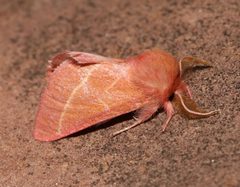
As a member of the Notodontidae , Hyparpax venus likely exhibits the typical prominent : a robust, hairy body with wings that fold tent-like over the at rest. The Hyparpax is characterized by moths with relatively broad wings and often subtle, earth-toned coloration. Specific color patterns for H. venus are not well documented in available sources.
Habitat
Available sources do not specify preferences for this . Based on -level patterns, Hyparpax species are generally associated with deciduous and mixed forests.
Distribution
North America. Specific range details within this region are not documented in available sources.
Similar Taxa
- Hyparpax auroraOverlapping North American range and similar size; distinguished by forewing pattern and genitalia
- Hyparpax perophoroidesSympatric in eastern North America; requires genitalic examination for separation
More Details
Taxonomic History
The was described by American entomologist Berthold Neumoegen in 1892, a period of intensive North American lepidopteran description. The name Hyparpax derives from Greek, with 'hypo' meaning 'under' and 'arpax' meaning 'seizer' or 'robber', though the etymological significance is unclear.
Research Status
This appears to be poorly studied, with limited published information on its , , or precise distribution. The 16 iNaturalist observations suggest it is encountered infrequently by citizen scientists, possibly due to habits and cryptic coloration.
Sources and further reading
- BugGuide
- GBIF taxonomy match
- iNaturalist taxon
- Catalogue of Life
- What a Wasp! | Bug Squad
- For Insect Ecologists, Some Rare Species Interactions Are a Sign of Things to Come
- Bug Eric: Spider Sunday: Orchard Orbweaver
- Uncategorized | Blog - Part 12
- Featured Guest Photo: A Spectacular Case of Mimicry | Beetles In The Bush
- A decade of ZooKeys: Publishing and communicating knowledge & love for zoology | Blog