
Hyparpax aurora
(Smith, 1797)
Pink Prominent
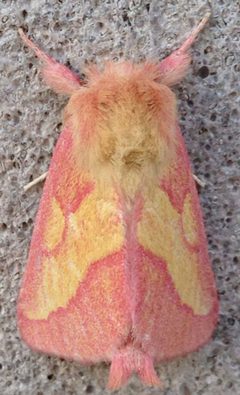
Hyparpax aurora, commonly known as the pink prominent, is a in the Notodontidae native to eastern North America. First described by James Edward Smith in 1797, this is notable for its distinctive pink and yellow coloration. It is listed as a species of special concern in Connecticut, indicating potential conservation vulnerability in parts of its range.
Pronunciation
How to pronounce Hyparpax aurora: /haɪˈpɑːrpæks ɔːˈrɔːrə/
These audio files are automatically generated. While they are not always 100% accurate, they are a good starting point.
Identification
The combination of pink and yellow coloration with a 30–36 mm wingspan distinguishes this from other North American Notodontidae. The specific color pattern of pink prominents separates it from the generally more cryptically colored relatives in the .
Images
Appearance
display a striking pink and yellow coloration. The wingspan ranges from 30–36 mm. The ' vivid color pattern is distinctive among North American prominents.
Distribution
Eastern North America. GBIF records also indicate presence in South Africa (ZA), though this may represent an introduced or data quality issue requiring verification.
Diet
Larval plants are in the Quercus (oaks) and Viburnum. feeding habits are not documented in available sources.
Host Associations
- Quercus - larval plant
- Viburnum - larval plant
Human Relevance
Listed as a of special concern in Connecticut, indicating regulatory recognition of potential conservation needs. No other documented economic or cultural significance.
Similar Taxa
- Other Notodontidae speciesMost North American prominents lack the distinctive pink and yellow coloration; they are typically more drab brown, gray, or green for camouflage.
More Details
Conservation Status
The is listed as being of special concern in the US state of Connecticut, suggesting localized decline or vulnerability in that region.
Taxonomic History
Originally described as Phalaena aurora by James Edward Smith in 1797, later transferred to the Hyparpax.
Sources and further reading
- BugGuide
- Wikipedia
- GBIF taxonomy match
- iNaturalist taxon
- NCBI Taxonomy
- Catalogue of Life
- 'The Well': The Hammocks Did It Well | Bug Squad
- The Last Survivors: Hammock-Style | Bug Squad
- Nature's Night Lights - Buglife Blog - Buglife
- Bug Eric: Colorado's State Insect: Colorado Hairstreak Butterfly
- Study Shines a (Fluorescent) Light on Invasive Fruit Fly Trapping
- An Inordinate Fondness #9 | Beetles In The Bush