
Nolidae
Bruand, 1846
Tufted Moths, Tuft Moths
Subfamily Guides
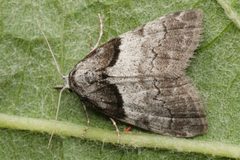
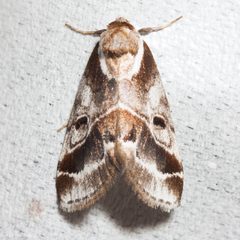
7Nolidae is a of small to medium-sized within the superfamily Noctuoidea, comprising approximately 1,400-1,700 described worldwide. Members are characterized by relatively dull coloration and, in the Nolinae and Collomeninae, distinctive tufts of raised on the forewings. The family was historically treated as a subfamily of Noctuidae but is now recognized as distinct based on morphological and molecular evidence. A defining feature of the family is the construction of a silk cocoon with a vertical exit slit for pupal .

Pronunciation
How to pronounce Nolidae: /ˈnoʊlaɪdiː/
These audio files are automatically generated. While they are not always 100% accurate, they are a good starting point.
Identification
Nolidae can be distinguished from related Noctuoidea by the combination of: (1) a silk cocoon with vertical exit slit (unique among Noctuoidea), (2) presence of forewing tufts in Nolinae and Collomeninae, and (3) generally small size with dull coloration. The family was formerly included in Noctuidae but is now separated based on these cocoon characteristics and molecular data. Within Noctuoidea, Nolidae lack the dense thoracic scaling of some Erebidae and the more robust body form typical of many Noctuidae sensu stricto. -level identification requires examination of genitalia and wing pattern details.
Images
Habitat
Nolidae occupy diverse including temperate and tropical forests, woodland edges, scrublands, and agricultural areas. The shows broad ecological , with recorded from lowland rainforests (e.g., Bornean resin-cocoon species associated with Vatica rassak trees) to montane regions and urban environments. Specific habitat associations vary by and species; for example, Garella musculana is associated with walnut orchards, while forest-dwelling species are linked to particular tree .
Distribution
Worldwide distribution with approximately 1,400-1,700 described . The is represented on all continents except Antarctica, with highest diversity in tropical regions. The Indian subcontinent 354 species (16.2% of global diversity), while the fauna of Baikal Nature Reserve in Russia and other Palaearctic regions has been documented. Specific distribution records include: Estonia and eastern Europe (Nola estonica), Russian Altai (Nola crambiformis), China (multiple Evonima and Westermannia species), Republic of Congo (Nouabalé-Ndoki National Park), Zambia, Uganda, and Borneo.
Seasonality
activity periods vary by and geographic region. In temperate zones, seasons typically span spring through autumn. Phenological data from the Baikal Nature Reserve (1981-2012) documents seasonal occurrence patterns for regional species. Tropical species may show year-round activity or seasonality tied to rainfall patterns.
Host Associations
- Juglans (walnut) - larval food plantGarella musculana feeds on shoots and fruits, causing shoot drying and fruit drop; recorded from walnut orchards in Bartın province, Turkey
- Oroxylum indicum - larval food plantNew record for Eligma narcissus from Kerala, India; first record of Bignoniaceae as host for Eligma
- Vatica rassak (Dipterocarpaceae) - cocoon construction materialUndescribed Nolidae (possibly Negritothripa) in Borneo uses resin flakes from this tree species to construct unique double-walled cocoon
- Neothoracaphis yanonis (aphid) - kleptoparasitismNola innocua is a kleptoparasite of this
Life Cycle
Holometabolous development with four stages: , larva, pupa, . Eggs are typically spherical or flattened; in Garella musculana, eggs are spherical, flattened, greenish-yellow with striped edges. Larvae pass through multiple instars (first instar ~5 mm, mature larvae ~10 mm in Garella musculana). occurs within a silk cocoon with vertical exit slit; cocoon construction varies, with some incorporating bark fragments or, uniquely, tree resin flakes. Adults emerge through the vertical slit. Specific durations and voltinism patterns vary by species and climate.
Behavior
Larvae of some exhibit distinctive cocoon-building . An undescribed Bornean species constructs a double-walled cocoon from tree resin flakes, creating a physical and chemical defense barrier with sharp external spines and toxic resin compounds. This behavior is unique among Lepidoptera and represents an evolutionary innovation in pupal protection. Nola innocua exhibits kleptoparasitic behavior, exploiting colonies. Larval feeding behavior causes specific damage : Garella musculana larvae cause shoot drying and premature fruit drop in walnut trees.
Ecological Role
Larvae function as herbivores, with some acting as significant agricultural pests. The includes pest species affecting walnut production (Garella musculana) and vegetable crops (Earias species). The undescribed Bornean resin-cocoon species demonstrates specialized plant-insect chemical interaction through resin . Kleptoparasitic species (Nola innocua) occupy a distinctive trophic position. As members of diverse , likely contribute to pollination and serve as prey for bats, birds, and other .
Human Relevance
Agricultural pests: Garella musculana causes 42% orchard-level damage and 15% shoot in Turkish walnut production. Earias are associated with vegetable crops in India. The 's distinctive cocoon has taxonomic significance for distinguishing pest species. Some species have been recorded from urban environments (e.g., Warsaw, Poland). The resin-cocoon building has attracted scientific interest for its evolutionary and biomimetic implications.
Similar Taxa
- NoctuidaeNolidae was formerly included within Noctuidae; distinguished by the vertical exit slit of the cocoon (Noctuidae typically have different cocoon structures or pupate in soil without cocoon)
- ErebidaeBoth within Noctuoidea; Erebidae typically show greater diversity in coloration and lack the characteristic forewing tufts and cocoon structure of Nolidae
More Details
Taxonomic History
Nolidae was historically treated as a (Nolinae) within Noctuidae. Molecular phylogenetic studies and morphological evidence, particularly cocoon structure, support its elevation to rank within Noctuoidea. The family comprises six primary subfamilies: Chloephorinae, Collomeninae, Eligminae, Nolinae, Risobinae, and several smaller subfamilies (Afridinae, Bleninae, Diphtherinae, Eariadinae, Westermanniinae).
Cocoon Diversity
While the silk cocoon with vertical exit slit is diagnostic for Nolidae, construction materials vary. Most use silk alone or incorporate bark fragments. The undescribed Bornean species represents an extreme specialization, using tree resin flakes from Vatica rassak to create a structurally and chemically defended pupal chamber. This suggests cocoon-building is evolutionarily plastic within the .
Sources and further reading
- BugGuide
- Wikipedia
- GBIF taxonomy match
- iNaturalist taxon
- NCBI Taxonomy
- Catalogue of Life
- Nolidae Archives - Entomology Today
- Caterpillar in Borneo Uses Tree Resin to Construct Cocoon
- Noctuoidea: Nolidae: Blenininae, Chloephorinae, Eariadinae, Westermanniinae
- TO THE FAUNA AND ECOLOGY OF BOMBYCOIDEA AND NOCTUOIDEA MOTHS (LEPIDOPTERA: LASIOCAMPIDAE, ENDROMIDIDAE, SPHINGIDAE, NOTODONTIDAE, EREBIDAE, NOLIDAE, NOCTUIDAE) OF BAIKAL NATURE RESERVE
- Ceviz güvesi Garella musculana (Erschov, 1874) (Lepidoptera: Nolidae)’un morfolojik karakterleri, Bartın ilinde yayılış alanları ve zarar oranı Morphological characters, damage rate and distribution areas of Walnut moth Garella musculana (Erschov, 1874) (Lepidoptera: Nolidae) in Bartın
- First record of Nola crambiformis Rebel, 1902 (Insecta: Lepidoptera, Nolidae) from the Russian Altai
- Descriptions of two new species associated with Westermannia nobilis Draudt, 1950 (Lepidoptera, Nolidae, Westermanniinae) from China
- Report on a new host plant for Eligma narcissus Cramer (Lepidoptera: Nolidae)
- Description of a new species of Genus Chloroplaga Hampson (Lepidoptera, Nolidae) from India
- The genus Earias (Lepidoptera: Nolidae) associated with vegetables from Karnataka
- On the taxonomy of Meganola cretacea (Hampson, 1914) with description of two new species (Lepidoptera, Nolidae, Nolinae)
- A new species of Evonima Walker, 1865 (Lepidoptera: Nolidae: Nolinae) from China
- A catalogue of Nolidae Bruand, 1846 from India (Lepidoptera, Noctuoidea)
- Two new Nolini (Lepidoptera: Nolidae: Nolinae) from Nouabalé-Ndoki National Park, Republic of Congo
- Butterflies and moths (Lepidoptera) in urban habitats: the moths of Warsaw I. Noctuidae, Pantheidae, Nolidae
- Neothoracaphis yanonis (MATSUMURA)(Homoptera : Aphididae) : A spring Host of a Kleptoparasitic Moth, Nola innocua BUTLER(Lepidoptera : Nolidae)
- Description of Nola estonica sp. nov., with comparison to N. aerugula and N. atomosa stat. rev. (Lepidoptera, Nolidae, Nolinae)