
Nolinae
Bruand, 1846
Genus Guides
3Nolinae is a of within the Nolidae, erected by Charles Théophile Bruand d'Uzelle in 1846. The subfamily contains numerous distributed across multiple biogeographic regions including the Palearctic, Afrotropical, Oriental, and Indomalayan realms. within Nolinae exhibit considerable morphological diversity, with some genera showing external resemblance to . Taxonomic research on Nolinae has focused heavily on genitalia for species discrimination and generic placement.

Pronunciation
How to pronounce Nolinae: /noʊˈlaɪniː/
These audio files are automatically generated. While they are not always 100% accurate, they are a good starting point.
Identification
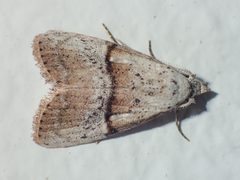
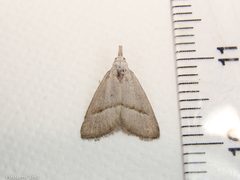
Members of Nolinae are distinguished from other Nolidae primarily by genitalia characteristics. Male genitalia configuration serves as the primary diagnostic feature for generic placement, particularly in complexes such as Evonima and related . External is highly variable across the subfamily; forewing patterns range from uniform to distinctly marked, and body size varies considerably among genera. Some Nolinae resemble in general appearance. Species-level identification typically requires examination of genitalia, as external features alone are often insufficient due to convergent similarities.
Images
Distribution
Nolinae has a broad geographic distribution spanning multiple continents. The occurs in the Palearctic region (including Europe, Russia, and China), the Afrotropical region (Ivory Coast, Republic of Congo, Uganda, Zambia, and other areas), the Oriental region (Southeast Asia), and the Indomalayan realm. Specific collection localities include Mont Tonkoui in Ivory Coast, Nouabalé-Ndoki National Park in Republic of Congo, Tianmushan Mountain in Zhejiang Province China, and various localities across India. The Evonima demonstrates a disjunct distribution pattern with Southeast Asian and African components. Some such as Nola estonica show transpalaearctic distribution patterns across eastern Europe and the temperate Far East.
Similar Taxa
- ArctiidaeSome Nolinae resemble in external appearance, though they belong to the Nolidae and are distinguished by genitalia and other internal morphological features.
More Details
Taxonomic Complexity
Nolinae exhibits substantial taxonomic complexity with numerous synonymies and ongoing generic revisions. Recent research has established 23 new synonymies in the Meganola alone, and has transferred between genera based on genitalia evidence. The Evonima generic complex has been particularly problematic, with African reassigned to new genera Vansonima and Laetonima based on male genitalia structure.
Research Focus
Contemporary Nolinae research emphasizes alpha , descriptions, and faunistic surveys. Major recent contributions include comprehensive revisions of Meganola in West Africa, descriptions of new Evonima species from China, and updated checklists for regions such as India. These studies rely heavily on combined with morphological analysis of and genitalia.
Sources and further reading
- BugGuide
- Wikipedia
- iNaturalist taxon
- NCBI Taxonomy
- Catalogue of Life
- An Updated Checklist of Subfamily Nolinae (Lepidoptera, Nolidae) from India
- A new species of Evonima Walker, 1865 (Lepidoptera: Nolidae: Nolinae) from China
- Review of the genus Meganola Dyar, 1898 of Ivory Coast and adjacent areas with descriptions of 5 new species and several taxonomic updates (Lepidoptera, Nolidae, Nolinae)—Taxonomic studies on West African Nolinae I.
- Two new Nolini (Lepidoptera: Nolidae: Nolinae) from Nouabalé-Ndoki National Park, Republic of Congo
- On the taxonomy of Meganola cretacea (Hampson, 1914) with description of two new species (Lepidoptera, Nolidae, Nolinae)
- Description of Nola estonica sp. nov., with comparison to N. aerugula and N. atomosa stat. rev. (Lepidoptera, Nolidae, Nolinae)
- A review of the genus Evonima Walker, 1865 from China with description of a new species (Lepidoptera, Nolidae, Nolinae)
- New records of the genus Nola Leach, 1815 (Lepidoptera, Nolidae, Nolinae) from China, with description of a new species
- Contribution to the knowledge of the Afrotropical Evonima Walker, 1865 generic complex with description of two new genera and two new species (Lepidoptera: Nolidae, Nolinae)