Syngrapha octoscripta
(Grote, 1874)
Figure-eight Looper Moth, Dusky Silver Y
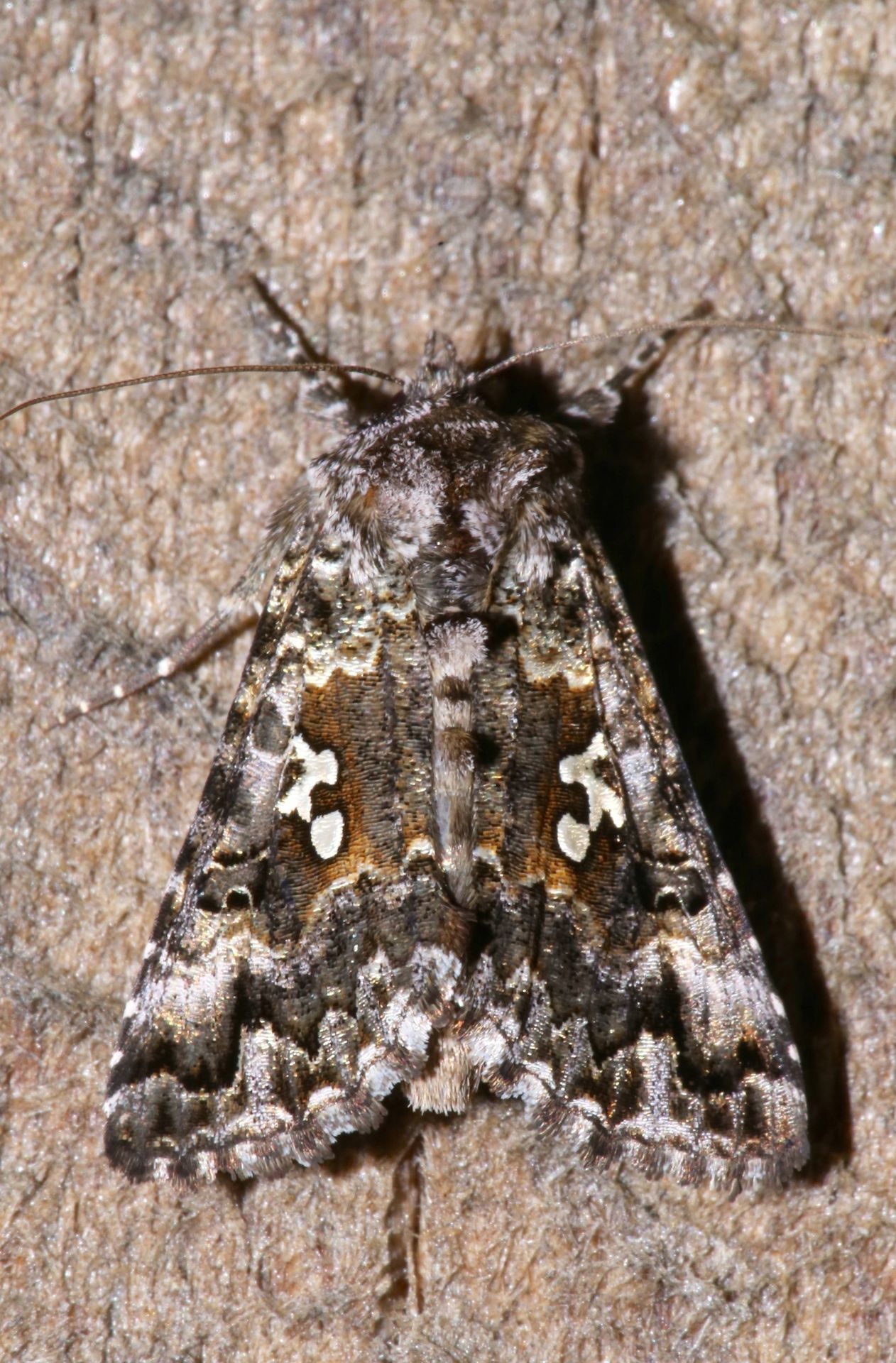
Syngrapha octoscripta is a noctuid native to North America, commonly known as the figure-eight looper moth or dusky silver Y. are medium-sized with a wingspan of 34–36 mm and display the characteristic silver Y-shaped marking typical of the . The has a single , with adults active during mid-summer. Larvae are specialized feeders on Vaccinium species.
Pronunciation
How to pronounce Syngrapha octoscripta: //sɪnˈɡræfə ˌɒktoʊˈskrɪptə//
These audio files are automatically generated. While they are not always 100% accurate, they are a good starting point.
Identification
The silver Y marking on the forewings distinguishes Syngrapha octoscripta from superficially similar noctuids lacking this pattern. Within the Syngrapha, precise identification requires examination of genitalia or detailed wing pattern analysis; S. octoscripta may be distinguished from by geographic range and specific wing pattern elements, though these require verification. The "figure-eight looper " suggests a pattern element, but this is not taxonomically diagnostic without further detail.
Images
Appearance
have a wingspan of 34–36 mm. Forewings display a distinctive silver Y-shaped marking, a diagnostic feature of the Syngrapha. The overall coloration is dusky or muted, consistent with the "dusky silver Y." Specific pattern details of the "figure-eight" marking referenced in one common name are not described in available sources.
Habitat
Associated with supporting Vaccinium , which serve as larval plants. These include and temperate forest understories, bogs, and heathlands where blueberries and related ericaceous shrubs occur.
Distribution
Transcontinental in Canada, from coast to coast. In the eastern United States, extends south to northern Pennsylvania, Ohio, and the Great Lakes states. Distribution records include Alberta, Manitoba, Saskatchewan, and Vermont.
Seasonality
are on wing from July to August, with exact timing varying by location. One per year ().
Diet
Larvae feed on Vaccinium . feeding habits are not documented in available sources.
Host Associations
- Vaccinium - larval plantEricaceae; includes blueberries and related
Life Cycle
: one per year. Specific details of , larval, and pupal stages are not documented in available sources.
Ecological Role
Larval herbivore on Vaccinium shrubs in and temperate forest . Specific ecological impacts or interactions are not documented.
Human Relevance
No documented economic or cultural significance. Occasionally encountered by naturalists and enthusiasts.
Similar Taxa
- Syngrapha aliasOverlapping range and similar silver Y forewing pattern; requires genitalia examination or detailed wing pattern analysis for reliable separation
- Syngrapha epigaeaCongeneric with similar overall appearance and preferences; distinguished by subtle wing pattern differences
- Autographa speciesRelated plusiine moths with silver Y markings; differ in wing pattern details and often in geographic range