Syngrapha abstrusa
Eichlin & Cunningham, 1978
Abstruse False Looper Moth, abstruse false looper
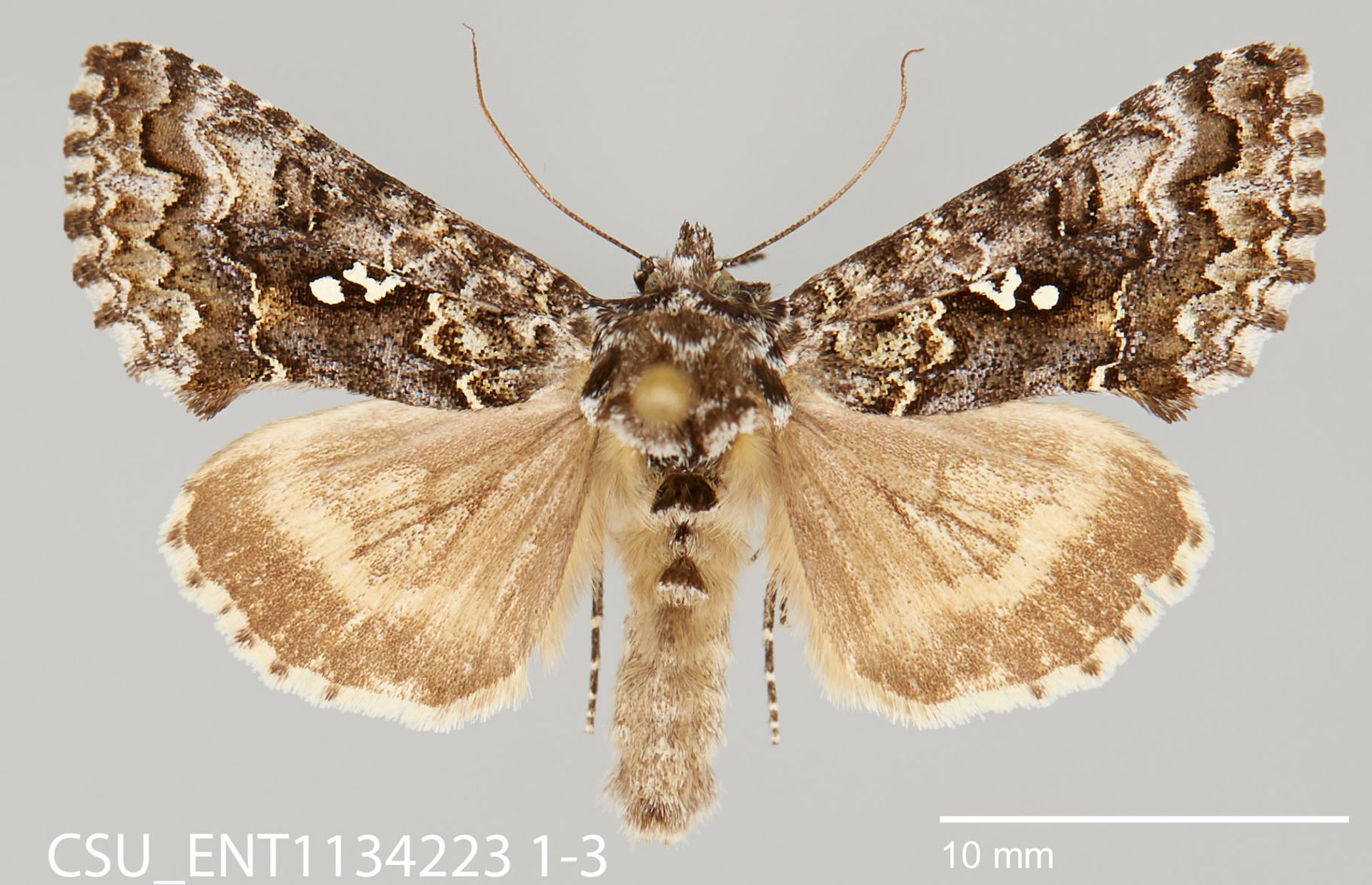
Syngrapha abstrusa is a noctuid described in 1978 from North American specimens. are medium-sized with wingspans of 30–32 mm. Larvae are specialized feeders on conifer foliage, particularly spruce and pine . The species exhibits a transcontinental northern distribution pattern.
Pronunciation
How to pronounce Syngrapha abstrusa: /sɪnˈɡræfə æbˈstruːsə/
These audio files are automatically generated. While they are not always 100% accurate, they are a good starting point.
Identification
Distinguished from similar false looper moths (Plusiinae) by combination of size, geographic range, and genitalia . External identification to level often requires dissection and comparison with reference specimens. Resembles other Syngrapha species; separation from S. epigaea and S. octoscripta particularly difficult based on wing pattern alone.
Images
Appearance
Habitat
and montane coniferous forests. Associated with stands of conifers including Engelmann spruce, white spruce, and jack pine. Occurs in both continuous forest and fragmented woodland within its range.
Distribution
North America: Newfoundland to New Jersey, southern Canada (Alberta, Manitoba, Saskatchewan, Quebec), Montana, and northern New Mexico. Distribution corresponds broadly with ranges of primary conifers.
Seasonality
period June to August, varying with latitude and elevation. Single-brooded () inferred from narrow flight window.
Diet
Larvae feed on foliage of Picea engelmannii (Engelmann spruce), Picea glauca (white spruce), and Pinus banksiana (jack pine). feeding habits unknown.
Host Associations
- Picea engelmannii - larval Engelmann spruce
- Picea glauca - larval white spruce
- Pinus banksiana - larval jack pine
Life Cycle
Complete with , larva, pupa, and stages. Larval stage feeds on conifer needles. stage inferred to be pupa or late-instar larva based on early summer adult , though not directly documented.
Behavior
are and attracted to light. Larvae are solitary foliage feeders on conifers. Specific behavioral details beyond feeding and activity remain undocumented.
Ecological Role
Larval herbivore in coniferous forest . likely influenced by tree availability and quality. Potential prey for insectivorous birds and other .
Human Relevance
No documented economic or medical significance. Occasionally encountered in forestry and biodiversity surveys. Scientific interest primarily taxonomic and ecological.
Similar Taxa
- Syngrapha epigaeaOverlapping range and similar external ; requires genitalia examination for reliable separation
- Syngrapha octoscriptaSimilar size and wing pattern; distinguished by subtle differences in forewing markings and genitalia structure
- Syngrapha aliasShared and associations; S. alias typically shows more contrasting forewing pattern elements
More Details
Taxonomic history
Described as a distinct in 1978 by Eichlin and Cunningham, separating it from previously confused within the S. epigaea . Type series from multiple North American localities established the species' geographic range.
Research needs
details remain poorly documented. Specific larval instar descriptions, site preferences, and require field study. in relation to tree stress or defoliation events unknown.