
Sericaglaea signata
(French, 1879)
Variable Sallow, Variable Sallow Moth
Sericaglaea signata, commonly known as the Variable Sallow , is a noctuid moth found in eastern and central North America. are active from October through May, with a single per year and adults. The species has a wingspan of 35–43 mm. Larvae feed on the leaves of oak (Quercus), cherry/plum (Prunus), and basswood/linden (Tilia) species.
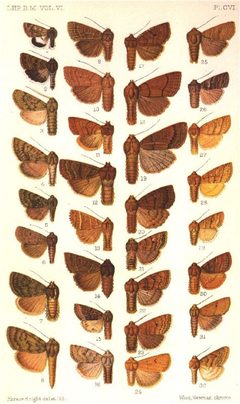
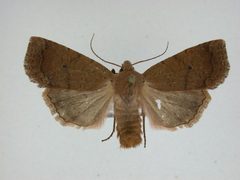

Pronunciation
How to pronounce Sericaglaea signata: /ˌsɛrɪkəˈɡliːə sɪɡˈneɪtə/
These audio files are automatically generated. While they are not always 100% accurate, they are a good starting point.
Identification
The Variable Sallow can be distinguished from similar noctuid moths by its autumn-to-spring period (unusual for most moths), its specific plant associations with Quercus, Prunus, and Tilia, and its geographic range in the eastern United States. The name 'signata' refers to the variable but distinctive markings. may be confused with other Xylenini tribe members, but the combination of flight season and forewing pattern helps separate it from .
Images
Appearance
have a wingspan of 35–43 mm. The exhibits variable coloration typical of sallow , with forewings that are generally dull brownish to grayish with subtle patterning. The hindwings are typically paler. The overall appearance is cryptic, aiding in camouflage against tree bark during daytime roosting.
Habitat
Deciduous and mixed forests, woodlands, and suburban areas with tree present. Associated with oak-hickory forests and areas containing basswood or cherry trees.
Distribution
Eastern and central North America: from Connecticut south to Florida, and west to Missouri and Texas.
Seasonality
are active from October through May, with peak activity varying by latitude. The has one per year (). Adults overwinter, making this one of the few species regularly active during winter months in temperate regions.
Diet
Larvae feed on the leaves of Quercus (oak), Prunus (cherry, plum), and Tilia (basswood, linden) . Specific feeding habits of are not documented in available sources.
Host Associations
- Quercus - larval food plantoak
- Prunus - larval food plantcherry and plum
- Tilia - larval food plantbasswood and linden
Life Cycle
(one per year). are laid in late autumn or early winter. Larvae develop through the growing season, feeding on plant leaves. occurs in soil or leaf litter. emerge in autumn and are active through winter, with the ability to withstand freezing temperatures. This winter-active strategy is unusual among noctuid .
Behavior
are and attracted to light. They are among the few regularly encountered during winter months, suggesting physiological adaptations for cold-weather activity. Adults seek shelter in bark crevices or similar protected locations during daylight hours.
Ecological Role
Larvae function as folivores (leaf-feeders) on hardwood trees, contributing to nutrient cycling and serving as prey for and . may serve as winter food sources for birds and other when few other insects are active.
Human Relevance
Minor significance. Not considered an agricultural or forestry pest due to its scattered distribution and preference for wild plants. Occasionally encountered by naturalists and enthusiasts due to its unusual winter period. May be observed at porch lights during winter months.
Similar Taxa
- Other Xylenini mothsSimilar general appearance, but distinguished by season (most Xylenini are spring-flying) and specific forewing pattern details
- Eupsilia spp.Other winter-active noctuids with similar preferences; distinguished by wing shape and pattern details
More Details
Taxonomic history
Originally described as Orhtosia signata by French in 1879, later transferred to the Sericaglaea. The genus name combines 'serica' (silk) and 'aglaea' (brightness/beauty), possibly referring to the sheen of the wings.
Physiological note
The ability of to remain active through winter months suggests cryoprotectant mechanisms or freeze , though specific physiological studies have not been documented in the provided sources.
Sources and further reading
- BugGuide
- Wikipedia
- GBIF taxonomy match
- iNaturalist taxon
- NCBI Taxonomy
- Catalogue of Life
- Meloidae Holdings | Entomology Research Museum
- Monarda marauder: Raspberry pyrausta, Pyrausta signatalis — Bug of the Week
- Return of the monarda marauder: Raspberry pyrausta, Pyrausta signatalis — Bug of the Week
- Bug Eric: Blodgett Peak Bioblitz Report
- Archive — Bug of the Week