
Spodoptera latifascia
Walker, 1856
velvet armyworm, lateral-lined armyworm, garden armyworm
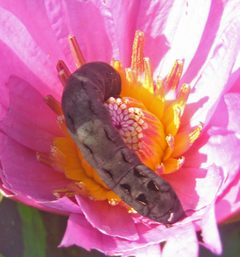
Spodoptera latifascia is a noctuid native to Central America and the Antilles, extending into North America from Texas to Florida. have a wingspan of approximately 42 mm and are active from March to October depending on location. The was originally described by Walker in 1856 as Prodenia latifascia. Spodoptera cosmioides, a South American species formerly considered synonymous with S. latifascia, has been reinstated as a valid species.

Pronunciation
How to pronounce Spodoptera latifascia: /ˌspoʊdəpˈtɪrə ˌlætɪˈfeɪʃə/
These audio files are automatically generated. While they are not always 100% accurate, they are a good starting point.
Identification
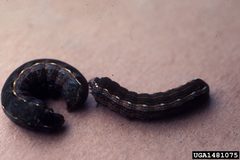
distinguished by wingspan of approximately 42 mm. Distinguished from the related South American Spodoptera cosmioides by geographic range; S. latifascia occurs in North and Central America while S. cosmioides is restricted to South America (Argentina to Rica). Larval identification requires examination of specific morphological characters: presence and pattern of black markings on abdominal segments, characteristics of subspiracular lines, and relative size of spots on first versus eighth abdominal segments.
Images
Habitat
Subtropical dry zones; agricultural landscapes with and horticultural crops; semiarid tropical regions with extreme summer temperatures and prolonged drought periods; non-crop including edges with grasses and areas with spontaneous vegetation.
Distribution
Central America; Antilles; North America from Texas to Florida; Puerto Rico. Type locality: Jamaica.
Seasonality
on wing from March to October depending on location.
Diet
larval feeding on wide variety of plant .
Life Cycle
laid on plastic surfaces and vegetation; emerge from eggs after approximately 10 days under laboratory conditions at 25±2°C, 60±9% RH, 14:10 .
Behavior
Females exhibit atypical oviposition , laying on plastic surfaces and non-crop without selectivity for plants that support larval development. No strong pattern; limited flying capability of only a few kilometers per .
Ecological Role
Human Relevance
Occasional pest of agricultural crops; larvae feed on foliage and can damage seedlings, mature plants, and pods. Subject of documentation—larvae have been observed scavenging dried human skin on cadavers.
Similar Taxa
- Spodoptera cosmioidesFormerly considered synonymous with S. latifascia but reinstated as valid ; distinguished by geographic distribution (South America vs. North/Central America) and larval including presence of dark spot on mesothoracic segment and uninterrupted subspiracular line.
- Spodoptera eridaniaLarvae similar in appearance; distinguished by pattern of black markings on abdominal segments and characteristics of subspiracular lines.
- Spodoptera frugiperdaBoth are with overlapping geographic range; S. frugiperda larvae distinguished by pinaculae with single stout seta forming square pattern on eighth abdominal segment and inverted white Y-shaped mark on .
Sources and further reading
- BugGuide
- Wikipedia
- GBIF taxonomy match
- iNaturalist taxon
- NCBI Taxonomy
- Catalogue of Life
- Quick Guide to Armyworms on Soybean | Beetles In The Bush
- October | 2013 | Beetles In The Bush
- Noctuidae | Beetles In The Bush | Page 2
- Lepidoptera | Beetles In The Bush | Page 6
- Forensic Entomology is More than Just Blow Flies and Beetles
- economic pests | Beetles In The Bush
- First report of natural parasitism by Telenomus remus Nixon, 1937 on Spodoptera latifascia Walker, 1856 eggs in Puerto Rico: insights into spatial-temporal dynamics in a semiarid tropical region.