
Peridroma
Hübner, 1821
variegated cutworm moth
Species Guides
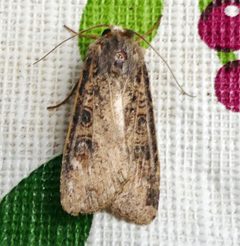
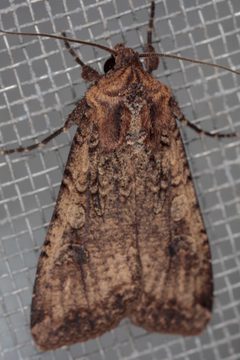
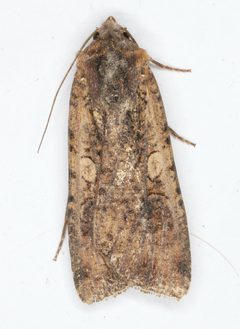
1- Peridroma saucia(Variegated Cutworm)
Peridroma is a of owlet moths in the Noctuidae, Noctuinae. The genus includes approximately 12 described , with Peridroma saucia (variegated cutworm) being the most economically significant due to its status as a widespread agricultural pest. Species in this genus are found across North America, Europe, and parts of Asia, with some species introduced to new regions. The genus is characterized by medium-sized with relatively stout bodies and cryptic coloration typical of noctuine moths.
Pronunciation
How to pronounce Peridroma: /ˌpɛrɪˈdroʊmə/
These audio files are automatically generated. While they are not always 100% accurate, they are a good starting point.
Images
Habitat
Agricultural fields and farmlands, including potato, soybean, wheat, corn, and tobacco fields. have been observed in open fields, cultivated areas, and disturbed . In North America, larvae are associated with field crops and weedy vegetation.
Distribution
Native to Europe (first recorded 1790); established in Canada, United States, and Europe; in South Korea and Japan since the 1970s; present in China (first Sichuan Province 1985, now reported in at least 13 provinces; widespread in Huang-Huai River Basin since 2016-2018). GBIF records indicate presence in Denmark, Norway, Sweden, Vermont (USA), and other US locations.
Life Cycle
Larvae overwinter in stages. occurs in soil. emerge in late spring and early summer, with some undergoing at high elevations during midsummer heat. Females deposit on bare soil, especially in cultivated or overgrazed conditions; egg hatching is triggered by rainfall.
Behavior
are and attracted to light. Males locate females using detected via . When disturbed, larvae coil into a tight "C" shape. Adults are capable of sustained ; laboratory experiments show individuals can fly more than 50 miles, with one individual flying 23 hours at 5.8 mph (equivalent to 133 miles). Adults may spray a liquid substance from the when disturbed as a defense mechanism. Some migrate to high elevations to aestivate, gathering in rockslides or cavities.
Ecological Role
Larvae of some , particularly Peridroma saucia, are significant agricultural pests causing yield reductions of 30-60% in severely damaged soybean fields. serve as of flowering plants, including apple trees, contributing to pollination services in agricultural systems. Larvae are prey for parasitic including braconid species. Adult are a critical food source for Grizzly Bears in parts of Montana and Wyoming during periods of food scarcity.
Human Relevance
Major agricultural pest status due to larval damage to field crops. Larvae feed on stems of young plants and can defoliate vegetation. Subject of research. recognized as contributing in orchard systems, complicating simple "pest" categorizations. Used in studies of -binding proteins for potential strategies.
Similar Taxa
- EuxoaBoth contain "" with similar larval habits and strategies; larvae of both coil into "C" shape when disturbed and are agricultural pests. Euxoa auxiliaris () shares and geographic range with Peridroma species.
- MythimnaBoth are Noctuidae with larvae considered agricultural pests; Mythimna unipuncta () and Peridroma saucia were the two most common noctuid observed in apple pollination studies in Arkansas.
More Details
Pheromone Biology
Peridroma saucia females produce Z11-16: Ac and Z9-14: Ac in a ratio of 2.1:1 to 2.4:1 during calling and copulation. The -binding protein PsauPBP3, predominantly expressed in male , shows high binding affinity for both pheromones. Five key residues (Thr-10, Phe-13, Ile-53, Ile-95, and Phe-119) are critical for ligand binding.
Pollinator Duality
Research on apple pollination demonstrates that Peridroma saucia and other noctuid contribute significantly to pollination. In Arkansas studies, nocturnal pollination rates reached 57.5% in 2017, with nocturnally pollinated fruit showing similar seed sets to diurnally pollinated fruit. This challenges simple "pest" classifications for these .
Sources and further reading
- BugGuide
- Wikipedia
- GBIF taxonomy match
- iNaturalist taxon
- NCBI Taxonomy
- Catalogue of Life
- Peridroma saucia Archives - Entomology Today
- Bug Eric: National Moth Week 2024 Recap from Kansas City
- Bug Eric: Winter 'pillars
- P.M. Pollinators: Study Shines Light on Nocturnal Insects' Role in Apple Production
- Binding Mechanism of PsauPBP3 to Sex Pheromones in Peridroma saucia: Insights from Computational and Experimental Approaches.