
Euxoa velleripennis
Grote, 1874
Fleece-winged Dart
Euxoa velleripennis, commonly known as the fleece-winged dart, is a of cutworm moth in the Noctuidae. The species is distributed across North America, with records from Canada (Manitoba, Saskatchewan) and the United States (Vermont). Like other Euxoa species, the larvae are cutworms that feed on plant stems and can damage agricultural crops. The species is assigned Hodges number 10803 in the North American classification system.


Pronunciation
How to pronounce Euxoa velleripennis: /juːkˈsoʊə vɛlərɪˈpɛnɪs/
These audio files are automatically generated. While they are not always 100% accurate, they are a good starting point.
Identification
Specific diagnostic features distinguishing Euxoa velleripennis from are not documented in available sources. Identification to level in Euxoa typically requires examination of genitalia or reference to regional faunal works. The suggests possible distinctive wing scaling that may aid field recognition. Specimens from the known range (Manitoba, Saskatchewan, Vermont) should be compared with similar Euxoa species such as Euxoa messoria or Euxoa ochrogaster.
Images
Appearance
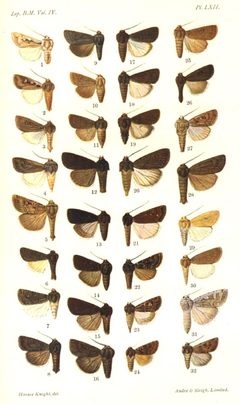
No specific description of appearance is available for this . As a member of the Euxoa, adults are likely drab, brownish typical of the Noctuinae . The "fleece-winged dart" may refer to distinctive wing scaling or texture. Larvae, like other cutworms in the genus, are plump, cylindrical caterpillars that curl into a C-shape when disturbed.
Habitat
Specific associations for this are not documented. Based on -level patterns, Euxoa species typically occupy open habitats including grasslands, agricultural fields, and disturbed areas where larval plants are available.
Distribution
North America: recorded from Manitoba and Saskatchewan in Canada, and Vermont in the United States. The full extent of the range is likely broader given the general North American distribution reported in sources.
Diet
Larval feeding habits are inferred from -level patterns: larvae in Euxoa feed on stems and leaves of herbaceous plants, including grasses and agricultural crops. Specific plant records for this are not available.
Life Cycle
Behavior
are and attracted to light. Larvae exhibit typical : nocturnal feeding on plant stems, curling into a C-shape when disturbed, and daytime concealment in soil or under debris.
Ecological Role
As a , larvae function as herbivores that can influence plant composition and agricultural productivity. may serve as prey for including bats and birds. Specific ecological studies on this are not available.
Human Relevance
Potential agricultural pest as a , though specific damage records for this are not documented. The Euxoa includes several economically significant cutworm species that damage cereal crops, corn, and other field crops.
Similar Taxa
- Euxoa messoriaOverlapping range and similar ; requires genitalia examination for reliable separation
- Euxoa ochrogasterAnother widespread North American Euxoa with similar larval habits and preferences
- Euxoa auxiliaris with similar and , though more western in distribution and with documented migratory not reported for E. velleripennis
More Details
Taxonomic reference
Hodges number 10803 in the North American Lepidoptera checklist system
Etymology
Specific epithet 'velleripennis' likely refers to woolly or fleece-like wing scaling (Latin 'vellus' = fleece, 'penna' = wing)
Sources and further reading
- BugGuide
- Wikipedia
- GBIF taxonomy match
- iNaturalist taxon
- NCBI Taxonomy
- Catalogue of Life
- Aboveground Pests - AgriLife Extension Entomology
- Stem- and Leaf- Feeding Insects - AgriLife Extension Entomology
- Bug Eric: Winter 'pillars
- How Army Cutworm Moths Bounce Between Midwest Heat and Alpine Cool
- Bug Eric: My Kind of Fourth of July
- Bug Eric: July 2019