
Euxoa stygialis
Barnes & McDunnough, 1912
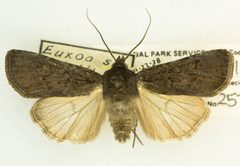
Euxoa stygialis is a of or dart moth in the Noctuidae, first described by William Barnes and James Halliday McDunnough in 1912. It is found in North America and has been assigned MONA/Hodges number 10761. Like other Euxoa species, it is part of the diverse cutworm moth fauna that includes agricultural pests, though specific details for this species remain poorly documented.

Pronunciation
How to pronounce Euxoa stygialis: /juːkˈsoʊ.ə stɪˈdʒiː.əlɪs/
These audio files are automatically generated. While they are not always 100% accurate, they are a good starting point.
Identification
Euxoa stygialis can be distinguished from similar Euxoa by reference to the MONA/Hodges number 10761 in North American identification systems. As with many Euxoa species, precise identification typically requires examination of genitalia or reference to specialized faunal works. The species name "stygialis" (relating to the River Styx, dark or gloomy) may suggest darker coloration, though this is speculative without verified specimen descriptions.
Images
Distribution
North America. Specific range details beyond continental distribution are not documented in available sources.
Similar Taxa
- Euxoa auxiliaris, a well-documented congeneric with extensive agricultural pest records; E. stygialis likely shares general and habits but lacks the detailed documentation available for E. auxiliaris
- Euxoa mimallonisRuddy-winged Dart, another Euxoa found in similar North American ; both belong to the same and share the dart moth , though E. stygialis is less frequently recorded in citizen science observations
- Euxoa messoriaDark-sided , a congeneric agricultural pest with similar cutworm larval habits; -level distinctions require technical examination
Sources and further reading
- BugGuide
- Wikipedia
- GBIF taxonomy match
- iNaturalist taxon
- NCBI Taxonomy
- Catalogue of Life
- Aboveground Pests - AgriLife Extension Entomology
- Stem- and Leaf- Feeding Insects - AgriLife Extension Entomology
- Bug Eric: Winter 'pillars
- How Army Cutworm Moths Bounce Between Midwest Heat and Alpine Cool
- Bug Eric: My Kind of Fourth of July
- Bug Eric: July 2019