
Euxoa lineifrons
Smith, 1890
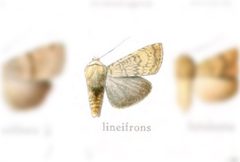
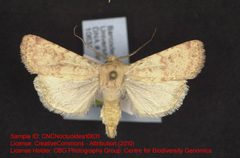
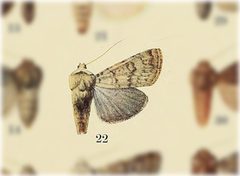
Euxoa lineifrons is a of or dart moth in the Noctuidae. The species was described by Smith in 1890. Like other Euxoa species, it is a whose larvae are known as cutworms. The MONA or Hodges number for this species is 10784, a standardized numbering system used for North American Lepidoptera identification.
Pronunciation
How to pronounce Euxoa lineifrons: /juːkˈsɔː.ə laɪn.iːˈfrɒnz/
These audio files are automatically generated. While they are not always 100% accurate, they are a good starting point.
Identification
Euxoa lineifrons can be distinguished from similar Euxoa by reference to its specific epithet "lineifrons," which refers to linear markings on the (forehead) of the . The species is assigned Hodges number 10784 in the North American moth numbering system. Accurate identification to species level typically requires examination of genitalia characters or molecular analysis, as many Euxoa species are morphologically similar.
Images
Distribution
North America. Specific distribution details beyond the continental level are not well documented in available sources.
Behavior
are and attracted to light sources. This is consistent with the Noctuidae, though specific behavioral observations for E. lineifrons are not documented in available sources.
Similar Taxa
- Euxoa auxiliarisBoth are Euxoa with larvae; E. auxiliaris () is a well-documented agricultural pest with known to alpine environments, while E. lineifrons lacks detailed ecological documentation.
- Euxoa mimallonisBoth are Euxoa dart moths found in North America with similar ; E. mimallonis (ruddy-winged dart) has been documented at blacklight stations in Colorado Springs, suggesting overlapping geographic range and .
More Details
Taxonomic Authority
The was described by Smith in 1890, with the original description published in a work on North American Noctuidae.
Hodges Number
The MONA ( of North America) or Hodges number 10784 provides a standardized reference for this in North American lepidopteran databases and field guides.
Sources and further reading
- BugGuide
- Wikipedia
- GBIF taxonomy match
- iNaturalist taxon
- NCBI Taxonomy
- Catalogue of Life
- Aboveground Pests - AgriLife Extension Entomology
- Stem- and Leaf- Feeding Insects - AgriLife Extension Entomology
- Bug Eric: Winter 'pillars
- How Army Cutworm Moths Bounce Between Midwest Heat and Alpine Cool
- Bug Eric: My Kind of Fourth of July
- Bug Eric: July 2019