
Euxoa conjuncta
Smith, 1890
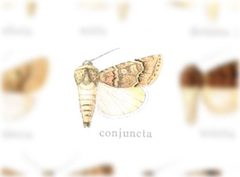
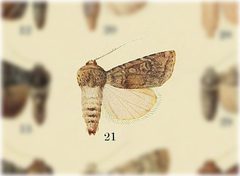
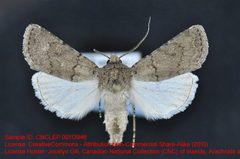
Euxoa conjuncta is a of owlet moth in the Noctuidae, described by Smith in 1890. It belongs to the Euxoa, which includes numerous species that are agricultural pests. The species is recorded from North America. Like other Euxoa species, it likely has a involving , larval (cutworm), pupal, and stages, with larvae that may damage crops by cutting stems at or below the soil surface.
Pronunciation
How to pronounce Euxoa conjuncta: /juˈksɔ.a kɔnˈjʊŋk.ta/
These audio files are automatically generated. While they are not always 100% accurate, they are a good starting point.
Identification
Euxoa conjuncta can be distinguished from similar Euxoa by genitalia characteristics, which are the primary means of identification within this . External is generally similar to other Euxoa species, featuring drab brownish or grayish coloration typical of the group. Accurate identification requires examination of male genitalia or female ovipositor structure. The species lacks the distinctive wing patterns that would allow reliable visual separation from in the field.
Images
Distribution
North America. Specific state or provincial records are not documented in the provided sources, but the Euxoa is broadly distributed across the continent with highest diversity in western regions.
Human Relevance
As a member of the Euxoa, E. conjuncta has potential significance as an agricultural pest. Cutworms in this genus are known to damage field crops including sorghum, wheat, barley, oats, and other cereals by cutting seedlings at or below the soil surface. However, specific documentation of E. conjuncta as a documented crop pest is not available in the provided sources; its pest status relative to other Euxoa remains unclear.
Similar Taxa
- Euxoa auxiliaris (Army Cutworm)The is the most extensively documented Euxoa in North America, sharing similar drab appearance and larval habits. It differs in having a well-documented migratory to alpine regions for summer and serving as a critical food source for grizzly bears.
- Euxoa mimallonis (Ruddy-winged Dart)Another Euxoa with similar general appearance, distinguishable by specific wing pattern and genitalia characteristics. Both species are attracted to light traps.
- Agrotis spp.Related noctuid with similar larval . Agrotis often have more distinctive forewing markings including and spots that can aid in visual identification, whereas Euxoa species typically require genitalia examination for reliable separation.
More Details
Taxonomic Note
Euxoa conjuncta was described by Smith in 1890. The Euxoa is taxonomically complex with over 100 described in North America, many of which are difficult to distinguish without dissection and examination of genitalia. The specific epithet 'conjuncta' (Latin for 'joined' or 'connected') may refer to a morphological feature of the , though the original description was not accessed for this record.
Research Gaps
Unlike the well-studied (Euxoa auxiliaris), E. conjuncta lacks published studies on its , thermal , , or ecological interactions. The has no observations in iNaturalist as of the data retrieval date, suggesting it may be rarely encountered, underreported, or difficult to identify from photographs.
Sources and further reading
- BugGuide
- GBIF taxonomy match
- iNaturalist taxon
- NCBI Taxonomy
- Catalogue of Life
- Aboveground Pests - AgriLife Extension Entomology
- Stem- and Leaf- Feeding Insects - AgriLife Extension Entomology
- Bug Eric: Winter 'pillars
- How Army Cutworm Moths Bounce Between Midwest Heat and Alpine Cool
- Bug Eric: My Kind of Fourth of July
- Bug Eric: July 2019