
Euxoa annulipes
Smith, 1890
Ring-legged Cutworm
Euxoa annulipes is a of cutworm moth in the Noctuidae, described by Smith in 1890. The "ring-legged " refers to characteristic banding on the legs. Like other Euxoa species, the larvae are soil-dwelling caterpillars that feed on plant stems at or near the soil surface. The species is part of a large of cutworms that are significant agricultural pests, though specific details about E. annulipes are sparse in the literature compared to better-studied such as the ().
Pronunciation
How to pronounce Euxoa annulipes: //juːkˈsoʊ.ə ænˈjuː.lɪˌpiːz//
These audio files are automatically generated. While they are not always 100% accurate, they are a good starting point.
Identification
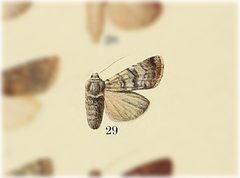
can be distinguished from similar Euxoa by the annulated (ringed) , referenced in the species name. Identification to species level typically requires examination of genitalia structures. Larvae are not readily distinguishable from other Euxoa cutworms without rearing to adults. Similar to Euxoa messoria (darksided cutworm) and Euxoa ochrogaster (redbacked ) but leg banding pattern differs. () is larger with different and lacks distinct leg rings.
Images
Habitat
Associated with agricultural fields, grasslands, and open disturbed . Larvae occur in soil of crop fields and weedy areas. are and attracted to lights. Specific microhabitat preferences are not well documented in published literature.
Distribution
North America. Distribution records indicate presence across the continent, though precise range boundaries are not well established in available sources. GBIF records confirm North American distribution.
Seasonality
activity period is not precisely documented. As a typical Euxoa , likely has spring and/or fall adult periods with larvae present in soil during growing season. Exact requires regional study.
Life Cycle
Complete (holometabolous). laid on soil or low vegetation. Larvae are soil-dwelling cutworms that feed on plant stems. occurs in soil. Number of per year not established in available literature for this . stage likely as larva or pupa, typical for the .
Behavior
Larvae are feeders, hiding in soil or under debris during daylight. When disturbed, larvae curl into a defensive C-shape. are nocturnal, attracted to artificial light sources. Specific behavioral details for this are not documented beyond general traits.
Ecological Role
Larvae function as herbivores and agricultural pests, cutting plant stems at soil surface. Serve as prey for ground-foraging birds, rodents, and predatory insects. may contribute to pollination through incidental nectar feeding, though this is not documented for this specifically. Soil-dwelling larvae contribute to nutrient cycling through burrowing activity.
Human Relevance
Potential agricultural pest as a , though specific crop damage records for E. annulipes are sparse compared to more common . The Euxoa collectively causes significant economic damage to small grains, corn, and other crops. Not known to be a target of programs specifically. No documented medical or cultural significance.
Similar Taxa
- Euxoa auxiliaris, much better studied, larger, migratory, lacks distinct leg rings, major pest of small grains
- Euxoa messoriaDarksided cutworm, similar size and coloration, distinguished by leg pattern and genitalia
- Euxoa ochrogasterRedbacked , similar and habits, reddish stripe on larvae distinguishes it
More Details
Taxonomic note
Euxoa annulipes is one of over 150 in the Euxoa, a large and taxonomically challenging group of Noctuidae. Species boundaries often require genitalic dissection for confirmation. The specific epithet refers to the ringed legs (annulipes = ring-footed), a diagnostic character for this species.
Data gaps
Unlike the well-studied (E. auxiliaris), E. annulipes lacks published studies on its thermal , , or detailed . Available information is primarily taxonomic and distributional.
Sources and further reading
- BugGuide
- GBIF taxonomy match
- iNaturalist taxon
- NCBI Taxonomy
- Catalogue of Life
- Encyrtid Holdings | Entomology Research Museum
- Aboveground Pests - AgriLife Extension Entomology
- Bug Eric: Winter 'pillars
- How Army Cutworm Moths Bounce Between Midwest Heat and Alpine Cool
- Bug Eric: Picture-winged Flies
- Bug Eric: My Kind of Fourth of July