
Euxoa adumbrata
(Eversmann, 1842)
Sordid Dart
Euxoa adumbrata, commonly known as the sordid dart, is a noctuid first described by Eduard Friedrich Eversmann in 1842. It occurs across northern regions of North America and Eurasia, including northern Canada, Alaska, Greenland, Scandinavia, and the Ural Mountains. The species has one per year, with active during summer months. Larvae feed on Taraxacum and Polygonum species.
Pronunciation
How to pronounce Euxoa adumbrata: /juːˈksɔːə ədʊmˈbɹɑːtə/
These audio files are automatically generated. While they are not always 100% accurate, they are a good starting point.
Identification
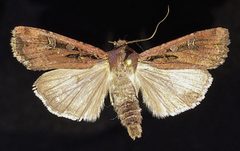
Euxoa adumbrata can be distinguished from similar Euxoa by its distribution combined with period (June–August in North America, July–August in Europe). The species has been historically confused with Euxoa lidia in Denmark, with some authors treating them as distinct species. The relatively small wingspan (34–40 mm) and dull, unmarked appearance of the hindwings help separate it from larger or more boldly patterned . Genitalia examination may be required for definitive identification from closely related species.
Images
Appearance
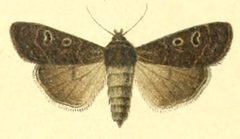
have a wingspan of 34–40 mm. The forewings are typically dull grayish-brown with darker markings, consistent with the 'sordid dart.' Wing pattern includes the typical noctuid configuration with and spots. Hindwings are pale, usually whitish or grayish with darker margins. Body is stout and densely scaled, typical of the Euxoa.
Habitat
and subarctic including tundra, taiga, and northern forest edges. In North America, occurs in open grassy areas, meadows, and disturbed sites within the northern forest zone. At southern limits of its range, found in montane habitats up to elevations in Colorado. Larval habitat includes areas supporting plants Taraxacum and Polygonum.
Distribution
Holarctic distribution. In North America: across northern Canada from Quebec to western Alaska, south to northern United States and in Rocky Mountains to Colorado. Also occurs in Greenland. In Eurasia: coastal areas of Scandinavia, the Ural Mountains, and recently recorded from Denmark (though records may include Euxoa lidia).
Seasonality
with one per year. on wing June to August in North America; July to August in northern Europe. Larvae present during growing season, likely as partially grown larvae based on patterns.
Diet
Larvae feed on Taraxacum (dandelion) and Polygonum (knotweed/buckwheat) . feeding habits not documented.
Host Associations
- Taraxacum - larval food plant of dandelions
- Polygonum - larval food plant of knotweeds and buckwheats
Life Cycle
One per year. likely laid in late summer. Larvae feed on plants and presumably overwinter as larvae, pupating in soil in spring. emerge in summer. Specific details of egg and pupal stages not documented.
Behavior
Ecological Role
Larval herbivore in and subarctic . Serves as prey for including birds, bats, and . Not a significant agricultural pest due to northern distribution and plant preferences.
Human Relevance
Minor significance. Not a major agricultural pest. may be attracted to lights in northern settlements. The has been subject to taxonomic debate regarding its distinction from Euxoa lidia.
Similar Taxa
- Euxoa lidiaHistorically confused with E. adumbrata in Denmark; some authors treat as distinct based on morphological or genetic differences
- Euxoa messoriaOverlapping distribution in northern North America; similar size and dull coloration require careful examination
- Euxoa ochrogaster Euxoa with similar preferences; distinguished by wing pattern details and genitalia
More Details
Taxonomic Uncertainty
The status of Euxoa adumbrata relative to Euxoa lidia remains unresolved, with some European authors recognizing them as distinct while others synonymize them. Danish records of E. adumbrata specifically include specimens now attributed to E. lidia by some authorities.
Subspecies
Two recognized: Euxoa adumbrata drewseni (Staudinger, 1857) and Euxoa adumbrata thanatologia (Dyar, 1904). The latter is the North American subspecies.
Sources and further reading
- BugGuide
- Wikipedia
- GBIF taxonomy match
- iNaturalist taxon
- NCBI Taxonomy
- Aboveground Pests - AgriLife Extension Entomology
- Stem- and Leaf- Feeding Insects - AgriLife Extension Entomology
- Bug Eric: Winter 'pillars
- How Army Cutworm Moths Bounce Between Midwest Heat and Alpine Cool
- Bug Eric: My Kind of Fourth of July
- Bug Eric: July 2019