
Dargida diffusa
(Walker, 1856)
Wheat Head Armyworm
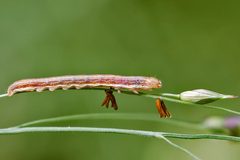
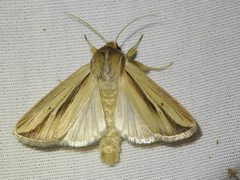
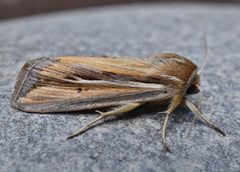
Dargida diffusa, commonly known as the wheat head armyworm, is a noctuid native to North America. have a wingspan of 27–36 mm and are active from May to September across their range. The is economically significant due to larval feeding on seed of cereal crops and grasses, with timothy grass (Phleum pratense) being a particularly favored .
Pronunciation
How to pronounce Dargida diffusa: /dɑːrˈɡiːdə dɪˈfjuːsə/
These audio files are automatically generated. While they are not always 100% accurate, they are a good starting point.
Identification
can be distinguished from similar noctuids by the diffuse, poorly defined wing pattern with reduced contrasting markings. The combination of moderate size (27–36 mm wingspan), pale hindwings with dark margins, and the absence of strong discal spots or markings helps separate it from related Dargida and other armyworm moths. Larvae are identified by their feeding location within grass seed and their smooth, relatively unmarked appearance compared to more heavily patterned noctuid larvae.
Images
Habitat
Found in grassland , agricultural fields, and prairie . Associated with both native grasslands and cultivated cereal crop areas. are attracted to light and can be found in varied open habitats where larval grasses occur.
Distribution
Occurs across most of North America, from southern Canada through the United States. Records from Alberta, Manitoba, and Saskatchewan in Canada; throughout the contiguous United States. Absent from Yukon and Alaska.
Seasonality
are on wing from May to September, with peak activity varying by latitude and local climate. In northern portions of the range, the period is compressed into June through August. Multiple may occur in southern regions.
Diet
Larvae feed on seed of cereal crops and grasses. Documented include wheat, oats, barley, and various cultivated cereals. Phleum pratense (timothy grass) is a particularly noted host. do not feed.
Host Associations
- Phleum pratense - larval especially favored grass
- Triticum aestivum - larval wheat
- Avena sativa - larval oats
- Hordeum vulgare - larval barley
Life Cycle
Complete with , larva, pupa, and stages. Eggs are laid on or near grass seed . Larvae feed within developing seed heads, consuming developing grains. occurs in soil. Number of per year varies with latitude; single generation in north, multiple generations possible in south.
Behavior
Larvae are concealed feeders, remaining within grass seed during feeding. are and attracted to light. Nocturnal activity pattern typical of noctuid .
Ecological Role
Herbivore specializing on grass seed . Can reach pest densities in agricultural settings. Serves as prey for various and predatory insects.
Human Relevance
Agricultural pest of cereal crops, particularly wheat, oats, and barley. Larval feeding reduces grain yield and quality. Economic impact is generally localized and sporadic rather than regionally devastating. Management typically involves monitoring and targeted application when exceed .
Similar Taxa
- Mythimna unipuncta (Armyworm)Similar and larval feeding on grasses; distinguished by more distinct wing markings in and different larval capsule coloration
- Pseudaletia unipuncta (True Armyworm)Overlapping range and ; have more prominent wing markings including distinct spot
- Other Dargida species-level similarity; D. diffusa distinguished by diffuse wing pattern and specific associations
More Details
Subspecies
Three described by Smith in 1902: D. d. obscurior (darker western form), D. d. limitata (intermediate form), and D. d. neptis (pale southwestern form). These are distinguished by minor variations in forewing coloration and pattern .
Collection records
Well-represented in entomological collections with over 2,600 iNaturalist observations, indicating it is frequently encountered and relatively common across its range.