
Lacinipolia
owlet moths
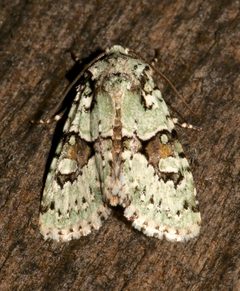
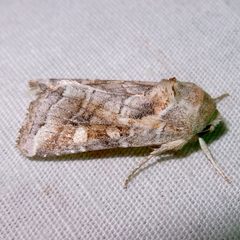
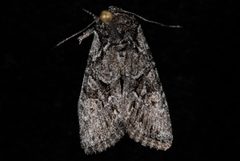
Lacinipolia is a of owlet moths in the Noctuidae. are and frequently attracted to blacklights. within this genus exhibit considerable variation in coloration, including mottled gray forms with reflective wing and green forms that likely provide camouflage against lichen-covered substrates. Species-level identification based on external appearance alone is generally not possible.
Pronunciation
How to pronounce Lacinipolia: //ˌlæsɪnɪˈpoʊliə spɒn//
These audio files are automatically generated. While they are not always 100% accurate, they are a good starting point.
Identification
Lacinipolia cannot be distinguished from one another by visual inspection alone. are medium-sized noctuid . Some individuals are mottled gray with reflective on the wings; others are green. The is part of the diverse owlet moth fauna but lacks obvious diagnostic external features that would allow separation from related genera without dissection or genitalia examination.
Images
Habitat
Observed in urban and suburban settings where blacklight trapping has been conducted. The green morph likely rests on lichen-covered tree trunks during daylight hours.
Distribution
Recorded from Colorado Springs, Colorado, USA. The has a broad distribution across North America, though specific locality records vary by .
Seasonality
have been observed in late July during National Week events in Colorado.
Behavior
are and attracted to artificial light sources, particularly blacklights. Daytime roosting habits likely vary by color morph: green individuals probably rest on lichen-covered bark for camouflage.
Similar Taxa
- AcrolophusBoth are small to medium-sized attracted to lights, but Acrolophus are in the Acrolophidae and have grass tube moth caterpillars that spin silken tubes at grass bases.
- EthmiaBoth can appear at blacklights, but Ethmia are typically smaller, have distinct wing patterning, and are associated with Boraginaceae plants.