
Apamea remissa
(Hübner, 1809)
Dusky Brocade
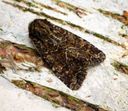
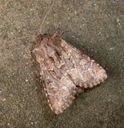
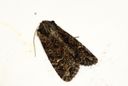
Apamea remissa, commonly known as the dusky brocade, is a noctuid with a wingspan of 36–42 mm. It occurs across the Palearctic region from Europe through Siberia to Japan, with disjunct in Alaska. The species exhibits considerable variation in wing markings, making identification challenging in some forms.
Pronunciation
How to pronounce Apamea remissa: /əˈpeɪmiə rɪˈmɪsə/
These audio files are automatically generated. While they are not always 100% accurate, they are a good starting point.
Identification
Well-marked individuals are fairly distinctive due to pronounced contrast between pale ground color and blackish-fuscous markings. However, forms with obscure markings are difficult to distinguish from , particularly Apamea furva. Key features to examine: contrast between ground color and dark shading; presence and clarity of black wedge-shaped marks before submarginal line; whitish annuli of upper stigmata. Definitive identification may require examination of genitalia or reference to specialized literature (Townsend et al.).
Images
Habitat
Grassland including meadows, pastures, and wetlands. Larval habitat associated with various grass .
Distribution
Palearctic distribution: Europe (including British Isles), Turkey, across Siberia to Manchuria and Japan. Also reported from Alaska, representing a disjunct Nearctic occurrence.
Seasonality
active June and July in British Isles. activity.
Diet
Larva feeds on various grasses including reedgrasses (Calamagrostis), tussock grasses, fescues (Festuca), canarygrasses (Phalaris), and ryes (Secale). feeds on nectar from flowers and is attracted to sugar.
Host Associations
- Calamagrostis - larval food plantreedgrasses
- Festuca - larval food plantfescues
- Phalaris - larval food plantcanarygrasses
- Secale - larval food plantryes
- tussock grasses - larval food plantvarious
Life Cycle
Overwinters as larva, feeding during mild weather. and in early summer. Single per year in temperate regions.
Behavior
. Attracted to light. visits nectar-rich flowers and sugar baits.
Ecological Role
Larva functions as a grass-feeding herbivore. serves as potential of nectar-producing flowers and as prey for including bats, birds, and predatory insects.
Human Relevance
Minor potential as a pest of cultivated grasses and cereals, though not considered economically significant. Subject of interest to lepidopterists and naturalists. Attracted to artificial light sources, bringing it into contact with humans.
Similar Taxa
- Apamea furvaExtremely similar appearance; obscure forms of A. remissa difficult to distinguish without detailed examination. Both share overlapping distribution and preferences.
- Apamea amputatrixAnother congeneric cutworm moth with similar size and general appearance; distinguished by coloration and specific wing pattern elements.
- Apamea indocilisTreated as () by some authors, indicating close morphological similarity and potential taxonomic confusion.
More Details
Taxonomic Note
Some authors consider Apamea indocilis to be a of A. remissa rather than a separate , reflecting ongoing taxonomic debate within the .
Variation
Named forms include ab. submissa (with black streaks from base and along submedian fold) and ab. remissa (pronounced pale grey ground with blackish markings).