
Apamea amputatrix
Fitch, 1857
Yellow-headed Cutworm, Yellow-headed Cutworm Moth
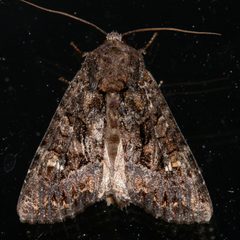
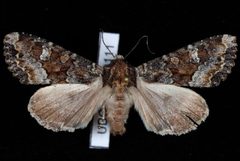
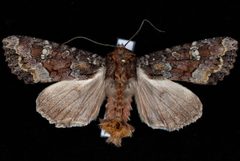
Apamea amputatrix, commonly known as the yellow-headed , is a noctuid native to North America with a range extending to the Arctic. have a wingspan of approximately 40 mm and are active from April to October depending on location. The is recognized as a cutworm pest, with larvae feeding on a broad range of plants including vegetable crops. Identification to species level is challenging due to individual variation and overlap with other Apamea species.
Pronunciation
How to pronounce Apamea amputatrix: /əˈpeɪ.mi.ə ˌæm.pjəˈteɪ.trɪks/
These audio files are automatically generated. While they are not always 100% accurate, they are a good starting point.
Identification
Difficult to distinguish from other Apamea due to substantial individual variation in forewing pattern and coloration, plus overlapping morphological characteristics with . The specific epithet 'amputatrix' does not refer to a visible diagnostic feature. Accurate identification typically requires examination of genitalia or molecular analysis. Larvae are identified by the yellow capsule, which provides the .
Images
Appearance
Wingspan approximately 40 mm. As a member of the Apamea, exhibit the typical cryptic, mottled forewing coloration common to cutworm moths. The 'yellow-headed ' refers to a distinguishing trait of the larval stage.
Habitat
Found in diverse terrestrial across its broad North American range. Observations include prairie habitats with cottonwood groves and nearby wetlands. Specific microhabitat preferences for or larvae are not well documented.
Distribution
Widespread across most of North America, with confirmed records from Canada (Alberta, Manitoba, Saskatchewan) and the United States (Vermont). Range extends north to the Arctic.
Seasonality
fly from April to October, with timing varying by geographic location. This extended period suggests either multiple or broad phenological plasticity across latitudes.
Diet
Larvae are herbivores feeding on a wide range of plants, including vegetable crops. Specific host plant records beyond this generalization are not documented in available sources. feeding habits are not described.
Life Cycle
Complete with , larval, pupal, and stages. Larvae are cutworms, feeding at or below ground level on plants. No detailed description of developmental duration or stage is available.
Behavior
are and attracted to light sources. Larvae exhibit typical , severing plant stems at or near the soil surface. No other specific behavioral observations are documented.
Ecological Role
Larvae function as herbivores. may serve as prey for including bats, birds, and predatory arthropods. Specific ecological studies are lacking.
Human Relevance
Larvae are recognized agricultural pests due to feeding on vegetable crops. Damage occurs through stem-cutting characteristic of cutworms. No specific economic impact assessments or management protocols are documented in available sources.
Similar Taxa
- Other Apamea speciesOverlap in forewing pattern variation and general makes visual identification unreliable without specialized examination.