
Hadena
Schrank, 1802
Species Guides
11- Hadena amabilis
- Hadena caelestis(cutworm moth)
- Hadena capsularis(Capsule Moth)
- Hadena circumvadis(cutworm moth)
- Hadena ectrapela
- Hadena ectypa(Campion Coronet)
- Hadena lafontainei(Lafontaine's Hadena)
- Hadena maccabei
- Hadena plumasata
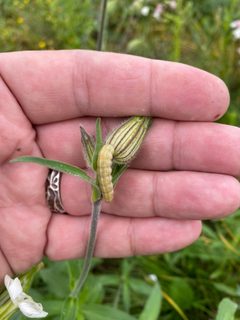
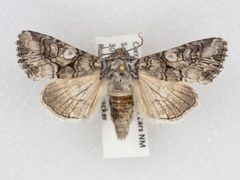
Hadena is a of noctuid comprising approximately 143–149 , with the majority distributed across the and about fifteen species native to North America. The genus was erected by Franz von Paula Schrank in 1802. Members are characterized by hairy , upturned palpi with long hairs, and short broad wings. Larvae typically feed on seeds of Caryophyllaceae, and of some species function as of Silene.

Pronunciation
How to pronounce Hadena: /həˈdiːnə/
These audio files are automatically generated. While they are not always 100% accurate, they are a good starting point.
Identification
Hairy are a distinctive feature distinguishing Hadena from many similar noctuid . The combination of upturned, long-haired palpi with a short third joint, squarely scaled and flattened , and the specific hindwing venation ( 3 and 4 from or on very short stalk) provides diagnostic characters. The short, broad wing shape differs from more elongate noctuids.
Images
Appearance
Small to medium-sized noctuid with short, broad wings. covered with hairs. Palpi upturned, clothed with long hairs, with a short third joint. squarely scaled and flattened. bears tufts on segments. Tibia lack spines. Male ciliated. Hindwings with 3 and 4 either arising from or on a very short stalk.
Habitat
associated with plants in Caryophyllaceae, including open grasslands, meadows, rocky slopes, and disturbed areas where pinks and related plants occur.
Distribution
Primarily Palearctic distribution with over 100 ; approximately 15 species native to North America. Documented from Scandinavia (Denmark, Norway, Sweden) and Vermont, USA.
Diet
Larvae feed on seeds of plants in Caryophyllaceae (the pinks). feeding habits not specifically documented beyond nectar visitation.
Host Associations
- Caryophyllaceae - larval food plantlarvae feed on seeds
- Silene - pollination are of some Silene
Ecological Role
Seed as larvae, reducing Caryophyllaceae seed production. Some serve as of Silene, contributing to plant reproductive success.
Similar Taxa
- Other Noctuinae generaHadena distinguished by hairy , upturned long-haired palpi with short third joint, and specific hindwing venation pattern
More Details
Taxonomic history
Zeteolyga was formerly recognized as a separate but is now synonymized with Hadena.
Species diversity
count estimates range from 143 to 149, reflecting ongoing taxonomic refinement.